

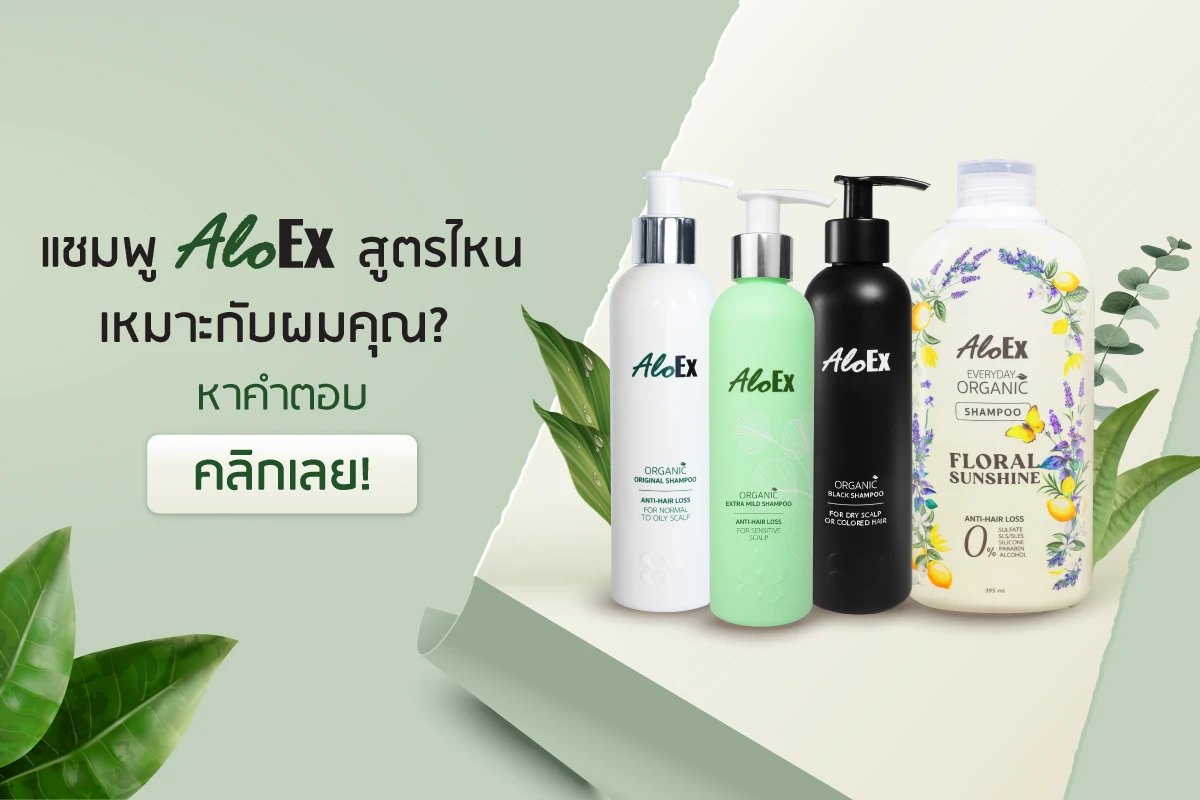
You might be wondering which AloEx anti-hair-fall shampoo formula best suits your scalp and hair — and how each formula differs.
How to deal with hereditary hair loss and thinning
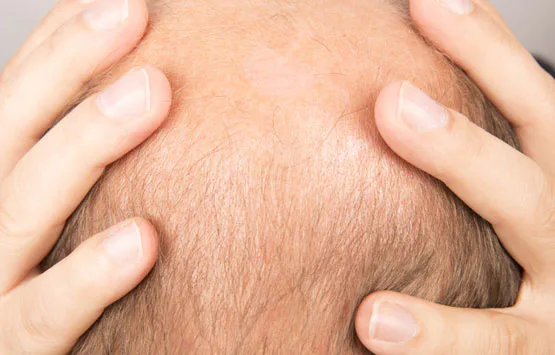
Hair fall and thinning hair are problems that cause anxiety and a loss of confidence for many people. These issues arise from a variety of causes, including allergic reactions to chemicals in hair care products, chemicals in food, stress, or abnormal body conditions. The most important primary cause, however, is hereditary hair loss and thinning. Hereditary hair loss and thinning is mainly caused by the activity of the male hormone DHT. Normally, the hormones in our body are determined by genes, which can be passed down through generations. When DHT circulates in the bloodstream to the scalp area, it reacts with the hair follicles, causing them to shrink, contract, and become smaller, so the hair gradually falls out. New hair that grows in becomes progressively smaller as the follicles shrink — making it thinner, weaker, and easier to fall out — eventually leading to baldness. Current treatments for hereditary baldness focus on reducing the production of DHT in the body through medication, such as Minoxidil, which dilates blood vessels to allow more blood to nourish the hair roots, or Finasteride, which helps lower DHT hormone levels. However, these medications can have other side effects — particularly effects on mood and sexual function — so they must be used carefully and with a doctor's consultation. In addition to medication to reduce DHT production, there are also many types of scalp-nourishing products — such as shampoos and serums — that focus on reducing DHT levels at the scalp without affecting systemic hormone levels, and therefore without affecting sexual function. Daily lifestyle habits are also a factor that can help reduce your risk of hair fall and thinning. For example, avoiding behaviors that damage hair, avoiding hair styling products made with chemicals, and switching to natural hair care products that are safe for hair and scalp. Thank you for the helpful information from http://bit.ly/1MVbsDb and http://bit.ly/1RMCjma