


Hair fall and thinning have eroded confidence for as long as anyone can remember — and they hit men and women alike. When it comes to today's most common medical treatments, especially topicals, you've probably already heard of Minoxidil Very well.
But because of certain drawbacks of Minoxidil many people end up stopping treatment partway through — whether due to side effects, scalp irritation, or worries about safety for household pets. There's also the fact that the drug Minoxidil is fairly hard to access — it must be prescribed by a doctor or sold through a pharmacist. As a result, the cosmeceutical industry has developed synthetic chemical substitutes for Minoxidil and uses them in hair-care products sold over the counter — no prescription required.
This article walks you through what you should know about Minoxidil, synthetic substitutes for Minoxidil and how those synthetic substitutes work for hair-fall and thinning concerns — plus their pros and cons relative to Minoxidil and other alternative extracts.
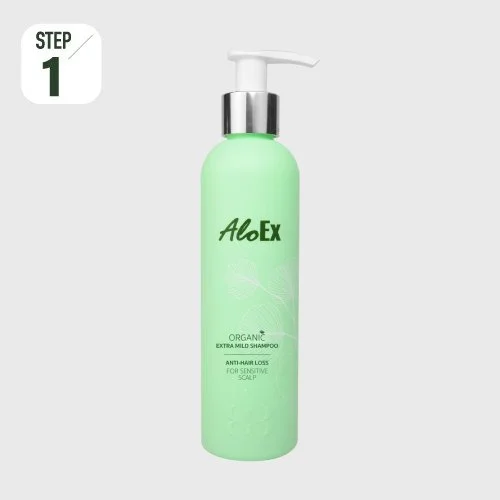
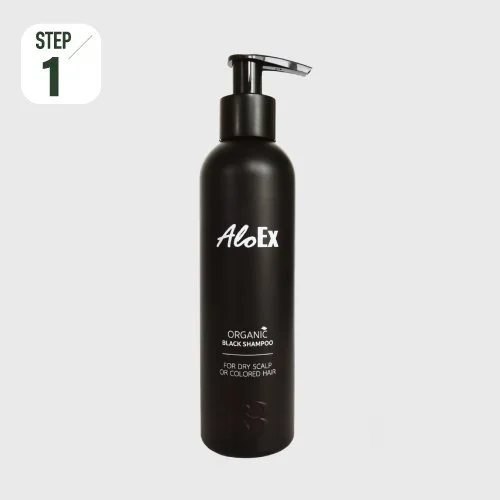
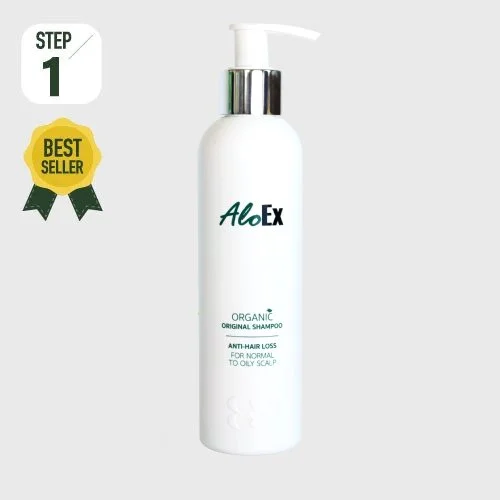
💡 Before you read on: if you're looking for a non-drug option that addresses hair fall and thinning end-to-end — both 'reducing shedding' and 'growing new hair' — the answer is at the bottom of this article.
What is Minoxidil?
Minoxidil Minoxidil was originally developed as an oral medication for high blood pressure. Because it dilates blood vessels, one side effect was abnormal hair growth — including thicker scalp hair. That led to the development of topical Minoxidil specifically for hair fall and thinning.
How does Minoxidil work for hair fall and thinning?
Minoxidil Minoxidil addresses hair fall and thinning by stimulating new growth, but doesn't tackle the root cause. Today, doctors typically prescribe Minoxidil (for new-hair stimulation) alongside Finasteride (which reduces DHT-driven shedding) specifically for hair fall and thinning. Minoxidil's mechanisms are:
1. Opens potassium channels
Potassium channels act like doors or switches inside follicle cells. They wake the follicle and signal it to start new growth. When Minoxidil opens these channels, peripheral arteries dilate.
2. Increases blood flow to follicles
Dilated vessels deliver more blood to the hair follicle, providing follicle cells with extra oxygen and nutrients. Follicles recover and strengthen, producing better new hair.
3. Extends the Anagen (growth) phase
Minoxidil keeps hair in the Anagen phase longer and lowers the number of hairs in the Telogen (shedding) phase — so hair looks thicker because more of it is actively growing. It also enlarges follicles that had shrunk, bringing them back to a healthier size.
Drawbacks of Minoxidil
Although Minoxidil is the standard drug doctors prescribe, many people with hair fall and thinning end up stopping it partway through, for reasons including:
- Minoxidil only works after the enzyme sulfotransferase at the follicle converts it into minoxidil sulfate. Studies show a sizable share of people (around 30–40%) have low sulfotransferase activity, which means Minoxidil doesn't work for everyone — some users see far less new growth than others.
- Minoxidil contains a large amount of alcohol (used as a solvent), which caneasily irritated cause itchiness and scalp flaking.
- Heavy shedding at the start Because Minoxidil pushes Telogen-phase hair to shed all at once, preparing the scalp for new growth, users often feel their hair is falling out more heavily than before.
- Although today's Minoxidil is topical, it can still absorb into the bloodstream — especially through broken scalp skin — which cancause side effects like dizziness, palpitations, and low blood pressure and so on.
- After applying Minoxidil, hair can becomeflat and limp, with a sticky scalp and residue.
- Dangerous to pets Because pets such as dogs and cats do not have the enzymes needed to break down Minoxidil, it directly impacts their cardiovascular system. This is especially true in cats, which are more sensitive to the toxin than dogs. Skin contact or licking may cause cats to develop heart failure, fluid in the chest and abdominal cavity, and death. The same applies to dogs, except that dogs have higher toxin tolerance than cats.
What are the synthetic Minoxidil substitutes, and what are their benefits?
Synthetic Minoxidil substitutes are lab-synthesized chemical derivatives that mimic Minoxidil's molecular structure — keeping the basic chemistry while modifying functional groups to reduce its side effects. The benefits include:
- Lower irritation risk than Minoxidil's high-alcohol formula
- Reduced Minoxidil side effects — like initial heavy shedding or systemic absorption into the bloodstream
- Synthetic Minoxidil substitutes can be used in over-the-counter scalp- and hair-care products without a doctor's consultation. They feel lighter, absorb into the scalp, and leave no sticky residue like the drug.
- Safer for households with pets
Which synthetic Minoxidil substitutes exist today, and how do they treat thinning?
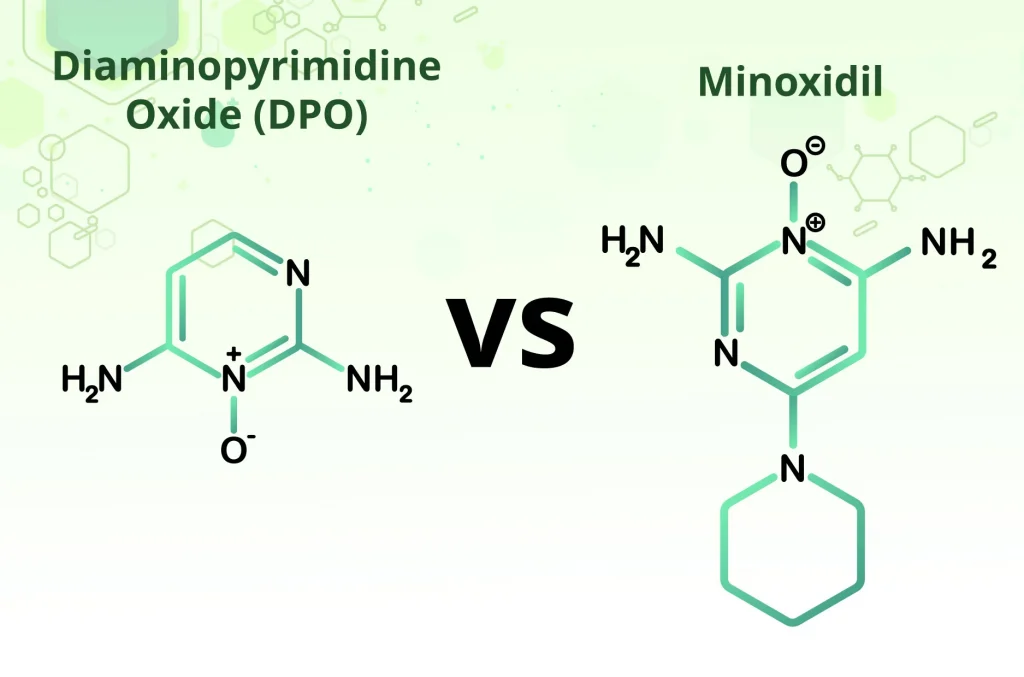
1. Diaminopyrimidine Oxide (DPO)
is a synthetic compound similar in structure to Minoxidil, but with a different mechanism. DPO focuses on perifollicular fibrosis — when collagen around the follicle stiffens and constricts it, shrinking the hair and causing premature shedding.
DPO has a mechanism to help manage hair loss and thinning by inhibiting the enzyme Lysyl Hydroxylase, which is responsible for creating collagen cross-links, making the tissue around hair roots more flexible and allowing hair to adhere better to the scalp. DPO is therefore suitable for those with hair loss due to age or early-stage hormonal issues, where hair roots are beginning to harden and shrink, and newly grown hair is becoming thinner.
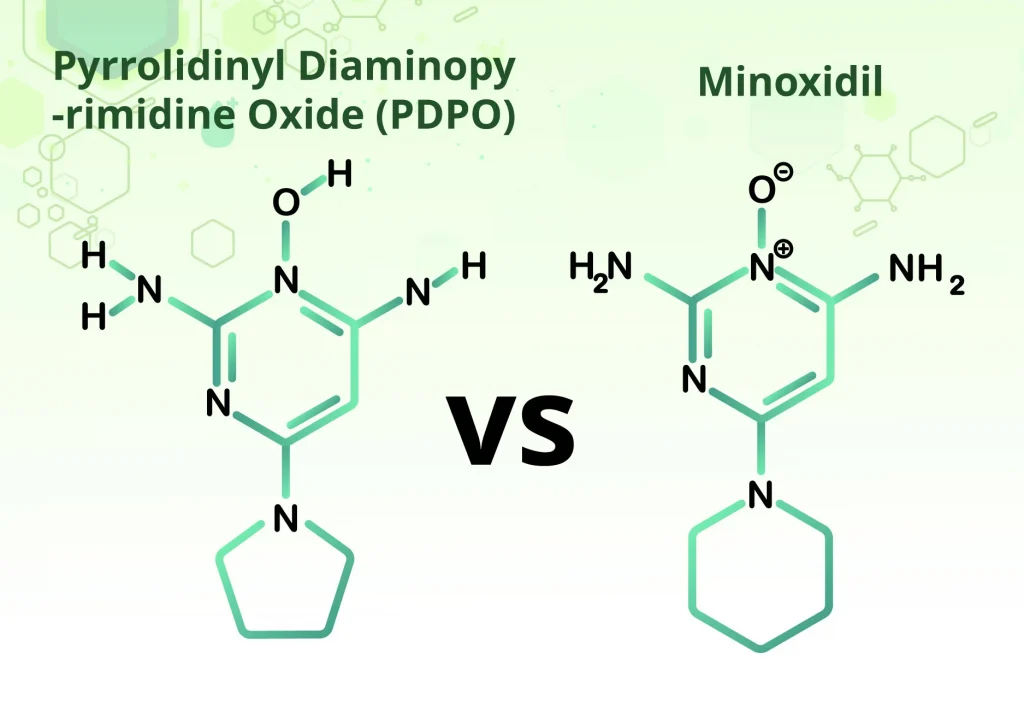
2. Pyrrolidinyl Diaminopyrimidine Oxide (PDPO)
PDPO is a widely used synthetic substitute for Minoxidil in hair care products in Asia. PDPO has a structure similar to Minoxidil but is designed to dissolve better in water than Minoxidil, making products for those with hair loss that contain PDPO as an ingredient alcohol-free, as they do not need alcohol as a solvent like Minoxidil does.
PDPO's mechanism for managing hair loss and thinning focuses on opening Potassium Channels to dilate blood vessels and improve nutrient delivery to the hair roots, which is a mechanism similar to Minoxidil but with less risk of alcohol irritation than the drug itself. PDPO is suitable for those with hair loss and thinning who also have oily hair, causing serums, creams, or nourishing products to not absorb well into the scalp, because PDPO is a synthetic compound derived from DPO but has a structure that absorbs into the scalp better than DPO.
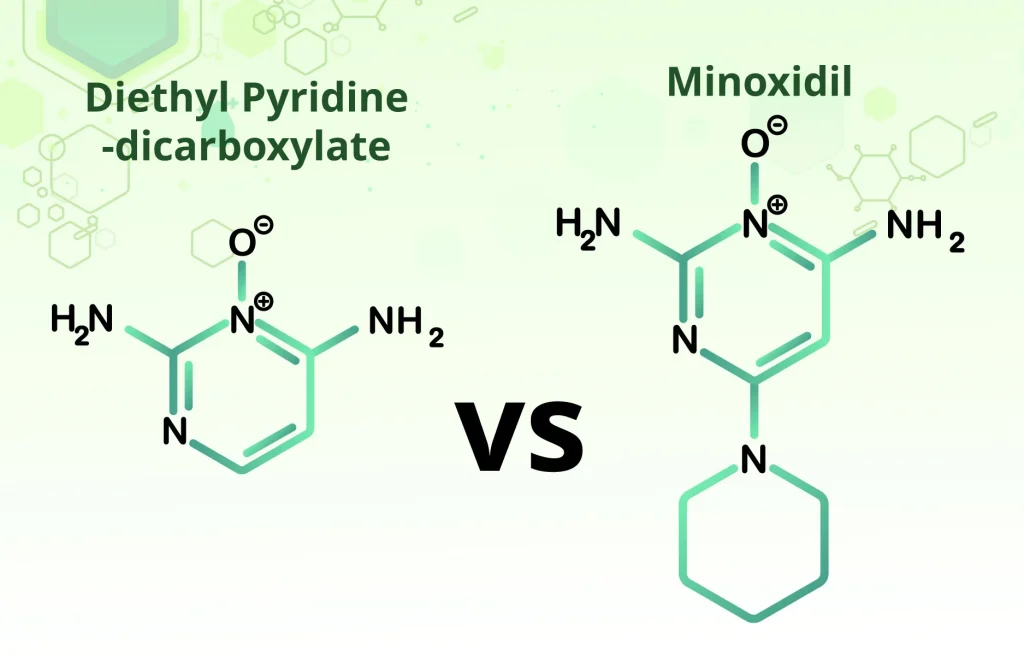
3. Diethyl Pyridinedicarboxylate
This is another synthetic compound created to mimic the structure of Minoxidil, but its mechanism for managing hair loss and thinning is not related to vasodilation. Instead, it activates the stem cells of the hair follicles that are in the resting phase to restart their activity, helping hair on the scalp look thicker by reducing the number of hair strands in the resting phase and returning them to the growth phase.
Diethyl Pyridinedicarboxylate is suitable for those who still have a good number of hair strands but whose hair diameter is beginning to shrink or thin, or those with hair loss due to stress, since stress causes hair strands to enter the resting phase, leading to rapid shedding all at once, making hair look thin. Diethyl Pyridinedicarboxylate works to manage hair in the resting phase, returning it to the growth phase again.
Limitations of synthetic Minoxidil substitutes
Although synthetic Minoxidil substitutes are now widely used in over-the-counter hair-care products, they still have limitations:
- Less research backing than Minoxidil
- Higher prices than Minoxidil — some synthetics are owned by major brands behind the research, so consumers pay a premium for substitutes that work less quickly than the drug
- Requires continuous use like Minoxidil, yet new-hair results aren't as strong
- Doesn't address DHT-driven hair fall — it focuses on supporting follicles and stimulating new growth, just like Minoxidil. (The drug that reduces hormone-driven shedding is Finasteride.)
Minoxidil and its synthetic substitutes don't address root-cause hair fall — so what does?
For patients with hair loss, doctors typically prescribe Minoxidil alongside Finasteride because
- Minoxidil grows new hair but doesn't reduce shedding
- Finasteride reduces DHT-driven shedding but doesn't grow new hair. To address hair fall end-to-end, doctors prescribe both. Meanwhile, synthetic Minoxidil substitutes only help with new growth — they don't address the root cause of shedding.
Is there an extract that replaces drugs and addresses both sides of the problem — reducing hair fall AND growing new hair — with research to back it up?
The answer: yes — and it comes from nature, not a lab.
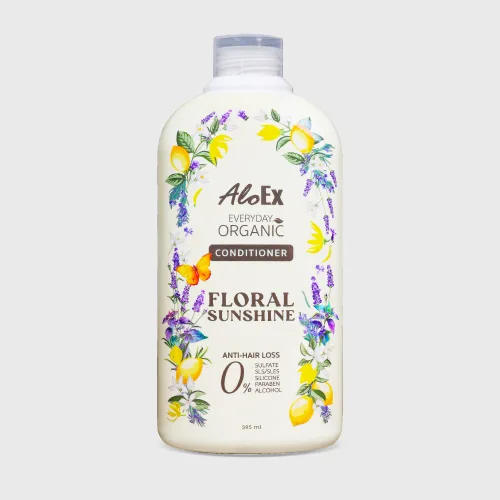
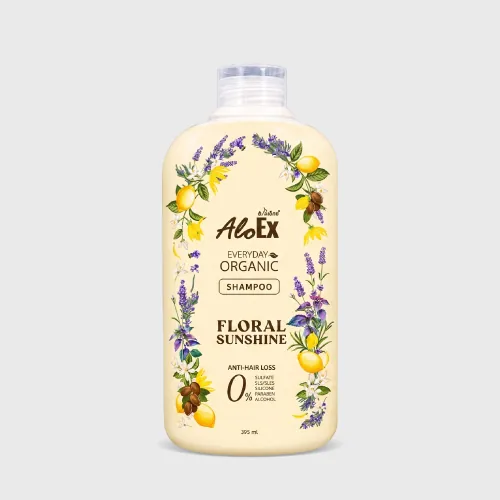
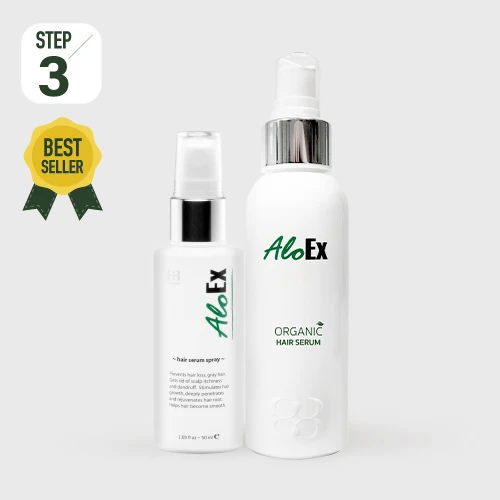
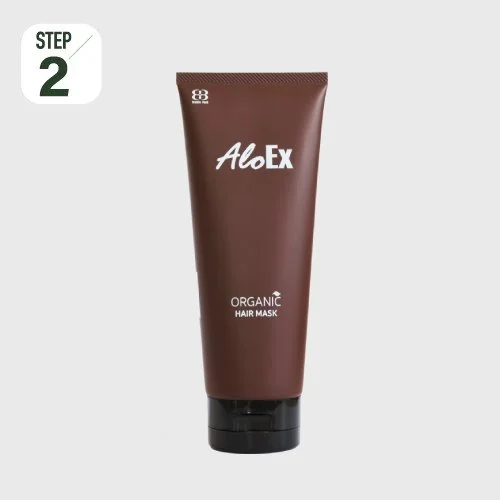
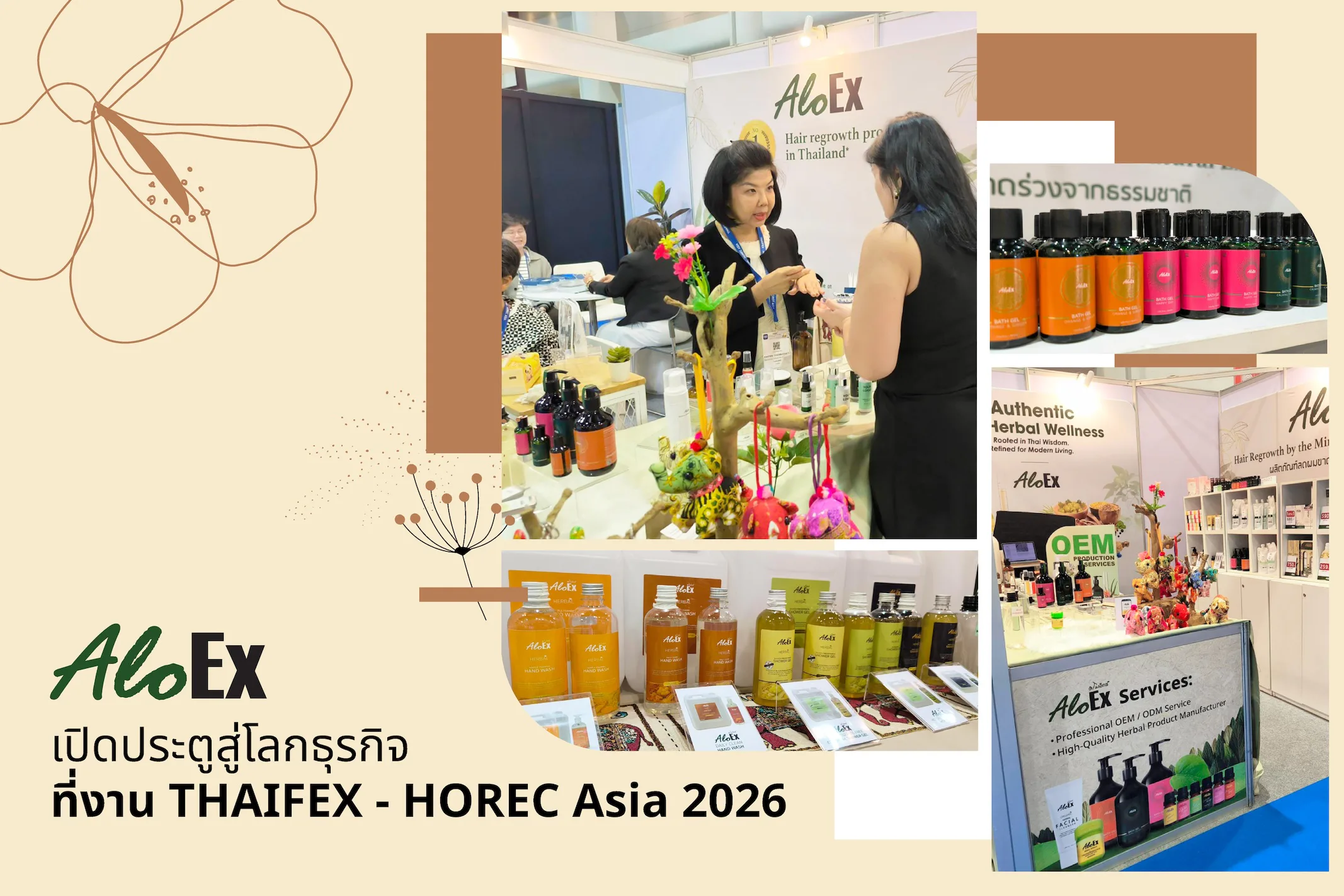
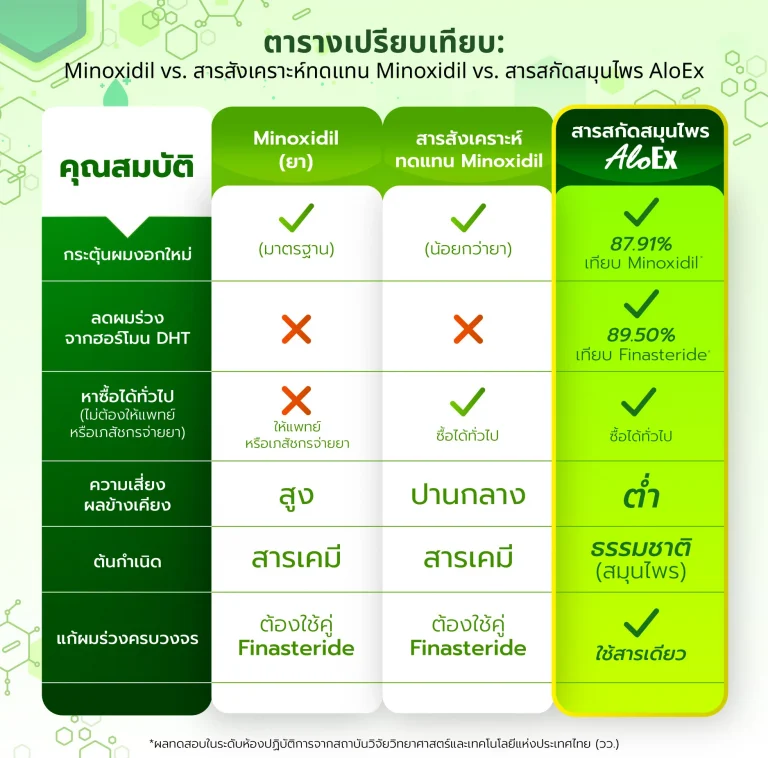
The natural substitute extracts referred to are the herbal extracts produced by AloEx's proprietary extraction method, namely AloEx Hydrosol Complex Extract and AloEx Phenolic Complex Extract, which have been tested by the Thailand Institute of Scientific and Technological Research (TISTR) compared to Minoxidil and Finasteride with the following results.
- AloEx herbal extract inhibits 5α-reductase at 89.50% of Finasteride's level — meaning its hair-fall reduction is 89.50% as strong as Finasteride.
- AloEx herbal extract drives follicle-cell division at 87.91% of Minoxidil's level — meaning it stimulates new growth at nearly Minoxidil's strength.
These results show that AloEx hair- and scalp-care products formulated with AloEx Hydrosol Complex Extract and AloEx Phenolic Complex Extract don't just replace Minoxidil for new growth — they also replace Finasteride for reducing DHT-driven hair fall.
AloEx's herbal extracts are therefore a noteworthy natural alternative to standard pharmaceutical drugs, because in addition to being easily accessible without needing a doctor or pharmacist to dispense them, and not carrying the risk of undesirable side effects from drugs, they also comprehensively help with hair loss and thinning problems — from reducing hair fall all the way to promoting new growth — unlike synthetic Minoxidil substitutes that only promote new hair growth.
Beyond the head-to-head vs the two standard drugs, AloEx's herbal extract has also been tested by the Research Centre for Bioorganic Chemistry (RCBC), Department of Chemistry, Faculty of Science, Chulalongkorn University, confirming that it:
- Contains 9 key Terpene compounds that reduce hair fall, address other hair-loss triggers, and support thicker hair.
- Provides antioxidant activity up to 371× that of Trolox, extending hair's Anagen (growth) phase and slowing shedding.
Summary: Minoxidil remains the primary standard drug for treating hair thinning, but due to its side effects and access limitations (which can only be dispensed by a doctor or pharmacist), synthetic compounds mimicking the structure of Minoxidil have emerged. While the results may not be as fast and strong as the drug itself, they were created to meet the needs of consumers who want gentleness and reduced undesirable side effects.
However, since Minoxidil and its synthetic substitutes still have limitations — as they only promote new hair growth and do not address the root cause of hair fall — they still need to be used together with Finasteride to comprehensively manage hair loss and thinning. This is precisely the point where natural extracts, backed by research comparing their results to Minoxidil and Finasteride, become an interesting alternative option for those who do not want to experience the undesirable side effects of drugs and who do not want to see a doctor to access both hair loss treatments.
References
McMullen, E., Xiong, G., Rayner, D. G., Brathwaite, S., Metko, D., Mehta, S., Gupta, S., Walker-Genovese, M.-V., Rayner, S. W., Witelus, I., Dumont, S., Mukovozov, I., Sibbald, C., & Donovan, J. (2025). Minoxidil toxicosis in cats and dogs: A scoping review and call to action. Journal of the American Academy of Dermatology. https://doi.org/10.1016/j.jaad.2025.02.047
Donovan, J., & McMullen, E. (2025). Risks of minoxidil toxicity for household pets. Journal of Dermatological Treatment, 36(1). https://doi.org/10.1080/09546634.2025.2583667
Kim, J., Park, S., & Lee, H. (2024). A case report of successful treatment of minoxidil toxicosis using hemodialysis in a cat. Veterinary Sciences, 11(10). https://www.ncbi.nlm.nih.gov/pmc/articles/PMC11511512/
The Maitland Clinic. (2025, December 30). Topical minoxidil and pet safety: Important guidance for cat and dog owners. https://www.themaitlandclinic.com/topical-minoxidil-and-pet-safety-important-guidance-for-cat-and-dog-owners/