






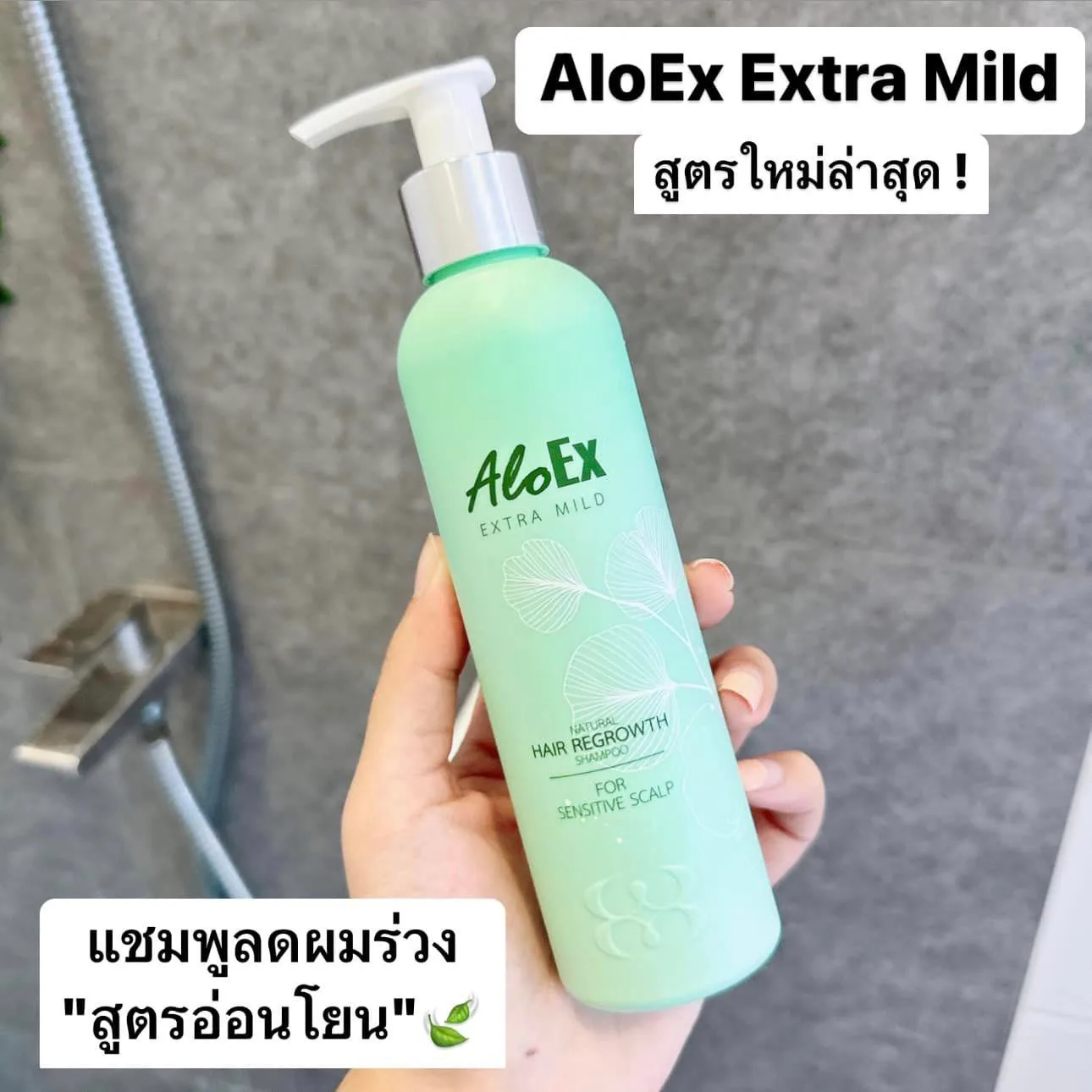
AloEx
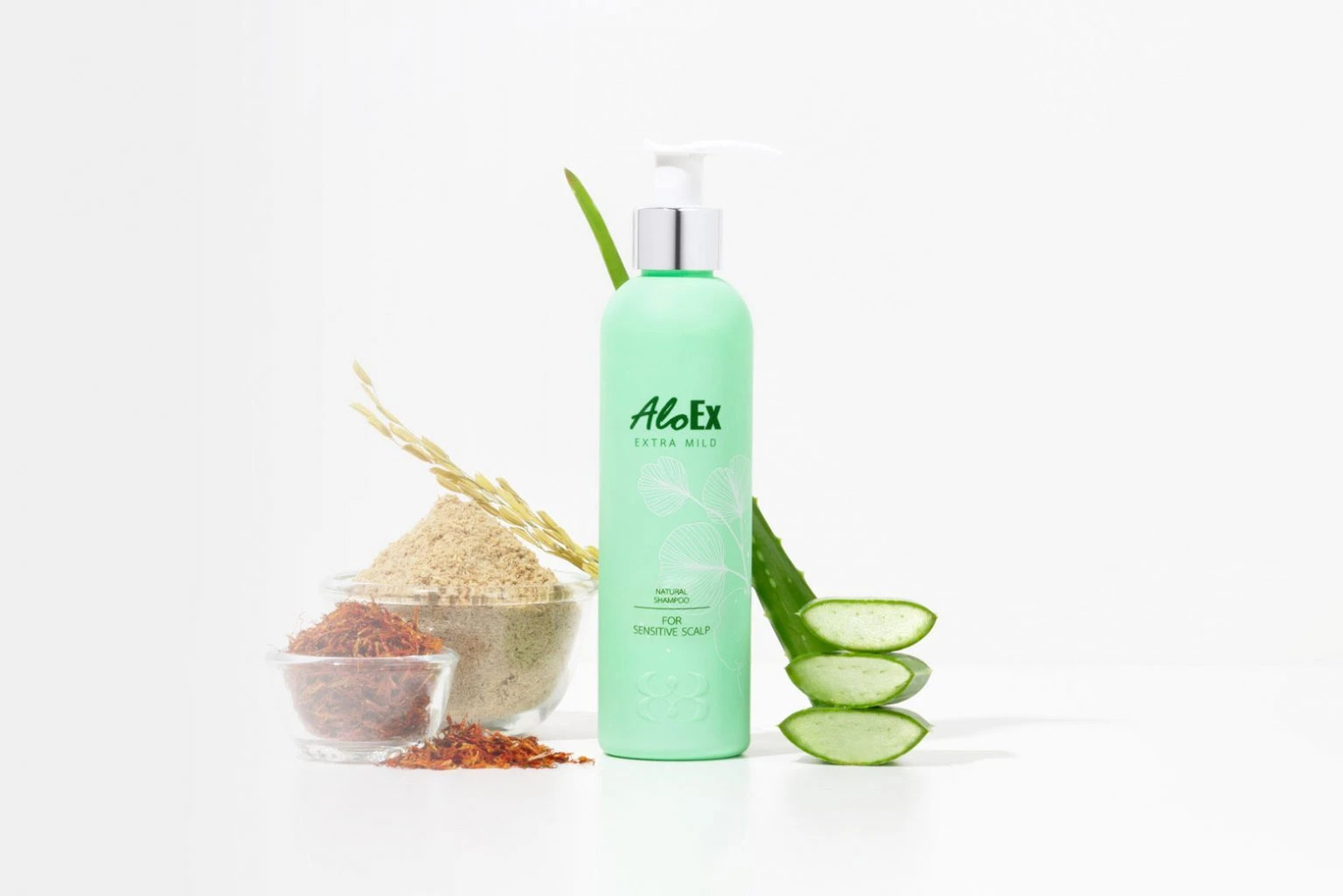
Extra Mild Shampoo
Gentle Shampoo Formula
for Sensitive Skin
Volume: 200 ml
Price: 680 THB
Buy NowAloEx Extra Mild Shampoo
Shampoo for Hair Loss Gentle Formula
AloEx Extra Mild Shampoo is a gentle shampoo formulated for individuals with hair loss issues. It is designed for those with sensitive skin prone to irritation and allergies. The shampoo effectively cleanses dirt and chemical residues while revitalizing the scalp and strengthening hair with concentrated herbal extracts.
- Nourish the scalp and promote healthy hair, reducing the risk of hair loss.
- Reduces oiliness, which is a cause of acne and dandruff.
AloEx Extra Mild Shampoo
Suitable For

Individuals with problems
of hair loss and thinning hair

Individuals with sensitive skin who are prone to allergies, irritation, and reactivity to various chemicals.
Suitable for all scalp and hair types.
Key Ingredients
AloEx Extra Mild Shampoo is a gentle formula designed for individuals experiencing hair loss. It is ideal for those with sensitive skin that is prone to reacting to various chemicals. Enriched with valuable herbal extracts, it helps restore the health of the scalp and strengthen hair.
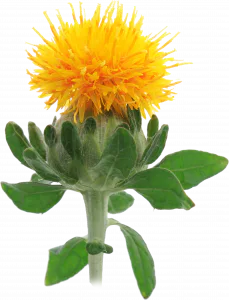
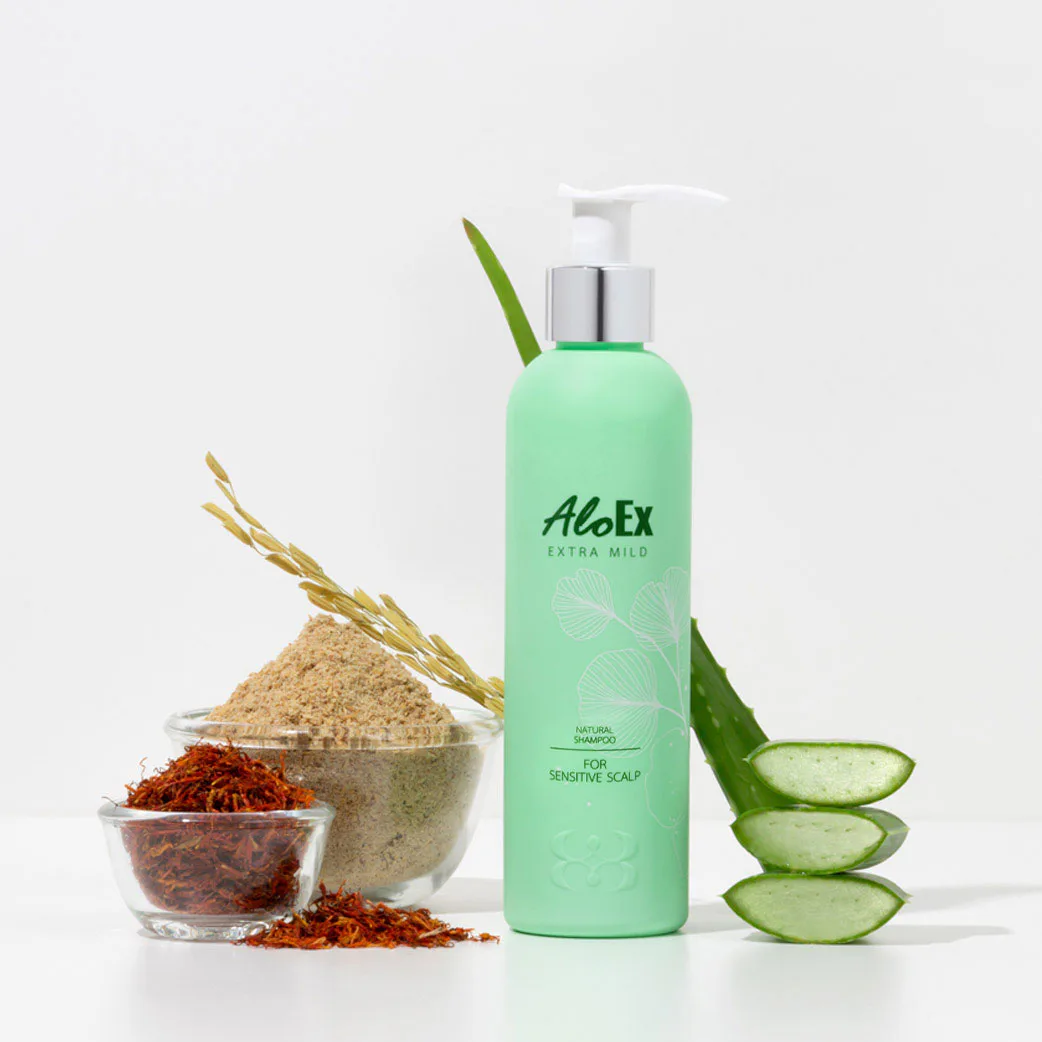
Safflower
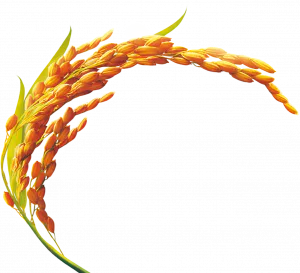
Rice Bran

Butterfly Pea Flower

Aloe Vera

Kaffir Lime Leaf
Other Extracts
- Golden Thread
- Female Butterfly Lily Foot
- Centella asiatica
- Buffalo's Tear Bead
- Bamboo
- Phaya Yo
- Pine resin
- Tamarind
- Indian gooseberry
- Jasmine Flower
- Mallow root
- Kaffir Lime

Texture
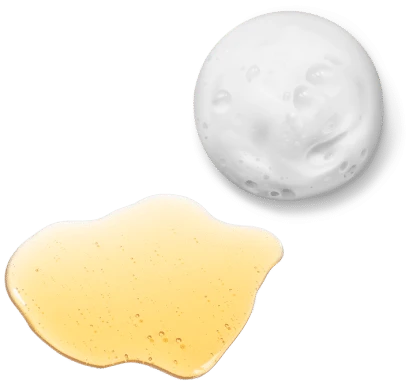
AloEx Extra Mild Shampoo is a gentle formula for those with hair loss issues. It has a light yellow, clear texture and a refreshing jasmine scent that lasts long. It helps relieve stress, moisturize hair, and promote a healthy scalp. It produces minimal foam but cleanses deeply.
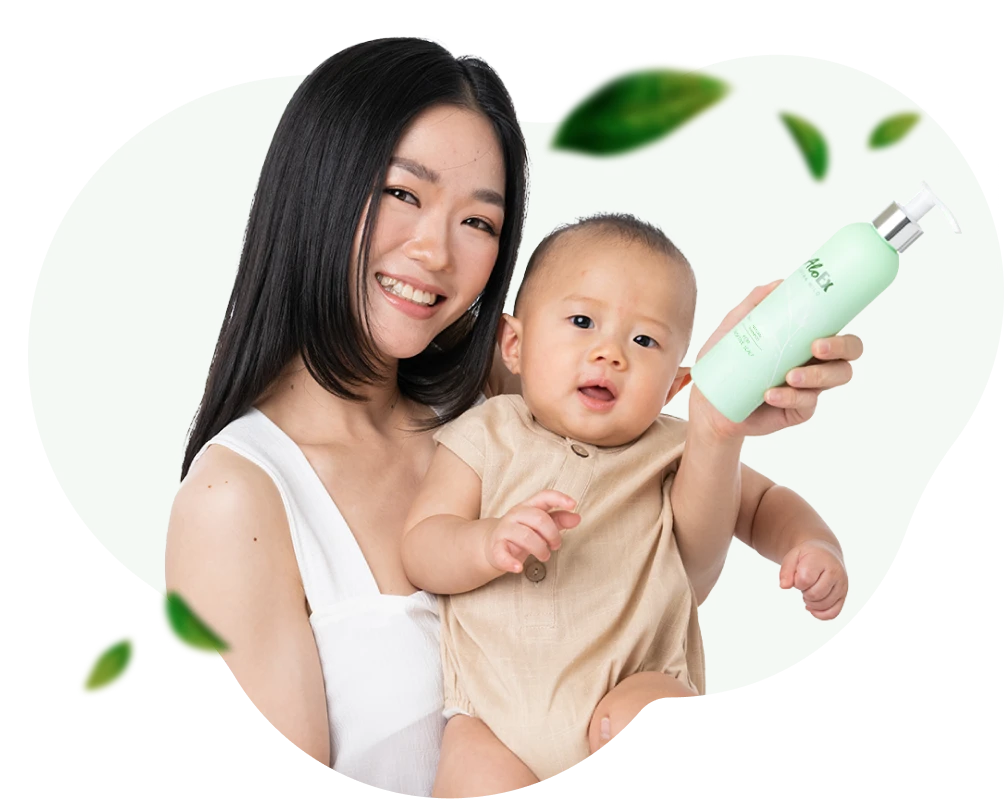
Gentle on Skin — Free from
Irritation-Risk Chemicals
Elevate your gentleness to the next level with AloEx Extra Mild Shampoo, a gentle formula designed for those with hair loss concerns. Free from harsh chemicals that may irritate the scalp, this shampoo is ultra-mild and ideal for even the most sensitive skin. Safe for use by those with delicate, allergic, or easily irritated skin.
- Registered with the Thai FDA.
- Reg. No. 50-1-6300042131






How to Use
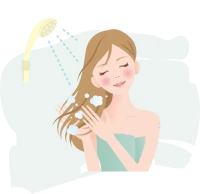
1. Wet hair and scalp with clean water.
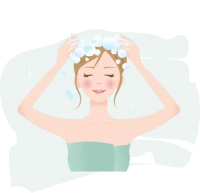
2. Apply AloEx shampoo evenly to hair and scalp.
3. Massage with fingertips for thorough cleansing.
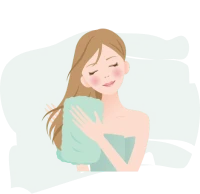
4. Rinse with clean water.
User Feedback on AloEx Products
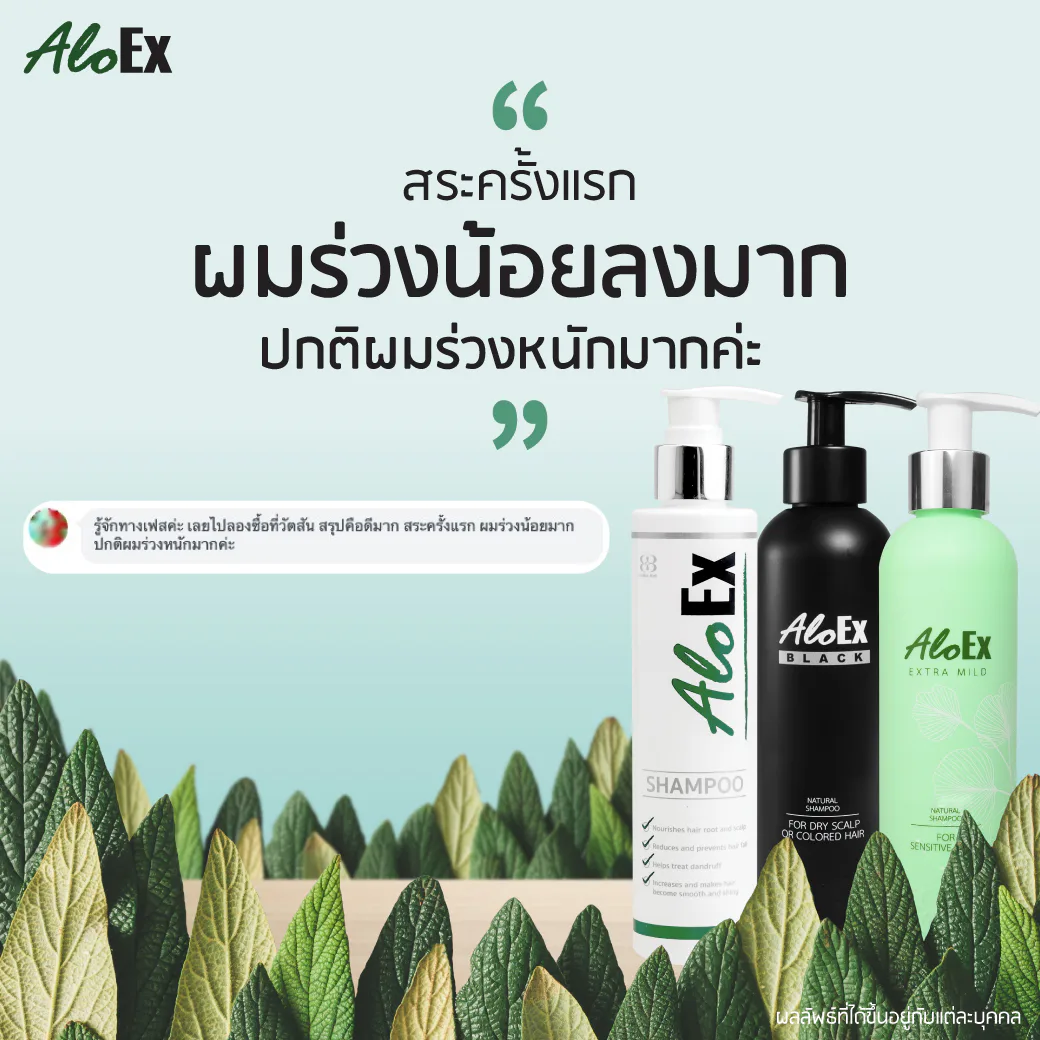
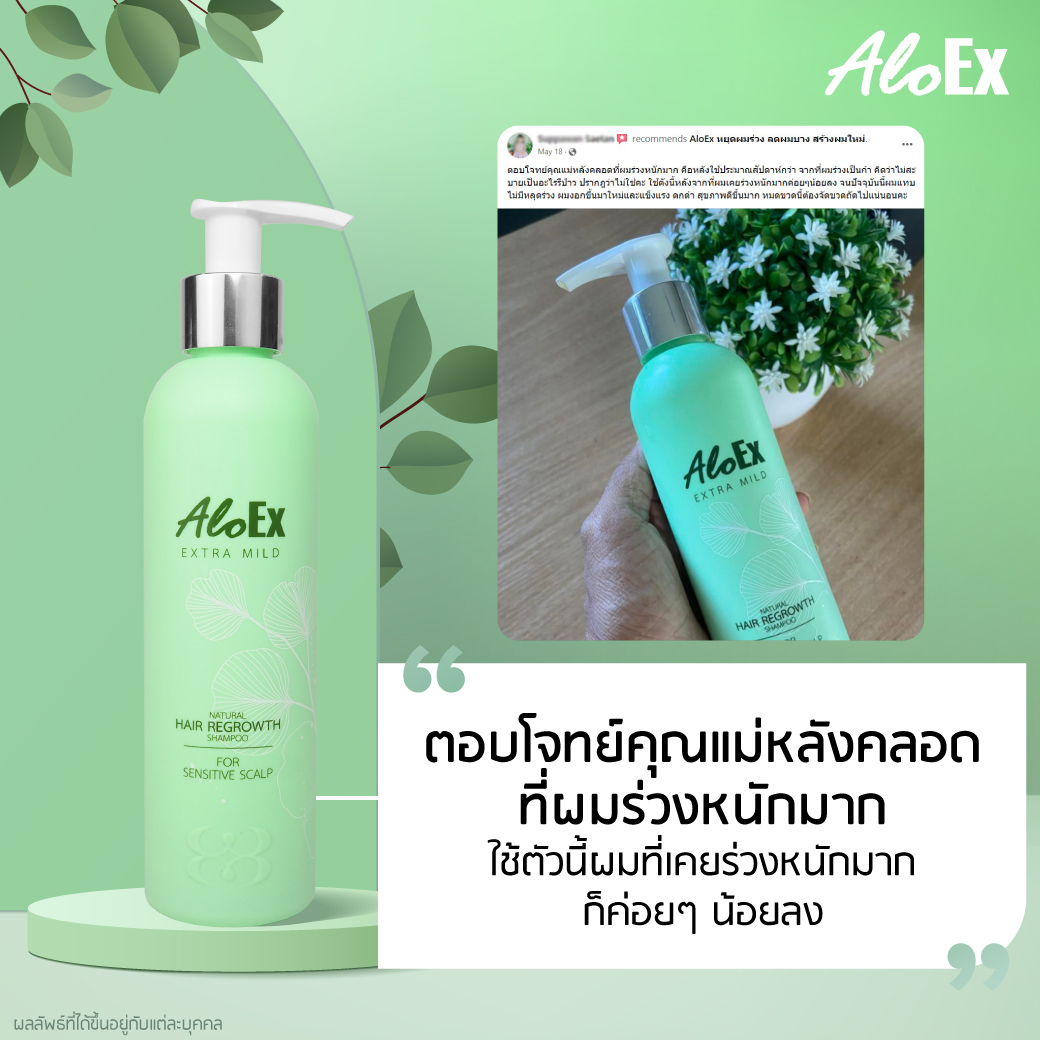
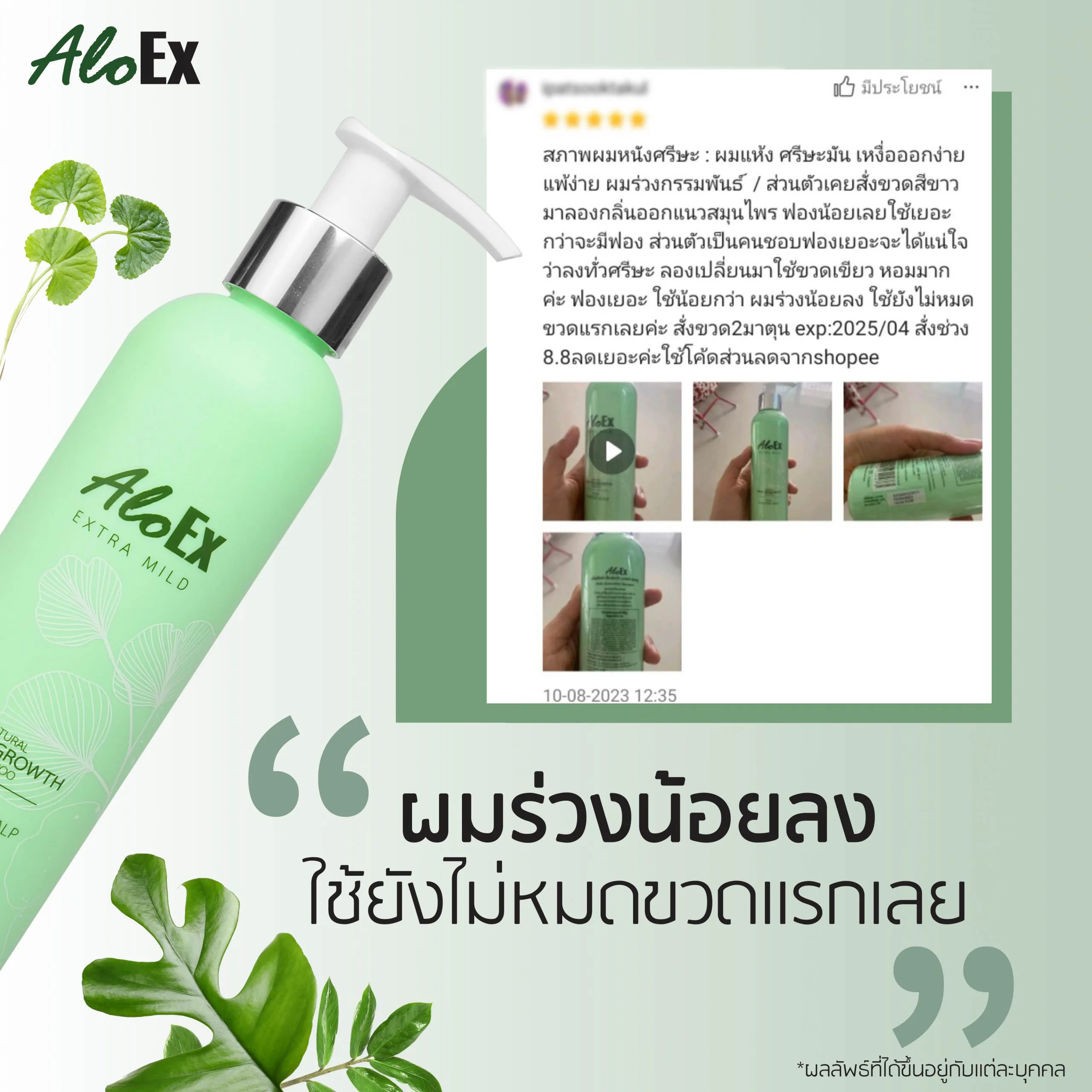
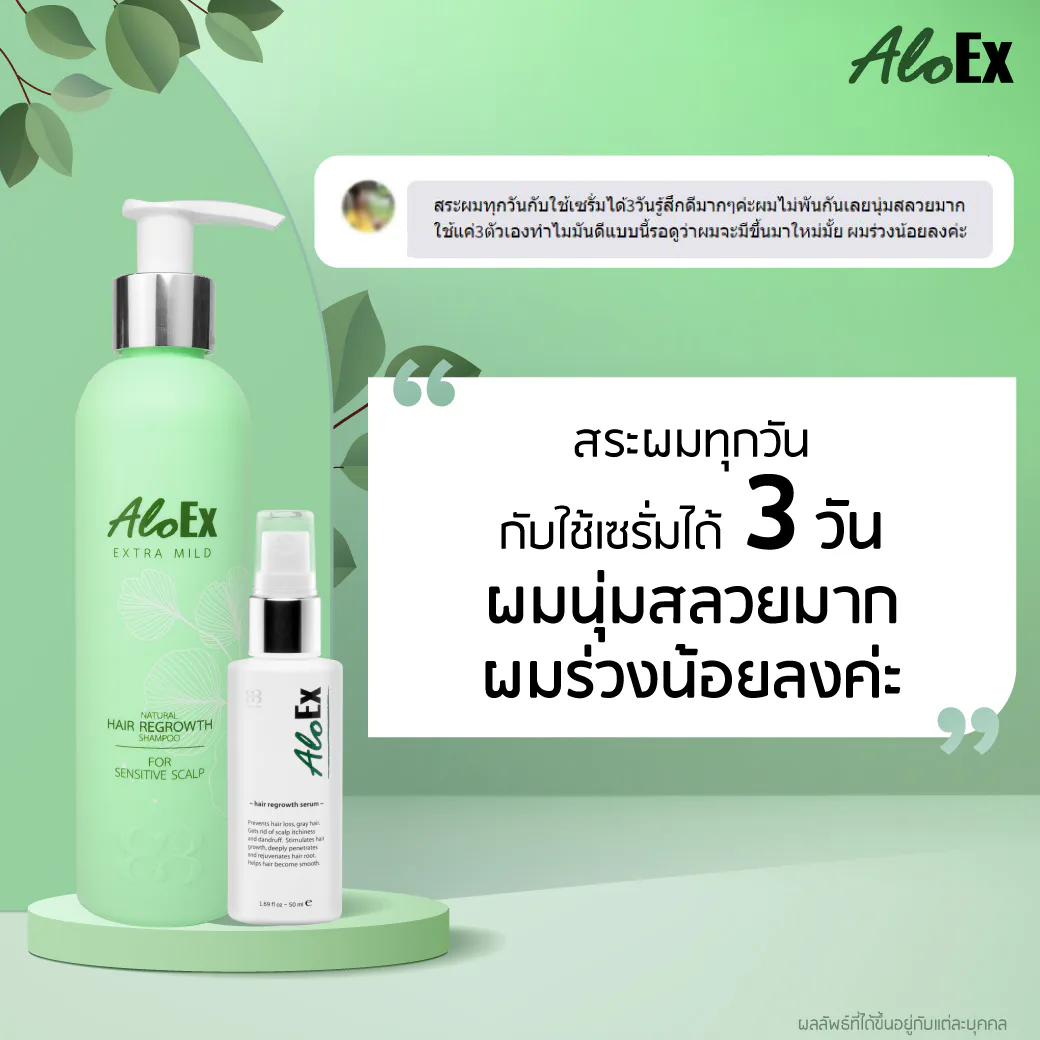
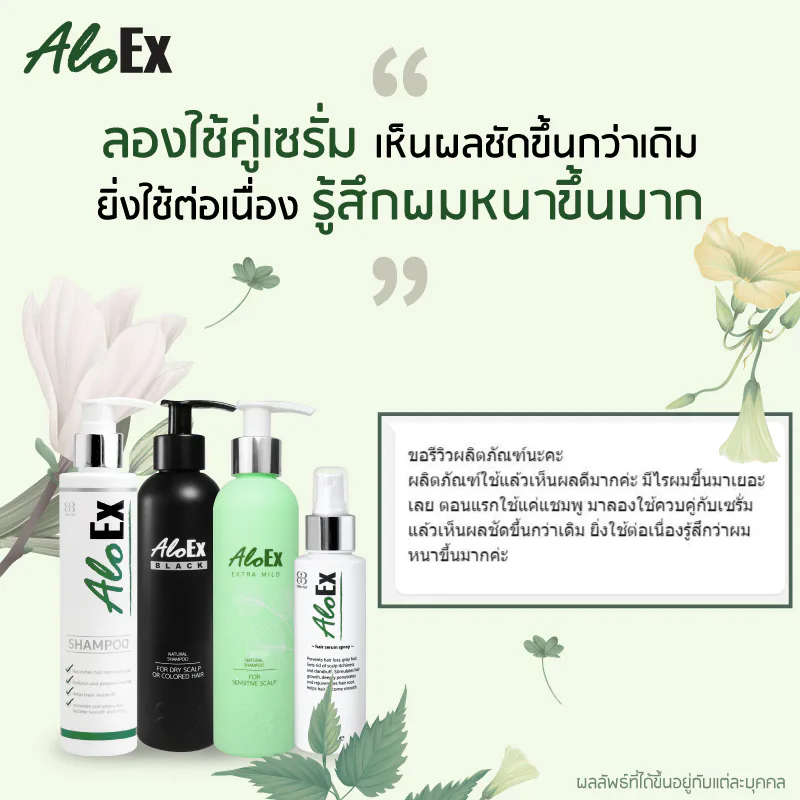
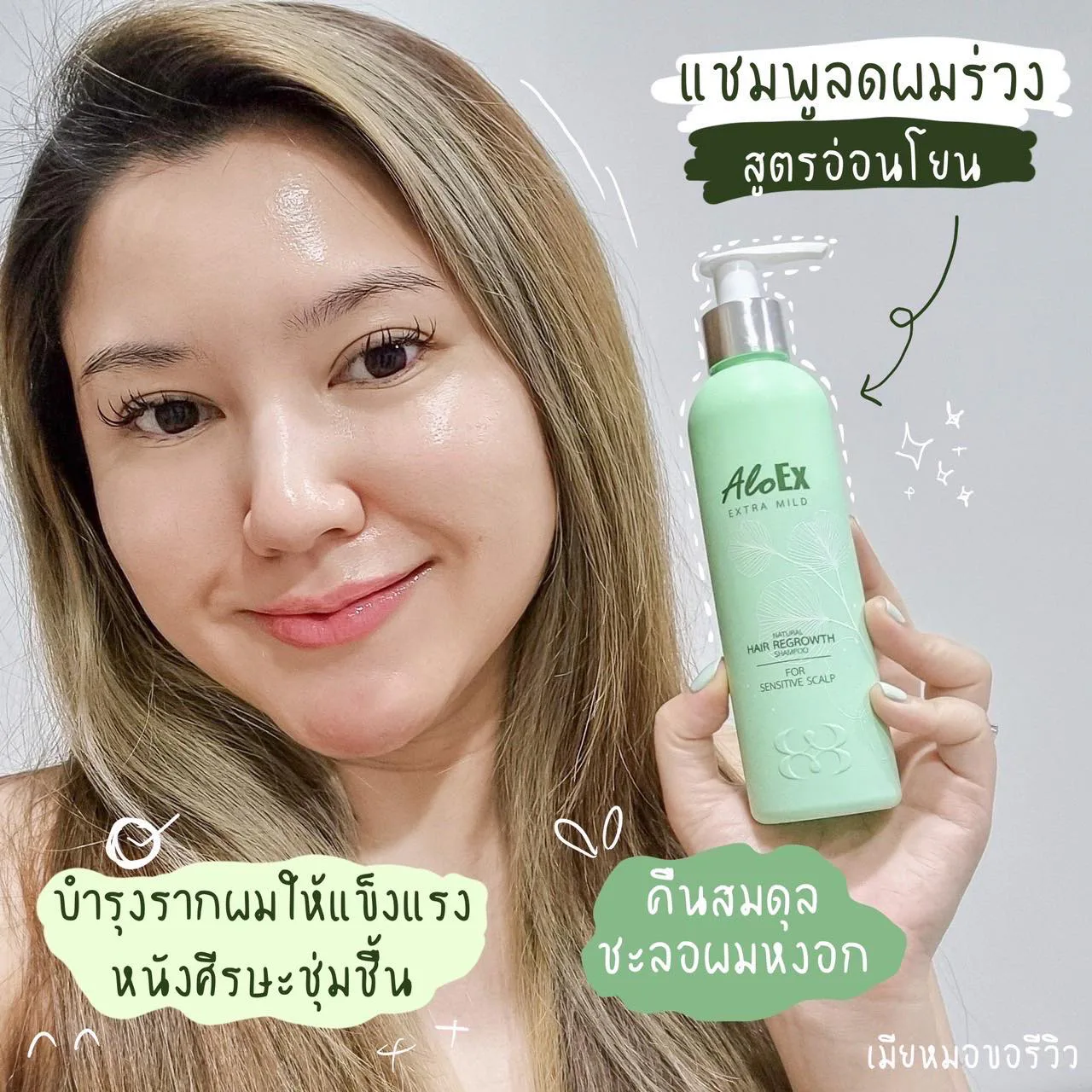
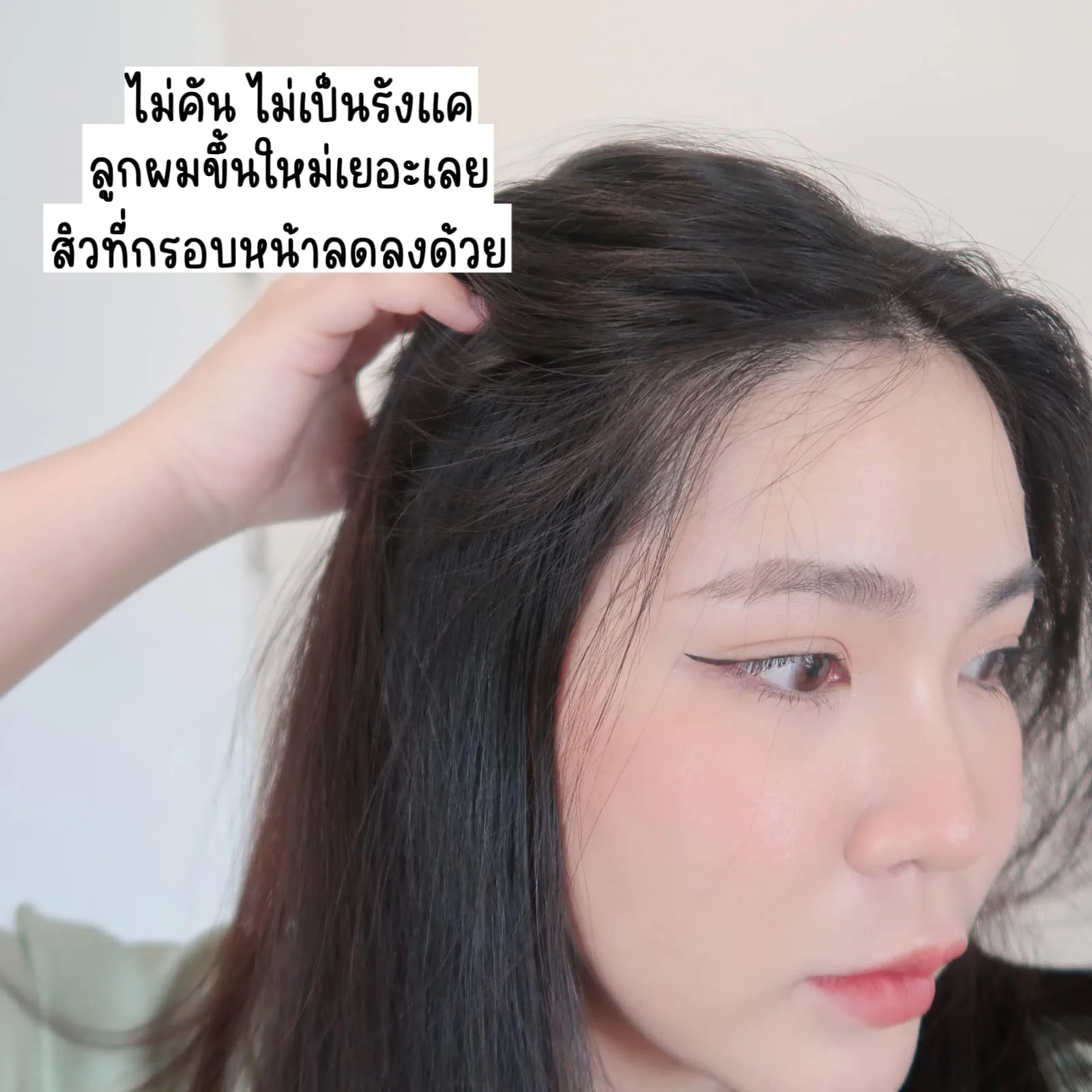
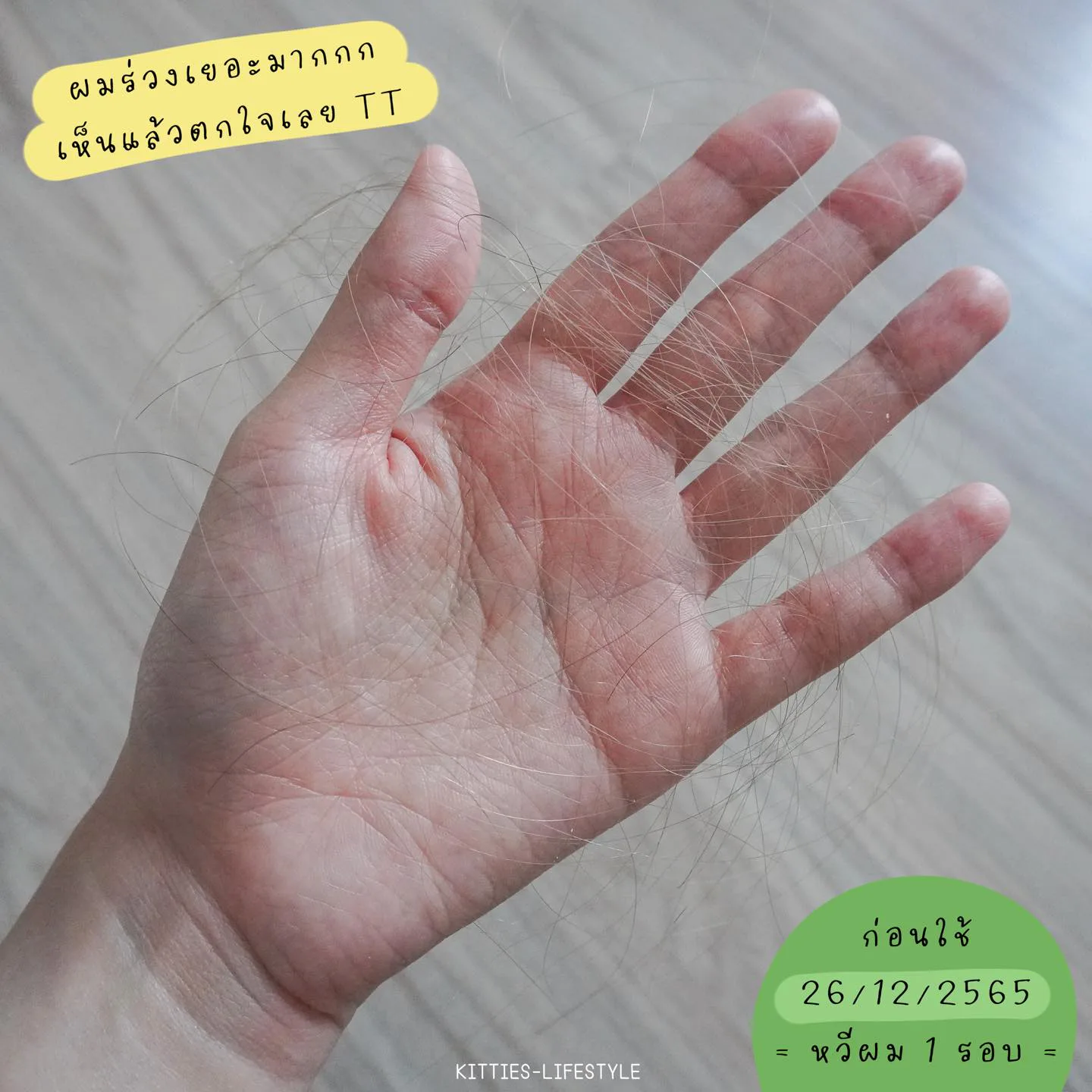
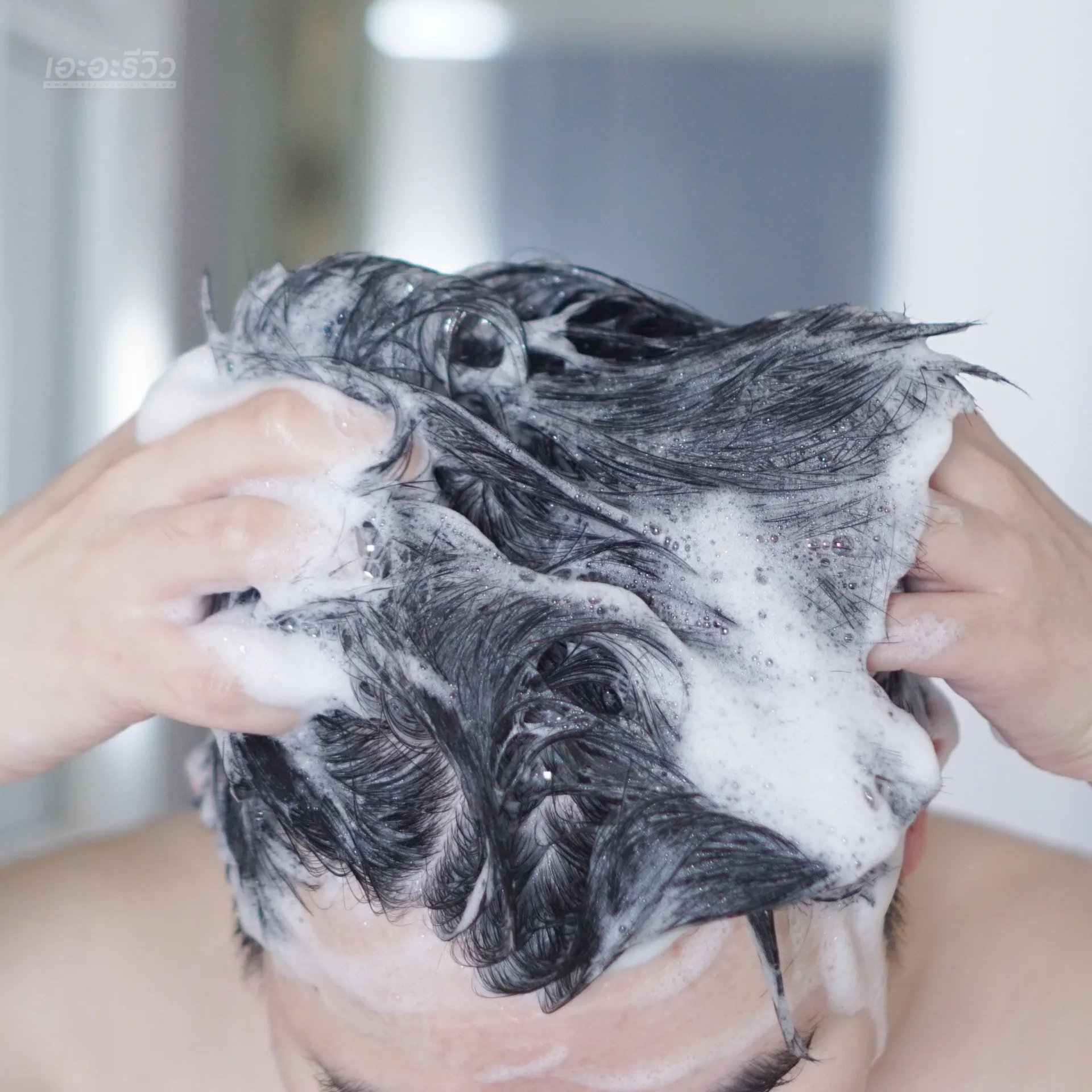
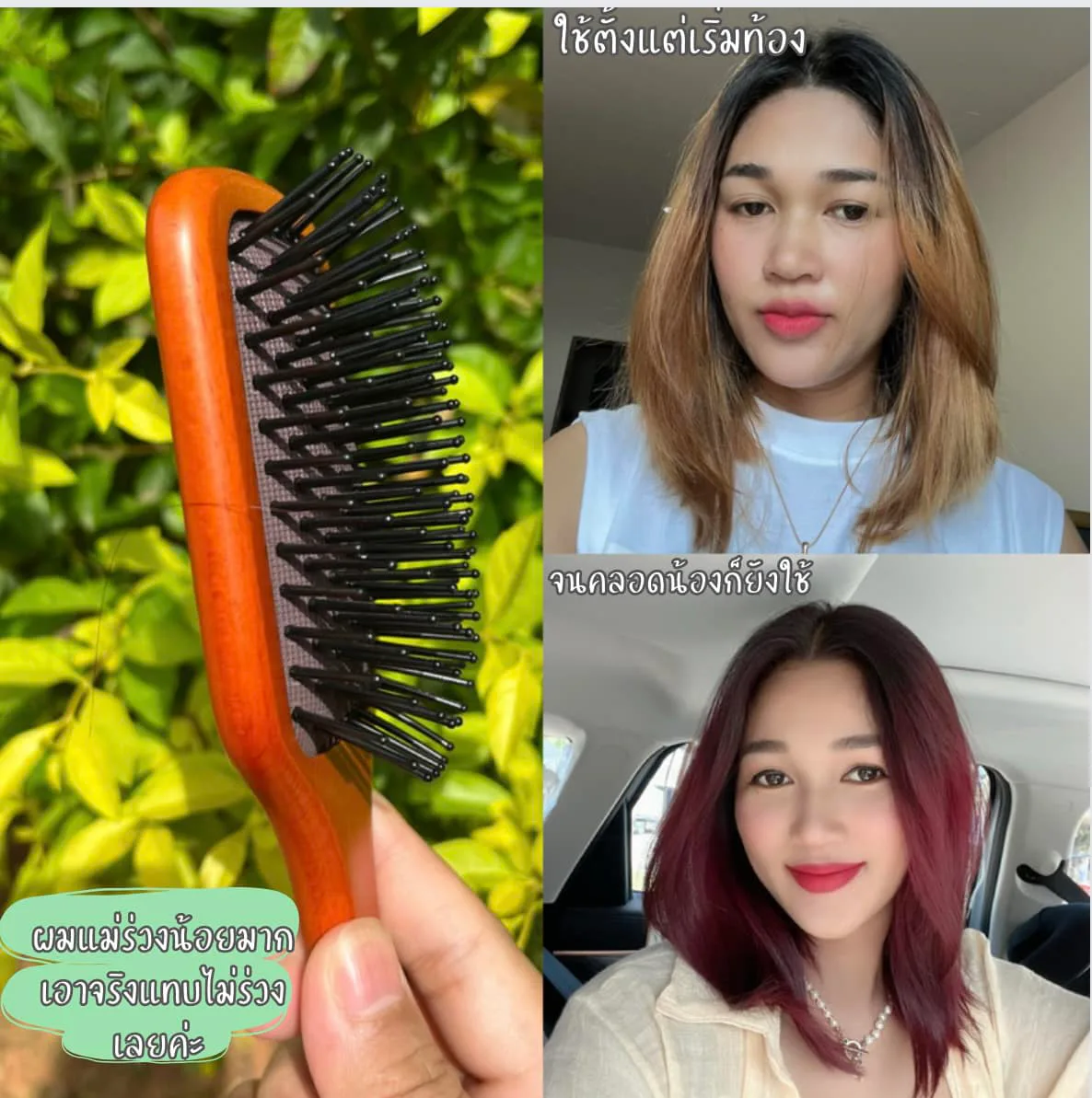
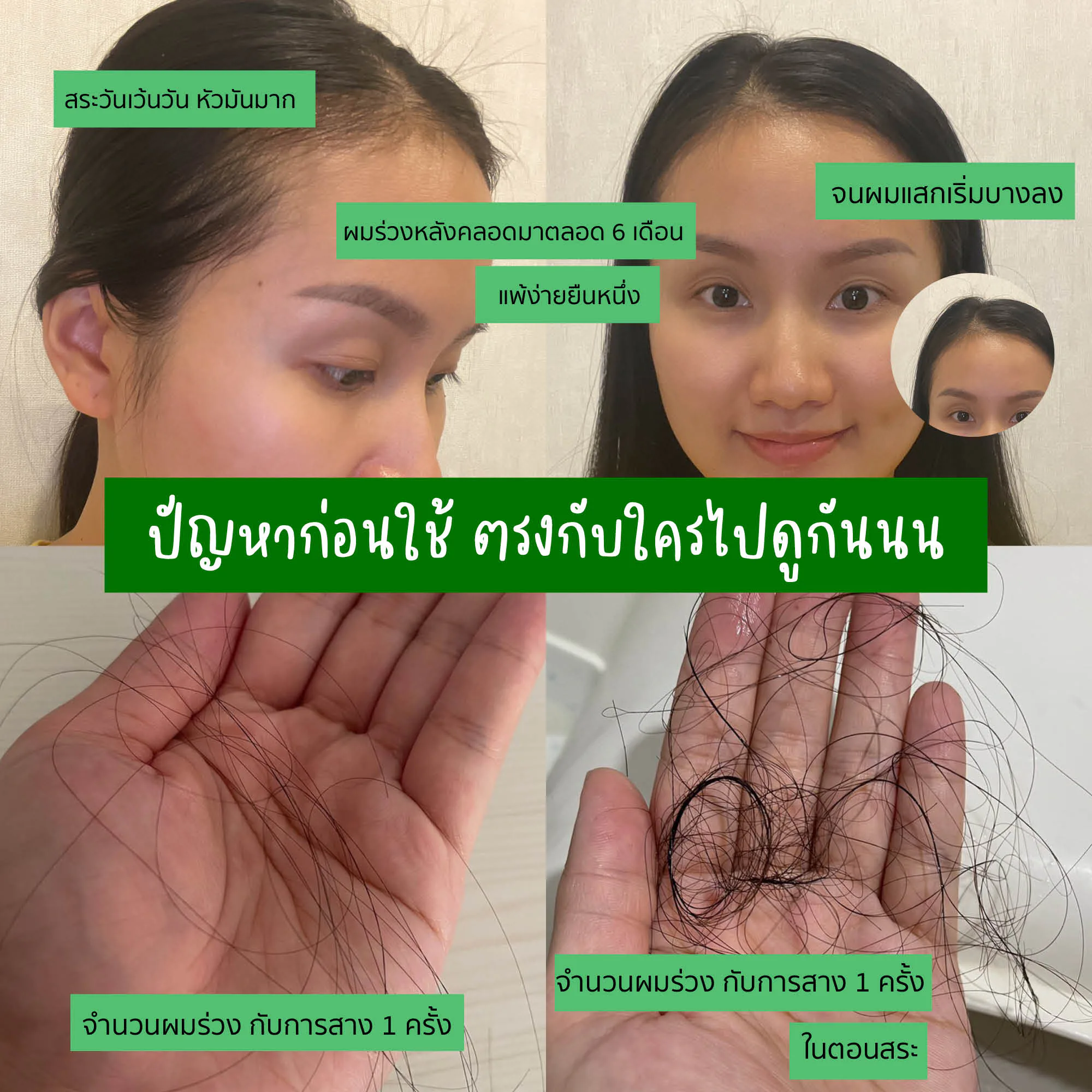
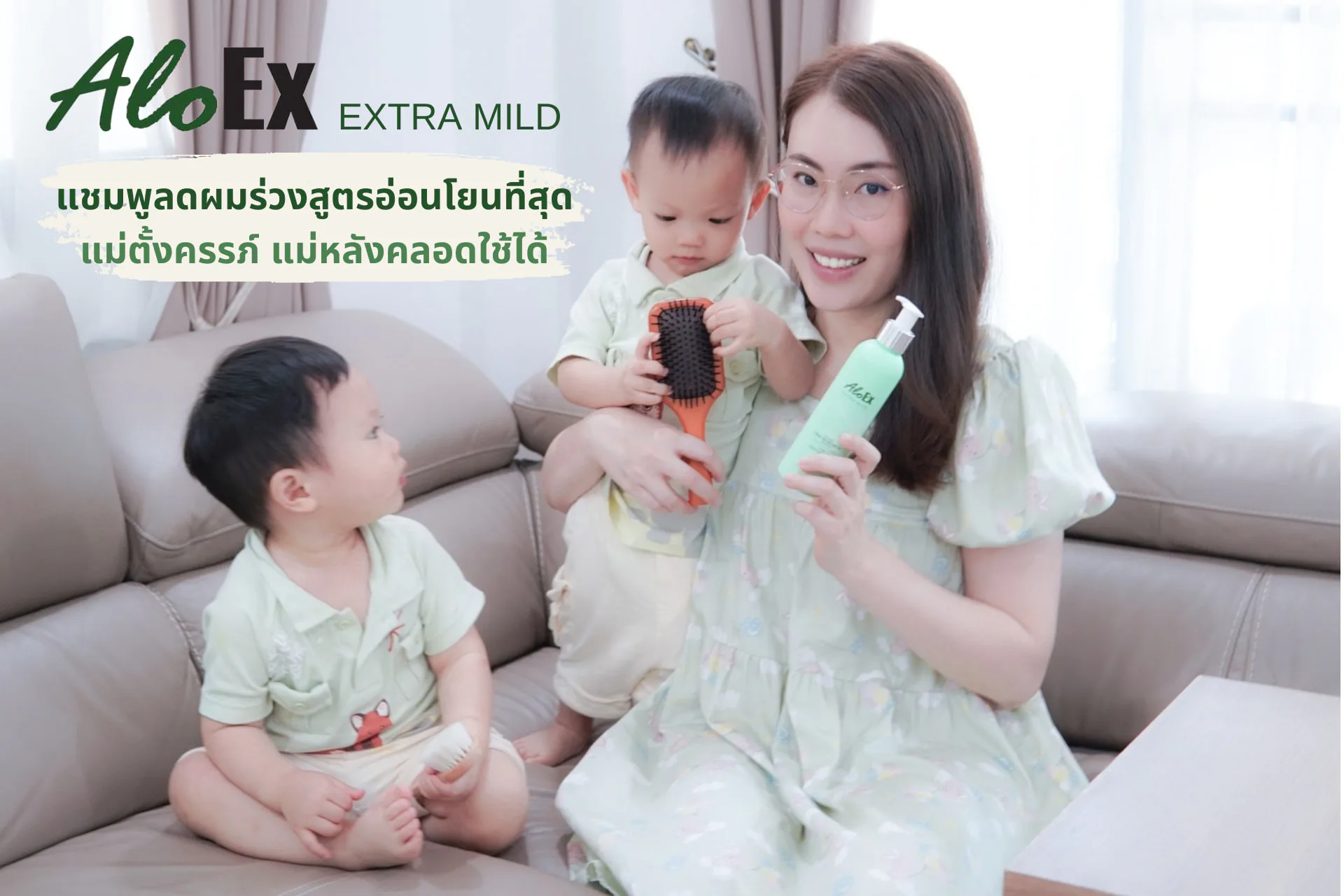
Real users confirm the quality. Experience a clean scalp and hair from the first use. AloEx Extra Mild Shampoo — a gentle formula that delivers satisfying results with regular, continuous use.

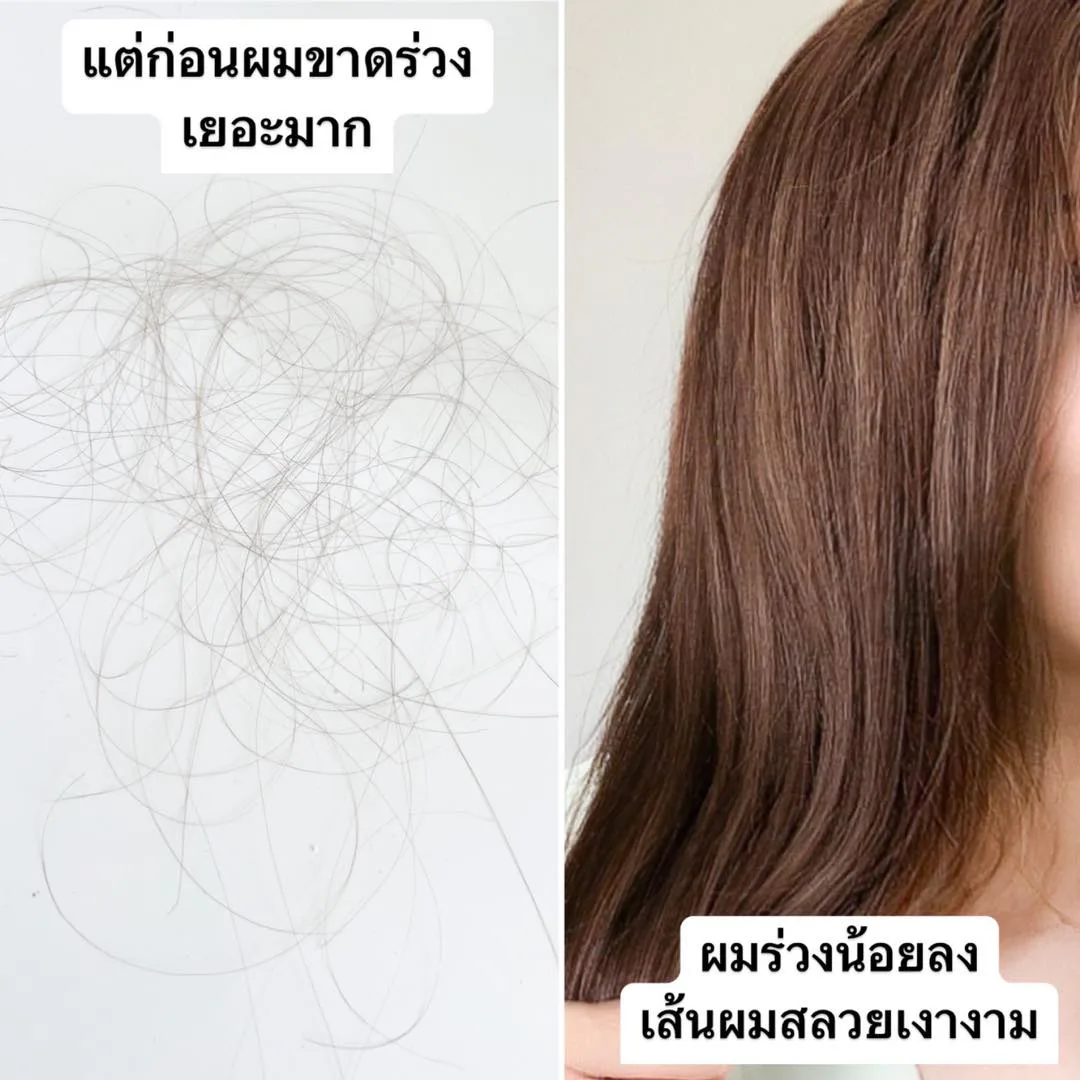
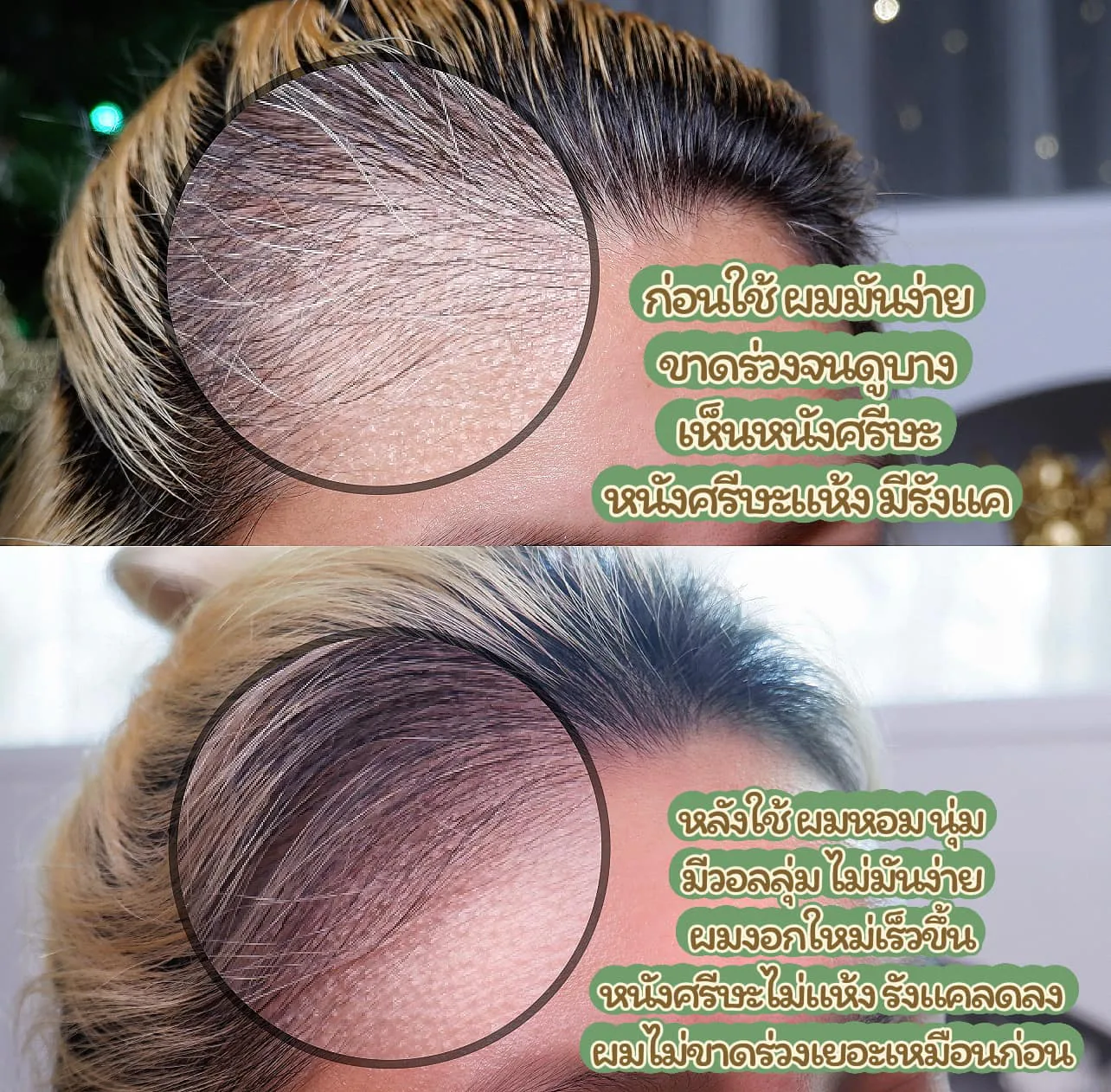
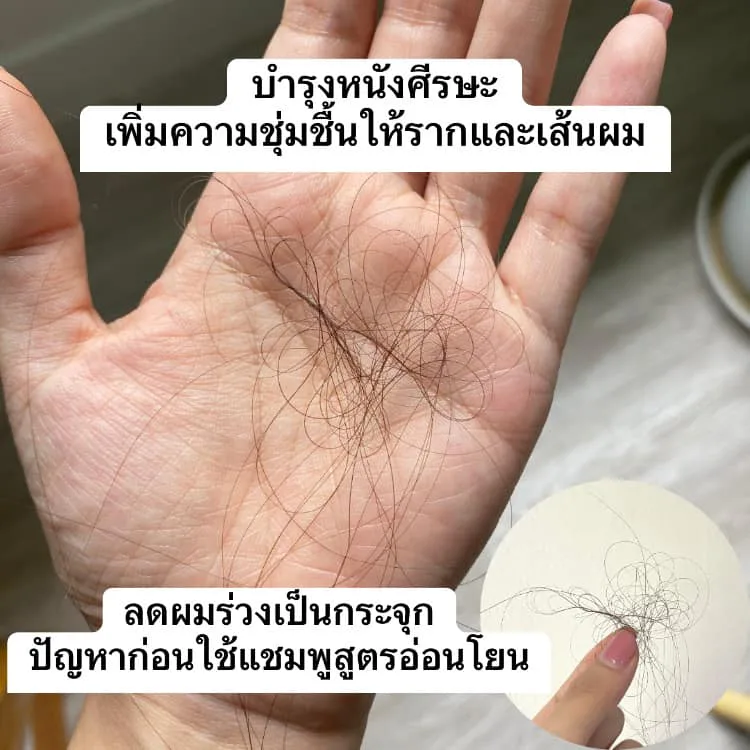
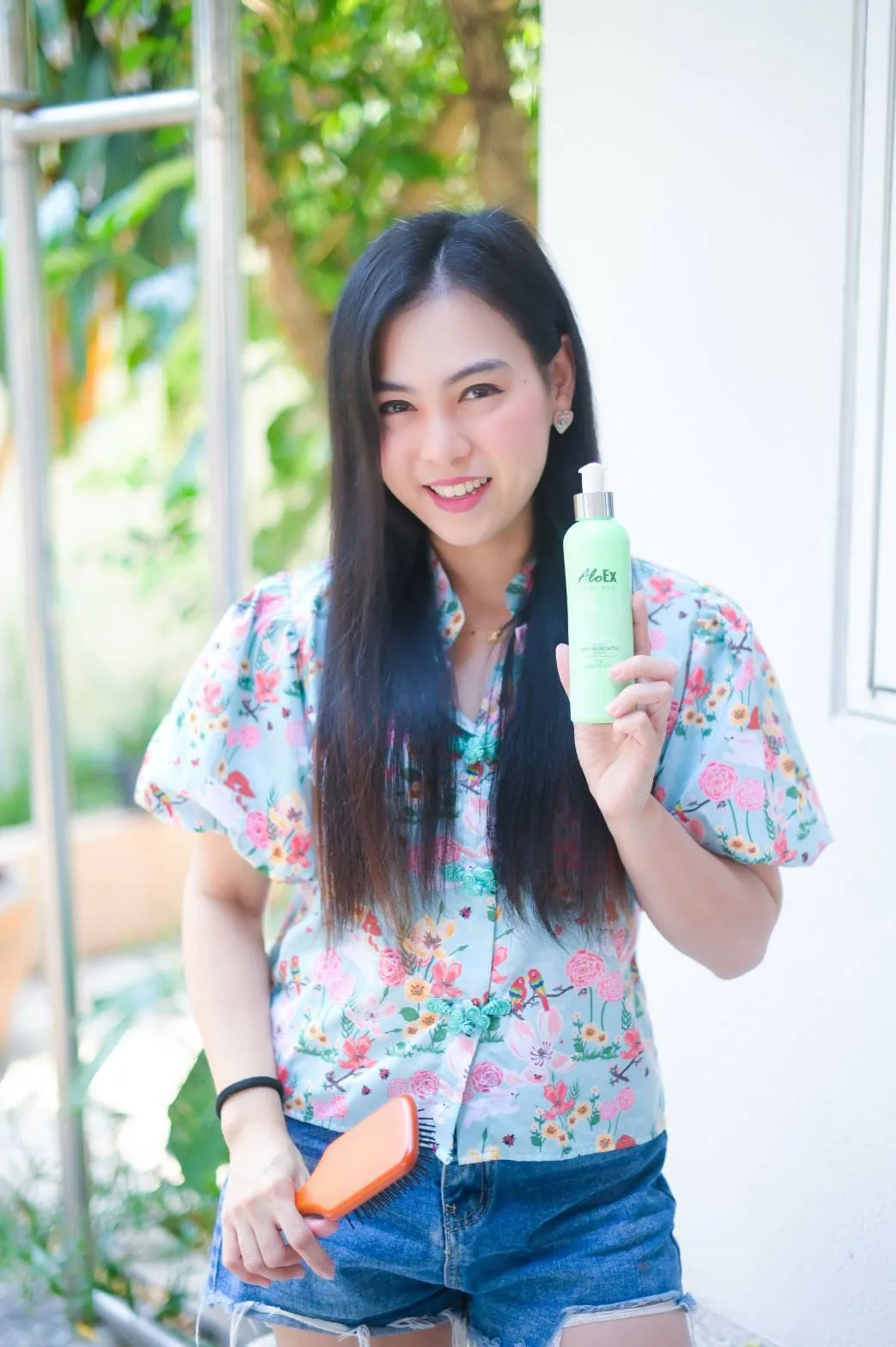
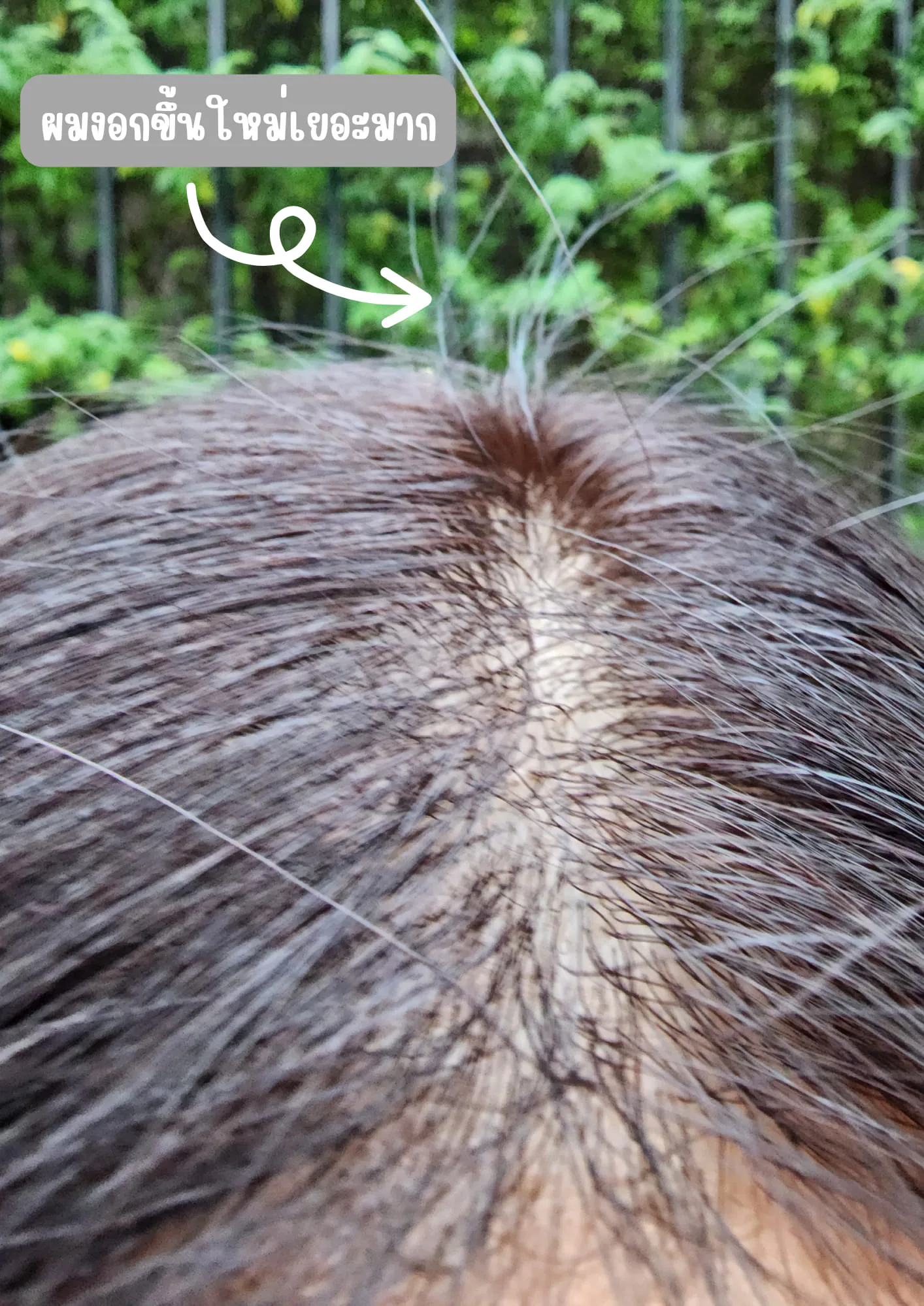
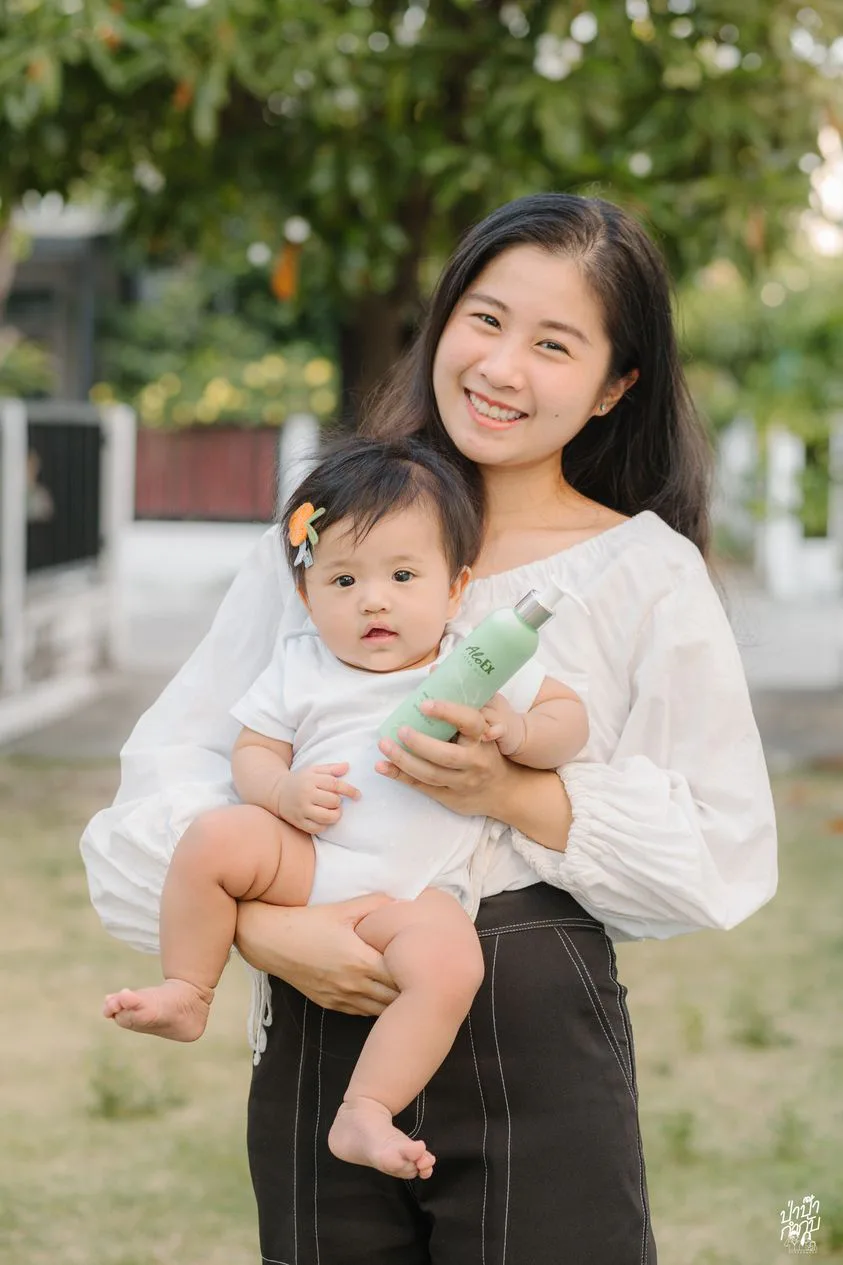
*Results may vary by individual
Order Online At
Related Products
-
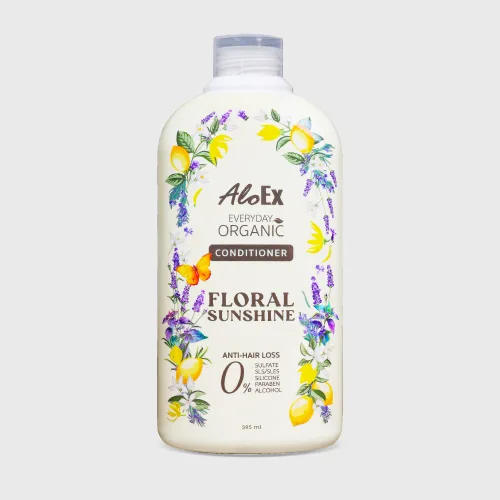
AloEx Everyday Organic Conditioner – Organic Herbal Conditioner for Daily Use
Organic herbal conditioner that reduces hair loss and restores softness and body. Features a fresh Floral Sunshine scent. Safe for daily use on all hair and scalp types.
-
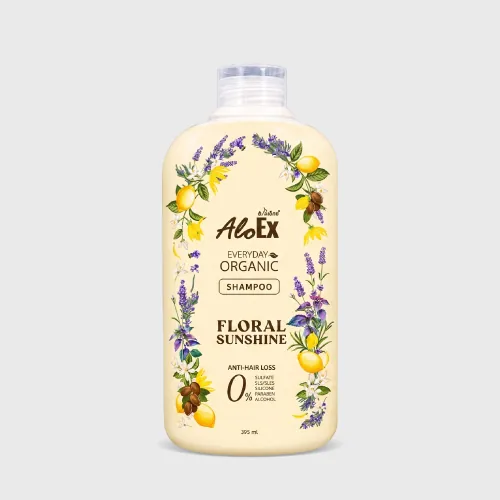
AloEx Everyday Organic Shampoo – Organic Herbal Shampoo for Daily Use
Organic herbal shampoo that revives dry, damaged hair — restoring softness and body. Adds moisture and a fresh Floral Sunshine scent. Safe for daily use on all hair and scalp types.
-
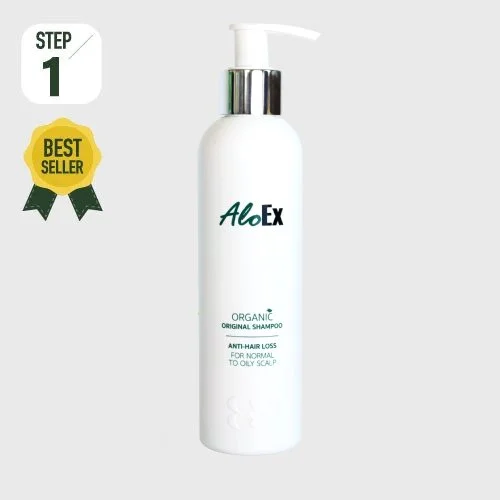
AloEx Organic Original Shampoo – Anti-Hair Loss Shampoo for Oily Scalp
Anti-hair loss shampoo for oily scalp and hair. Deeply cleanses impurities, excess oil, and chemical residue while nourishing scalp and hair with concentrated herbal extracts.
-
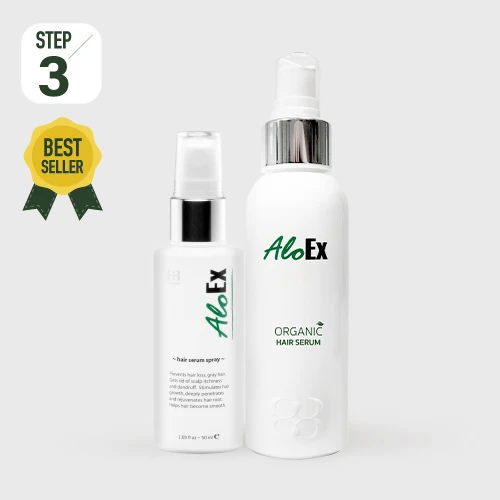
AloEx Hair Serum – Herbal Leave-In Hair Serum
Leave-in herbal serum for hair loss concerns. Nourishes scalp and hair while delivering moisture and key nutrients directly to the hair roots.
-
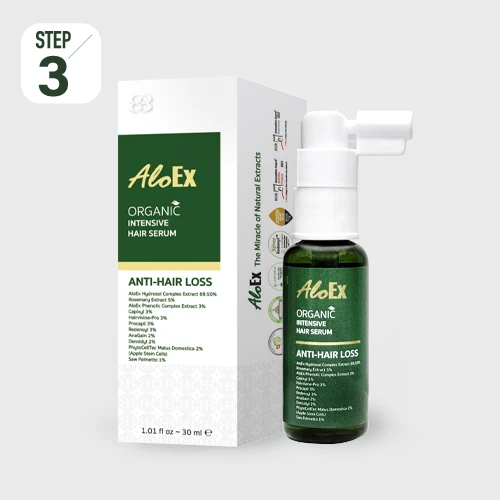
AloEx Organic Intensive Hair Serum – Naturally Thicker, Darker-Looking Hair
Organic serum for hair loss concerns. Strengthens scalp and hair, promotes thicker and darker-looking hair, and effectively reduces premature greying.
-
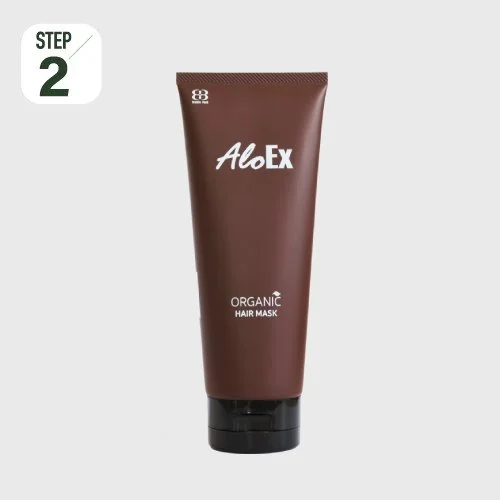
AloEx Organic Hair Mask – Silicone-Free Nourishing Treatment
Hair treatment that strengthens scalp and hair, helping to reduce breakage, thinning, and damage with concentrated herbal extracts.
-
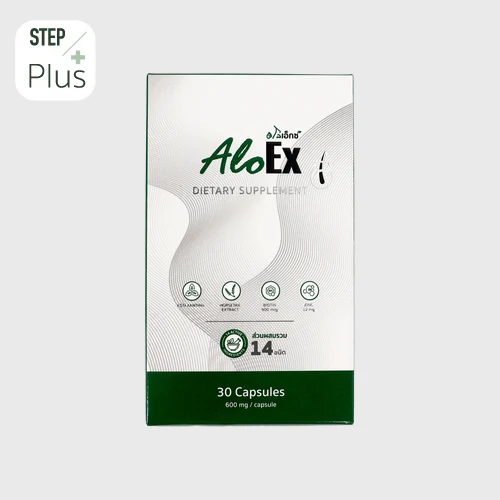
AloEx Dietary Supplement – Hair & Scalp Nourishment Capsules
Hair and scalp supplement in capsule form. Restores hair health from within using 3 natural formulas — Traditional Medicine, Modern Medicine, and Marine Extracts — all in one capsule.
Related Articles
-
 5 ways to treat postpartum hair lossWhat moms must know if they don't want chronic hair fall. Postpartum hair fall is a problem that occurs naturally, but it's worrying for many moms, because although postpartum hair fall isn't a dangerous symptom and doesn't happen to every mom, moms who face postpartum hair fall lose more hair than normal, so it may develop from postpartum hair fall into very heavy hair fall until the hair thins. Why does postpartum hair fall happen? Postpartum hair fall is caused by changes in the body's hormone levels. During pregnancy, the mom's estrogen rises very high, so hair grows well, is thick and healthy, and falls less. But after giving birth, estrogen levels drop sharply, and the hair that stopped falling during pregnancy re-enters the same hair-fall cycle and falls all at once, so postpartum hair fall occurs. Moms with postpartum hair fall may face the problem continuously for 1-6 months and then return to normal (depending on each mom). But we believe postpartum hair fall makes moms quite worried and stressed, because it can make hair thin. Moms can cope with postpartum hair fall with these ways to fix postpartum hair fall: Ways to fix postpartum hair fall — Cut your hair shorter — This is a way to fix postpartum hair fall that doesn't directly help reduce postpartum hair fall, but it can help hair fall less too, because caring for short hair is easier than long hair. Cutting hair short and caring for the hair at the same time helps reduce postpartum hair fall. Avoid coloring hair — No matter how much you want to color your hair beautifully, especially moms facing postpartum hair fall, it's even more not recommended, because the chemicals from coloring may go in and damage the hair and scalp, making the hair weak, and may make hair fall worse than before. Comb hair gently and avoid heat — Every time you comb, comb gently; if hair is tangled, we recommend using a wide-tooth comb or your fingers instead. Importantly, it's not recommended to comb hair when wet […]Read more »
 -
 5 tips for moms — reduce hair fall during pregnancy and after birthBecause of fluctuating hormones, moms can face hair fall during pregnancy or postpartum hair fall. 🤱🤰 It's another worry for moms. Although some moms don't lose much hair, others lose hair in clumps all at once, falling so much that hair looks thinner, which is quite frustrating. So the admin has put together 5 easy Tips to help reduce the problem of hair fall during pregnancy and postpartum hair fall, for moms. 🧡 1. Supplement and add nutritional value for moms with hair fall during pregnancy or postpartum — Diet is an important matter that can't be overlooked. 🍴 You should eat beneficial food, eat all 5 food groups so the body gets complete nutrients, and eat foods with natural iron, such as meat, egg yolk, liver, fish, green leafy vegetables, etc. For pregnant moms, you might consult your doctor further, for the sake of mom and the little one in the womb. 2. With hair fall, comb gently and avoid heat — Girls know, everyone knows, that you shouldn't comb hair when wet! Because wet hair is so fragile, weak and easily broken. You should wait until it's dry before combing. If you can't wait and have tangled hair, use a wide-tooth comb […]Read more »
 -
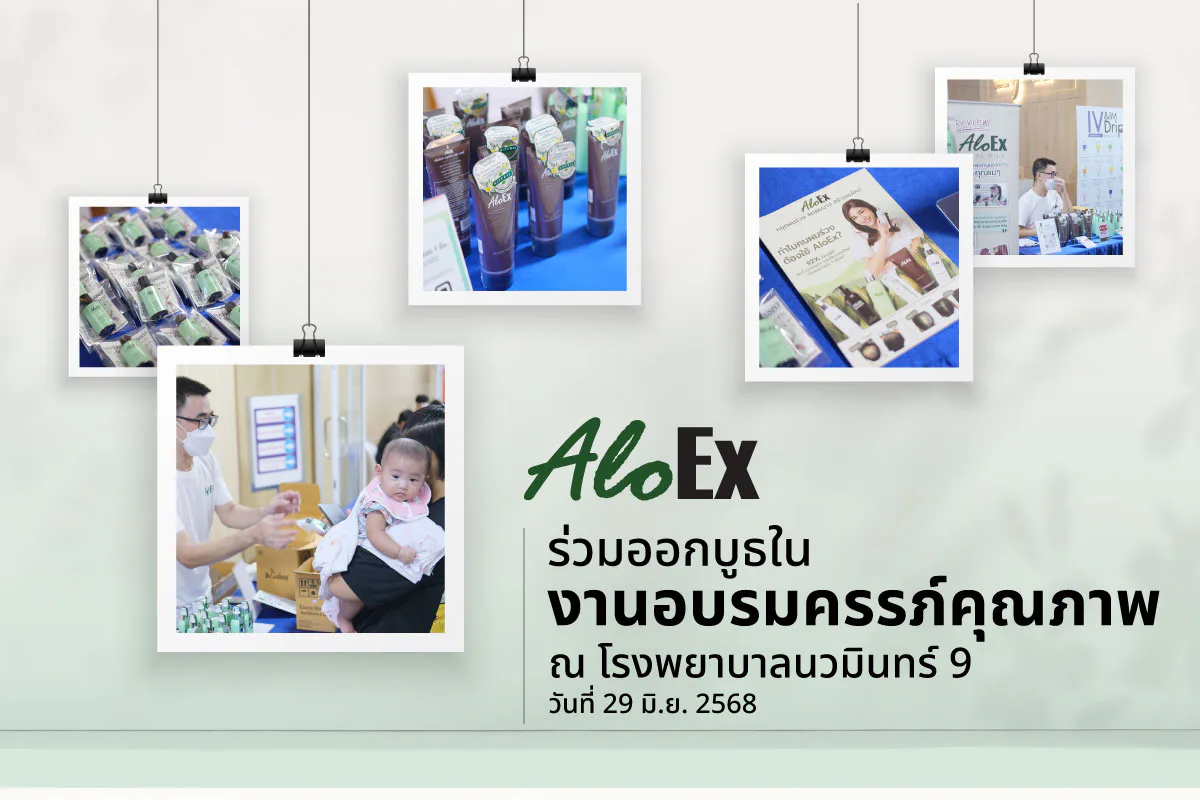 AloEx participated in the “Quality Pregnancy Training Event” at Nawamin 9 Hospital.Quality Antenatal Class — the event was filled with a warm, friendly atmosphere. Many first-time fathers and mothers showed up eagerly to attend the training, with enriching activities that were thoughtfully organized and covered every aspect of prenatal preparation.Read more »
 -
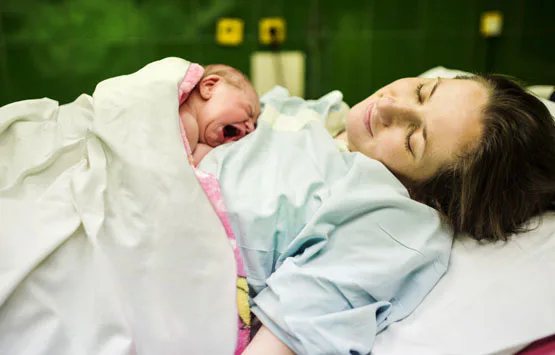 Coping with postpartum hair lossPostpartum hair fall is experienced by almost every new mum. During pregnancy, oestrogen levels are high, resulting in dense hair growth. But after delivery, these hormones drop rapidly, causing hair follicles to weaken and produce less hair — so a great deal of hair is shed when combing or washing. However, hair will return to strength and grow back normally 6–12 months after delivery. If new mums are worried about this hair fall, they can address it by choosing hairstyles that make hair appear thicker, such as a loose updo, or by using products that help balance hormones at the hair follicle level, nourish and strengthen hair roots, and stimulate new hair growth — such as AloEx shampoo and serum made from natural herbal extracts. This alone can restore a healthy scalp and beautiful, healthy hair for new mums.Read more »
 -
 The hair-loss saga of all mothersAs a young woman who colours and styles her hair a lot, hair fall is no surprise. But did you know that once you become a mother, hair fall problems continue? Let's look at when and why it happens. Hair fall before birth — in reality, hair fall during pregnancy is not a problem for every mother. In fact, during pregnancy high oestrogen levels can actually make hair look fuller and darker than before. However, hormonal changes can cause the hair to become oily or dry, making hair care during pregnancy quite challenging. Some mothers also experience increased sensitivity during pregnancy, which can lead to hair breakage and fall. Another cause of hair fall during pregnancy is insufficient iron intake, which means the body cannot adequately nourish hair — leaving it weakened. Hair fall after birth is something that happens to every mother, because oestrogen drops rapidly after delivery, causing heavy hair shedding. The hair that falls out is the hair that should have shed during pregnancy but was held in place by high hormone levels. Once the baby is born and hormones drop, all that retained hair sheds at once. This heavy shedding lasts for a period before returning to normal. Although it is natural, the amount of hair that falls out can be alarming. Stress is another cause of hair fall, and the stressors mothers face are many and varied — financial worries, household issues, concerns about the children, the husband, and personal matters. Sometimes you don't want to be stressed, but you just can't help it. As stress builds, hair starts to fall more heavily because stress weakens the immune system, disrupts hormones, causes some hair follicles to go dormant and shed, and some people even pull their hair when stressed — causing even more fall.Read more »
 -
 Stop the hair-fall worries of every momStanding strong on gentleness and safety! AloEx gives confidence to mums experiencing #HairFallDuringPregnancy and #PostpartumHairFall, with a collection of reviews from mums who have confirmed that AloEx genuinely reduces hair fall, giving peace of mind and safety for both mum and baby. Safety assurance to give mums confidence every time they use it: Natural herbal extracts. Gentle on sensitive and easily irritated skin. No SLS, Silicone, Paraben, or Fragrance. Certified by the Thai FDA and produced in a GMP-standard facility.Read more »
 -
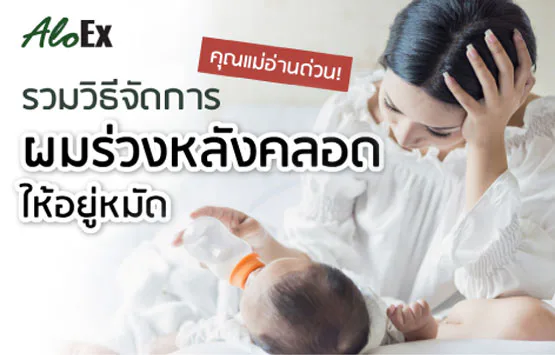 Moms, take note! Everything you need to know about postpartum hair loss: How to care for it, why it happens, and whether anti-hair loss shampoo works.Answers to every question mothers should know — to prepare for and manage post-birth hair loss. What causes post-birth hair loss? How do you care for it and prevent it? Is post-birth hair loss dangerous for mothers? Today, find all the answers together with AloEx.Read more »
 -
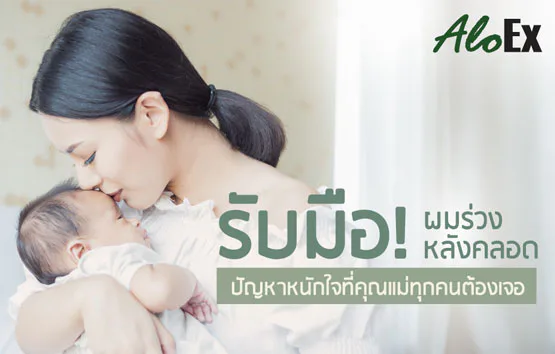 Dealing with it! Hair loss after childbirth: a major concern for every mother.New mothers often face the frustrating problem of heavy hair fall. For first-time mothers especially, the worry and stress over hair fall can be intense — sometimes it continues heavily for months until hair noticeably thins. Many mothers wonder why so much hair is falling out, what is abnormal, and whether it is dangerous. Let's clear up this confusion and find solutions together with AloEx. Post-birth hair loss — a natural occurrence for mothers. If you're a mother experiencing post-birth hair loss, don't panic — it is a natural phenomenon that happens to all mothers, caused by hormonal fluctuations. Normally we shed hair every day, but during pregnancy the body produces more oestrogen, and some pregnant mothers have healthy, lustrous hair with almost no shedding for the entire 9 months. After giving birth, however, the oestrogen that was high during pregnancy drops sharply. The hair that was in the resting phase and barely shed for over 9 months returns to its normal cycle all at once, shedding together and making post-birth hair loss look very heavy. Post-birth hair loss does not last forever — after about 6 months it will ease. Self-care tips for post-birth hair loss — eat a balanced diet of all 5 food groups so the body receives sufficient nutrients to feed the scalp and hair roots; avoid combing or pulling hair forcefully, especially when wet, as wet hair is weaker than normal; avoid applying heat to hair such as hot blow-drying or straightening.Read more »
 -
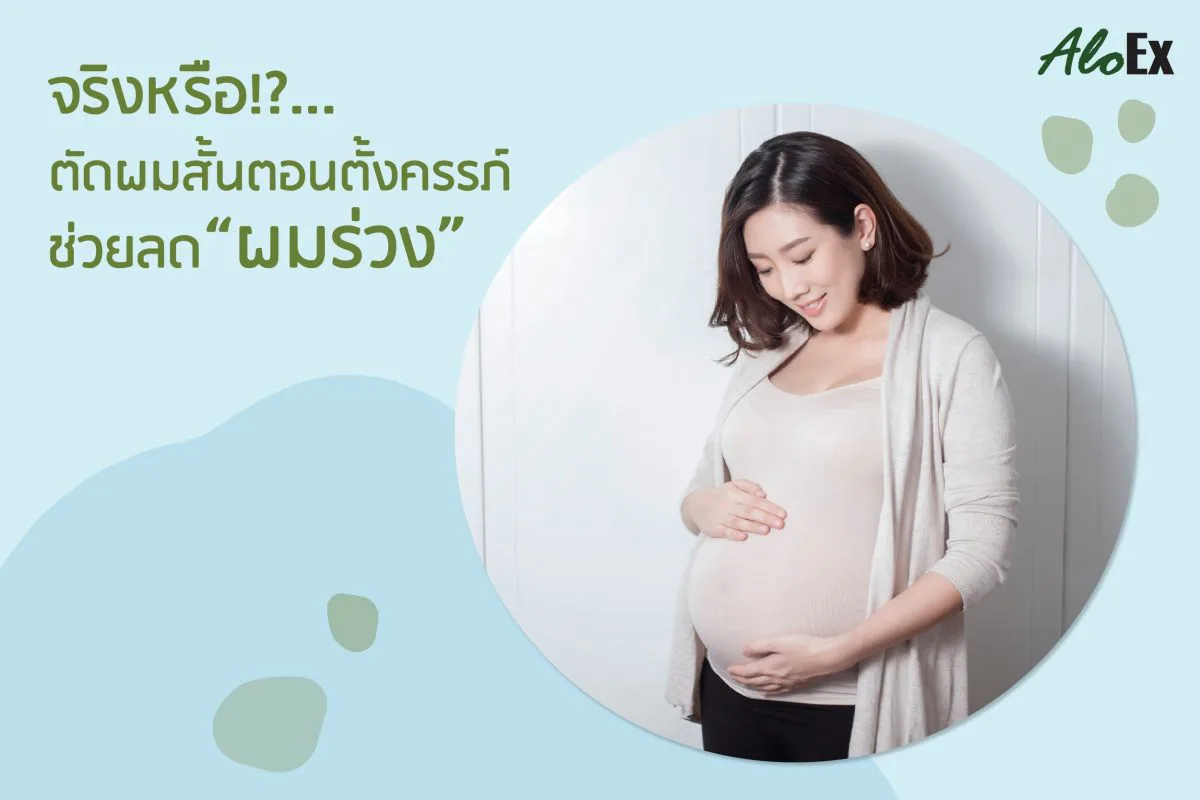 Really? Cutting hair short during pregnancy reduces 'hair fall'?Have you ever heard the saying that during pregnancy you should cut your hair short so it falls out less? And seeing that most expectant mothers tend to have short or not-very-long hair during pregnancy makes it seem even more believable. But does cutting hair short truly help reduce hair fall!? Hormones change, so does hair. During pregnancy, the hormones in a woman's body change. Estrogen levels rise very high for an extended period, making hair look even thicker and darker, because this hormone slows down hair shedding. The only issues are oily or dry hair due to hormonal changes. But if you experience hair fall when it normally doesn't fall, it indicates that the body is low in iron, causing insufficient nourishment of the hair roots. Cutting hair short can help reduce hair fall, though not 100%. Cutting hair short during pregnancy can help reduce breakage and hair fall, because the longer the hair, the more weight the hair roots have to support, and nutrients have difficulty reaching, making hair weak and prone to falling. Importantly, during pregnancy when hair is oily or dry due to hormonal changes, keeping hair very long can make it harder to manage and can negatively affect the hair. Cutting hair short makes it easier to manage. Heavy hair fall after childbirth — short hair helps too. Before childbirth it's not so bad… but after childbirth the shedding is very heavy during the first 6 months, or longer for some, which is normal for all mothers. After giving birth, estrogen levels drop drastically, causing a lot of hair to fall — so much that wherever you sit you find shed hair. If hair is long it's very easy to notice how much is falling, which worries some people. Cutting hair short is another good option that makes managing hair easier and makes the amount of fall seem less compared to long hair. Nourishment options beyond cutting short.Read more »
 -
 Pregnant moms, read this! How to keep pregnancy hair-loss under controlPregnant moms, read this! How to keep pregnancy hair-loss under controlRead more »
 -
 Why is hair loss so severe after giving birth?From the previous installment, we discussed hair fall caused by pregnancy — that pregnancy-related hair fall is actually divided into two types: 'hair fall during pregnancy' and 'hair fall after childbirth.' Hair fall during pregnancy is caused by an iron deficiency in the mother's body, resulting in insufficient nutrients reaching the hair roots. Today we will learn about the hair fall that occurs after giving birth. 'Hair fall after childbirth' occurs because after delivery, estrogen levels drop suddenly and dramatically. This can be seen in almost all mothers, as it is the body's natural mechanism for rebalancing hormones. Estrogen is the female sex hormone that helps slow down hair shedding. During the period when the mother's body is preparing for pregnancy, it produces more estrogen. At the same time, the placenta also produces this hormone, causing estrogen levels to be much higher than normal — so hair sheds slowly and less. But after the baby is born, hormone levels return to normal, and the hair that had not yet shed due to the effects of estrogen finally begins to fall. Therefore, after giving birth, mothers often find an unusually large amount of hair shedding. This post-childbirth hair fall typically begins about 2–3 months after delivery and continues for 6–12 months, at approximately 100–300 strands per day, with the most severe period around months 3–4 after delivery. Post-natal hair fall is quite common because it is the body's natural hormone-rebalancing mechanism, while hair fall during pregnancy is only found in some mothers who have an iron deficiency. At this point, many of you may be wondering — how can AloEx help? AloEx helps reduce post-natal hair fall. [...]Read more »