[weglot_switcher]

Interesting Articles

3 easy ways to restore shine to your hair

3 easy ways to restore shine to your hair

Damaged hair, lack of shine, or open cuticles are all problems that make women lose confidence — frizzy hair that is difficult to style. Today AloEx shares 3 easy methods to fix damaged hair that you can do at home. 1. Add shine by doing a hair mask. If you dislike hair that is frizzy and loses its shine after being exposed to light, we suggest a way to create shine using natural ingredients: blend strawberries with 1 tablespoon of mayonnaise, then mask your hair for approximately 5–10 minutes and rinse out. Just this simple step will help transform frizzy hair into shiny hair. 2. Use conditioner — reduce static. The problem of frizzy hair due to static electricity from dry weather conditions or in cold air-conditioned rooms with low humidity causes hair to lose moisture and become dry and frizzy. A simple solution is to use conditioner after every wash to restore moisture to hair, help reduce static, prevent tangles, and make hair easier to comb. 3. Finish with a cold water rinse to help close the cuticles for smoothness. Did you know that ladies who like to shower with warm water will find their cuticles open, making hair prone to damage? Therefore, the best solution is to use cold water to rinse out the shampoo foam in the final rinse, to close the cuticles completely again. You will then find that your hair is softer and reflects more light. Now that you know these simple ways to manage your own hair, don't forget to use AloEx to help stop hair fall, reduce hair thinning, and regrow new hair for your hair, so that your hair becomes even healthier. With thanks for the information from http://bit.ly/1SvL8UM

Read more »
Take on postpartum hair loss — the worry every mother faces

Dealing with it! Hair loss after childbirth: a major concern for every mother.

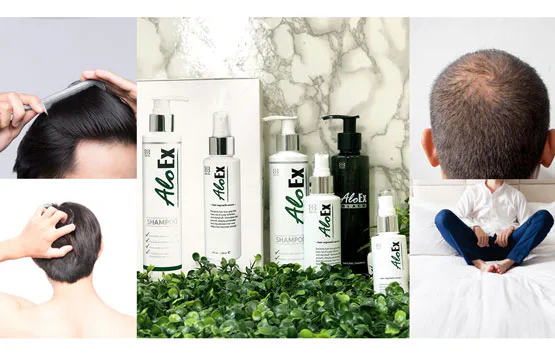
New mothers often experience the distressing problem of heavy hair fall. First-time mothers may be especially worried and stressed about hair fall, because sometimes it can fall heavily for several months, causing hair to become noticeably thin. Many mothers therefore wonder why there is so much hair fall, whether it is abnormal, and whether it is dangerous. Let AloEx clear up your doubts and concerns, and give you ways to cope. Post-partum hair fall — a natural occurrence for new mothers. For mothers experiencing post-partum hair fall, there is no need to panic — post-partum hair fall is a natural occurrence that can happen to any mother, due to hormonal fluctuations. Normally, we all shed some hair every day, but during pregnancy the body produces more oestrogen. Some pregnant women therefore have hair that looks healthy, dark, and thick, with almost no shedding throughout the 9 months. However, once the baby is born, the elevated oestrogen levels during pregnancy drop sharply. Hair that had been in a resting phase and barely shed for over 9 months re-enters its normal cycle and sheds all at once — causing the heavy hair fall experienced after giving birth. The post-partum hair fall will not be permanent — it typically lessens after about 6 months. Managing post-partum hair fall on your own. Eat a balanced diet with all 5 food groups so that your body receives sufficient nutrients to nourish all its parts, including the scalp and hair roots. Don't comb or pull your hair forcefully, as this will cause breakage and fall — especially when hair is wet, since wet hair is weaker than normal. Avoid applying heat to your hair — whether from a hot dryer, flat iron, or direct intense sunlight without protection — as heat will weaken your hair and make it brittle and prone to breakage. Avoid using chemical hair treatments or colouring — since hair is already falling, adding more chemicals may further damage it, causing chemical build-up and heavier fall. Dealing with post-partum hair fall — what should you use? Hair care products are another important thing to consider when facing this kind of post-partum hair fall — what should mothers use? Of course, products that are free of chemicals, organic, and naturally extracted are the answer — because hair is already falling, and using hair care products containing chemicals that may leave residue on the hair and scalp could cause even heavier hair fall. AloEx hair-fall reduction products are a hair care solution ready to address post-partum hair fall for mothers, nourishing hair and the scalp for strength, reducing hair fall, stimulating blood circulation in the scalp to deliver nutrients to the hair effectively, and increasing the rate of new hair growth to be better and stronger than before. Available as shampoo, hair mask, and serum — a complete nourishing set. Hair fall reduction shampoo, organic formula — helps detox chemicals and impurities that remain on the hair and scalp thoroughly. Available in 2 formulas: for dry hair and for oily hair. AloEx Hair Regrowth Original Shampoo — the original formula shampoo in a white bottle, suitable for normal-to-oily hair. Rich in over 30 natural herbal extracts, it cleanses hair and the scalp, reduces itching, removes excess oil, and refreshes. AloEx Hair Regrowth Black Shampoo — the black bottle shampoo for dry or chemically damaged hair. Rich in natural herbal extracts, Black Sticky Rice extract, Lemon Lavender Oil, and various natural oils — it cleanses, adds moisture, and stimulates new growth. AloEx Natural Hair Mask — comparable to a conditioner, it contains no silicone but leaves hair soft and moisturised, and adds volume to hair with Lemon Lavender Oil and natural oils. It can be used as a conditioner replacement — no worries about clogging. Besides replacing conditioner, it can also be used as a hair treatment or hair spa. AloEx Hair Regrowth Serum — produced using Hydrosol extraction technology as a clear liquid from 100% natural herbal extracts. Can be sprayed anytime you want to add vitamins to hair and the scalp, nourish hair for strength, reduce post-partum hair fall, while also refreshing and controlling oiliness throughout the day. AloEx is ready to care for mothers with post-partum hair fall problems. Use with peace of mind and no worries, as our products are naturally extracted, free of chemicals such as SLS, Silicone, Paraben, and Fragrance, certified by the Thai FDA, and manufactured in a GMP-standard factory — you can be confident in their gentleness and safety.

Read more »
Hey guys — reduce hair fall without sexual side effects

Sir, let's reduce hair loss without affecting sexual performance.

One of the main causes of hair fall and hair thinning is genetics — and the genes responsible for hair fall tend to affect men more than women. Being left with thinning hair, a barcode-like hairstyle, or a bald patch in the middle of the scalp is not a particularly distinguished look. Many men therefore seek ways to address this weighty but hair-light problem, and one popular method is taking medication. The hair-growth medication most popular on the market is Finasteride — a drug used to treat enlarged prostate and to treat hair fall, hair thinning, and baldness, because it works to inhibit Androgen hormone, the male hormone that causes hair fall. Those wishing to treat hair thinning with Finasteride must take 1 milligram per day, with or without food, continuously for 3 months before new hair growth can be seen. While Finasteride can genuinely stimulate new hair growth and prevent further hair fall, it has its dark side — because the drug inhibits Androgen hormone, the root cause of most hair fall in men, the side effect is that sexual performance in men will also decline. However, if the medication is stopped, sexual performance returns to normal — but the hair will start falling again too. For men who don't want to trade their sexual performance for hair on their head, Minoxidil is another drug commonly used to treat baldness. Originally a medication used to treat high blood pressure, it was found to have the side effect of stimulating hair growth, and was subsequently adapted into a topical treatment for hair thinning. Minoxidil is a vasodilator — it is believed that hair growth is stimulated because the drug dilates blood vessels in the scalp, increasing blood flow to hair cells, resulting in more new hair growth. While it is an effective hair-growth treatment, it does have many usage restrictions: the drug must not come into contact with any other areas of the body, and it must be allowed to dry naturally — using heat to blow it dry is absolutely prohibited as it may catch fire. Furthermore, topical Minoxidil contains alcohol and preservatives, which can cause dry scalp and dandruff. But for anyone who wants fuller hair without sacrificing sexual performance or risking dry, dandruff-prone scalp, we recommend AloEx — shampoo and serum extracted purely from Thai herbs with no chemical additives that would irritate the scalp or reduce masculinity. The shampoo gently cleanses the scalp, stimulates blood circulation on the scalp, and also detoxes the scalp in preparation for nourishment in the next step. That next step is the serum. AloEx serum contains protein extracted from plant seeds to stimulate new hair growth, strengthen hair roots, and reduce hair fall and breakage. Most importantly, it contains extracts that inhibit DHT hormone — a type of Androgen hormone and the main cause of genetic hair fall and thinning — without any loss of sexual performance.

Read more »
Get to know the hair growth cycle

Get to know the hair growth cycle

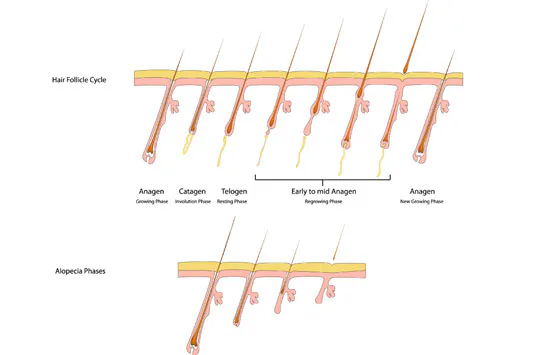
Our hair is composed of 2 main structural parts: the living part and the non-living part. The living part is the hair root, embedded in the hair follicle and responsible for producing hair cells. The non-living part is the part we see as the hair strand emerging from the scalp (hair shaft), composed mainly of protein, growing from the hair root (hair root) on the scalp. The hair root is the part responsible for hair fall and new hair growth, cycling every day. The cycle can be divided into 3 phases: 1. Growth phase (anagen): About 85–90% of all the hair on our scalp is in the growth phase. During this phase, the hair follicle produces hair cells, causing hair to grow longer, a process that takes approximately 3–7 years. It then enters the stopping phase (catagen), during which hair growth stops. Therefore, the longer an individual's growth phase (anagen), the longer the hair follicle can produce hair — meaning longer, thicker hair. But if this phase shortens, hair will enter the resting phase faster, shortening the time before hair falls, and newly grown hair will be short, thin, and weak, leading to premature baldness. 2. Transitional phase (catagen): A brief period during which the base of the hair root moves towards the skin surface layer. Hair growth slows and gradually stops. The number of hairs in this phase accounts for 1% of all hair on the scalp, and each strand stays in this phase for about 2–3 weeks before entering the resting phase. 3. Resting or final phase (telogen): Hair roots in this phase are already dead cells. The hair moves and anchors itself near the skin surface in preparation for falling. At the same time, a new hair strand that is beginning to enter the growth phase pushes out the old, dead strand. Normally, about 70–100 strands fall per day. About 10–15% of all hair on the scalp is in this phase at any time, with each strand remaining in this phase for approximately 2–3 months. Hair growth and fall occurs every day. As we age, new hair becomes increasingly finer and shorter-lived, and falls more than usual — this is the starting point of hair thinning that may lead to baldness. We should therefore always maintain the health of our hair by using products that nourish the scalp and extend the growth phase of hair, so that hair follicles can produce hair for longer, resulting in more hair that falls more slowly and baldness occurring later. For those who are unsure how to start nourishing their scalp, AloEx recommends shampoo and hair serum containing natural extracts, focused on extending the period during which hair follicles can produce hair, stimulating blood circulation in the scalp area, thereby visibly helping hair become thicker and fall less. With thanks for the information from http://wb.md/1Rz9vi3

Read more »
7 things that will make you shed

7 Things That Will Cause You to Lose Your Hair!!

Anyone experiencing hair fall for no apparent reason — gather here! Today AloEx has compiled the possible causes of hair fall for everyone. 🧖‍♀ Choosing the wrong hair care products. Sometimes just switching your shampoo can reduce hair fall! Choosing the right shampoo, conditioner, or hair care product is very important. Choose a shampoo that suits your hair type. If you already have hair fall or are prone to sensitivity, it is recommended to choose products that are gentle on hair and the scalp, and avoid products with chemicals that could cause irritation leading to hair fall. 🧴 Chemicals, frequent perming, straightening, and colouring — watch out! These can cause frizzy, dry, damaged, and rough hair. Chemicals weaken the scalp and hair strands until they become brittle and fall easily. Furthermore, hair styling products such as sprays, wax, and gel should be kept away from the scalp directly, and thoroughly washed out, to prevent chemical residue causing hair fall. 🧬 Hormones. Hormones are another factor that causes hair fall — for example, DHT hormone, commonly found in males, causes hair strands to have a shorter lifespan, with newly grown hair becoming smaller and thinner. The more DHT hormone the body has, the thinner and more the hair falls, potentially leading to baldness. Stress hormone Cortisol, which increases under stress, can also contribute to hair fall. Additionally, pregnancy in women can cause hormone-related hair fall due to hormonal fluctuations — particularly new mothers after giving birth. ☀ Heat. Hot dryers, flat irons, hot sunlight... heat-related things also cause hair fall. Because heat causes hair and the scalp to lose moisture, hair becomes dry and weak, and prone to breakage and fall. It can sometimes also cause itching. Washing hair with warm or hot water is also included here. Therefore, avoiding heat will help reduce the risk of hair fall. 💥 Being rough with hair and the scalp. Tying or pulling hair too tightly, or braiding too tightly, can cause hair fall by bending the hair and creating tension in the scalp as if something is pulling it. Furthermore, scratching the scalp hard or combing hair forcefully are also factors that cause hair fall. Those who like to comb their hair when wet — when hair is especially weak and fragile — will find hair falls very easily. If you need to comb, use a wide-toothed comb or gently finger-comb instead. 🍜 Eating and drinking habits. Hair needs nutrients just as the body does. If you lack nutrients that keep hair healthy and strong — such as protein, iron, zinc, and magnesium — hair may become weak, prone to breakage, and fall easily. Protein in particular, being the main component of hair, is essential. Furthermore, drinking alcohol can also contribute to hair fall, as does 🚬 smoking. 😷💊 Health problems and medication side effects. Certain health conditions are another factor that can cause hair fall — including anaemia, scalp fungal infection, psoriasis, and autoimmune disease (SLE). However, hair fall and thinning caused by disease or health conditions will be accompanied by other symptoms of the disease. It is recommended to monitor yourself and consult a doctor if you notice anything abnormal. Furthermore, people who regularly take certain medications may also experience hair fall as a side effect of the medication — such as cancer treatments, blood pressure medications, birth control pills, and others. Stop hair breakage and fall, prevent thinning, with AloEx — natural herbal scalp and hair care products, free of chemicals. Stimulates blood circulation, nourishes hair for strength, reduces fall, and stimulates new growth, restoring thick and beautiful hair to the scalp. AloEx 3 Steps PLUS+ helps care for hair easily with just: 🌱 Step 1 — Cleanse with our hero shampoo: thoroughly detox dirt and chemical residue with AloEx Original Shampoo for oily hair and AloEx Black Shampoo for chemically damaged dry hair. 🌱 Step 2 — Massage, mask, or treat your hair with AloEx Natural Hair Mask — a silicone-free treatment that softens hair with the power of natural oils, nourishing from root to tip with no fear of clogging. 🌱 Step 3 — Spray on nourishment after washing with AloEx Hair Regrowth Serum — an organic leave-on hair serum. Spray it on and it absorbs deeply to nourish hair roots. Can also be sprayed to control oiliness during the day. 🌱 PLUS+ — Nourish from the inside out with AloEx Dietary Supplement — a hair and scalp dietary supplement packed with key hair-nourishing nutrients such as Biotin, Iron, and Zinc. Don't let hair fall destroy your confidence — nourish with AloEx.

Read more »
Tackle thinning, hair fall, and receding hairlines from tight styling and frequent dyeing!

Tackle thinning, hair fall, and receding hairlines from tight styling — frequent dyeing!

For women who often tie their hair, you may experience the problem of hair ties pulling on hair strands, catching hair, causing a receding hairline or thinning — some pulling all the way from the forehead to the middle of the scalp — causing hair to come out in clumps or patches. Or for those who frequently colour their hair or change their hair colour, hair may become weakened by chemicals with roots that are no longer strong, falling out in handfuls, causing a serious loss of confidence. Come this way — let's see how to fix the problems of a receding hairline, thinning, and hair fall. 1. Eat nutritious food from all 5 food groups. It may sound boring and basic, but eating all 5 food groups — especially protein-rich foods — does help strengthen hair from the inside. Whether fish, soybeans, or tofu, protein is an essential nutrient that is a key component of hair. Normally, we should receive protein of approximately 20–30% of the nutrients the body receives each day. And don't forget to drink enough water, avoid MSG-containing food, avoid alcohol and cigarettes — and your hair will definitely come back thick, not thin or receding. 2. Exercise regularly. Exercise helps stimulate blood circulation throughout the body, so blood flows better to nourish the scalp and hair roots, effectively delivering vitamins and nutrients to hair roots so hair is strong and roots anchor well, not falling easily. Most importantly, don't forget to avoid stress and keep your mind relaxed to balance hormones in the body — this also helps reduce hair fall. 3. Wash your hair correctly. Women who like to scrub or scratch their scalp vigorously when washing must quickly change this habit. Because this damages the scalp and causes it to peel, and the hair roots are also pulled forcefully, potentially causing hair fall and progressive thinning. Instead, it is better to use a massaging technique — gently massaging in circular motions with fingertips. Besides protecting hair and the scalp, it also stimulates blood circulation to deliver blood to the hair roots more effectively. 4. Use heat on hair in moderation. Whether blow drying, flat ironing, or curling — if possible, avoid using heat-based hair tools. But if truly unavoidable, limit the temperature and use cool air instead, and don't forget to apply a heat-protective hair product before ironing or blow drying. This alone can help prevent damage to hair and the scalp. 5. Tie your hair correctly to prevent damage. If we must tie our hair, try to avoid the following methods to reduce breakage and hair fall: Tying too tight → damages hair follicles, leading to hair fall. Tying hair while sleeping → the hair tie pulls on strands and presses/pulls while moving during sleep, causing hair to be pulled out. Tying in the same position every day → the hair is repeatedly pulled at the same point, weakening the roots, causing hair fall and patchy thinning. Tying while hair is wet → when wet, hair roots are weaker than usual, so tying can easily cause hair fall. Using hair ties with metal parts → the metal parts may scratch and damage the scalp. 6. Choose a hair cleaning product that helps reduce hair fall and is free of chemicals. Try switching to an organic shampoo that is friendly to hair and the scalp because it is free of chemicals harmful to skin. AloEx shampoo is suitable for those with hair and scalp problems — whether hair fall from chemical use, a widening parting from tying and binding hair, or genetic hair fall and thinning. Besides helping reduce hair fall, it can also stimulate hair roots to produce hair faster and more strongly. AloEx is gentle on all hair and scalp conditions with 100% naturally sourced extracts — you can be confident it is safe for all genders and all ages. 7. Nourish with a serum that helps restore and care for hair and the scalp deeply. Caring for hair and the scalp is like caring for facial skin — after cleansing our hair, we should also nourish it. Especially if nourishing with gentle, chemical-free ingredients, hair will be even longer, more beautiful, thick, healthy, and not easily falling. AloEx serum — another product for hair health, free of chemicals, researched by scientists, packed with extracts from various herbal plants. It helps solve and restore hair and scalp problems effectively, whether adding protein and amino acids from plant seed, tuber, and ginseng extracts to hair roots and strands, increasing moisture and adding density to hair roots with extracts from various aloe species, reducing itching, oiliness, and skin inflammation with concentrated curcumin extract from turmeric, and stimulating blood circulation to better transport protein and nutrients to hair roots. Gentle and safe, suitable for sensitive scalps prone to irritation. How are these hair care and protection techniques that we share with you? If anyone is dealing with the distressing problems of a receding hairline, hair fall, hair thinning, or wanting to prevent hair thinning before it leads to baldness — don't delay, try following these steps right away! With thanks for the information from Sistacafe.com

Read more »
The danger of treating hair loss with Minoxidil

The danger of treating hair loss with Minoxidil

Minoxidil is a type of medication currently popular for treating hair loss. It was originally an oral medication used to treat a type of high blood pressure condition, but was found to have the side effect of stimulating hair or body hair growth — although not 100%, it can achieve 30–40% growth. This side effect has therefore been utilised as a treatment for hair loss. Those who use this medication may experience low blood pressure and dizziness in some cases. The effects of Minoxidil treatment are not permanent — hair that grows as a result of the medication will revert to its previous state within 2–3 months of stopping use.

Read more »
Warning — 7 bad outcomes from sleeping with wet hair

Warning — 7 bad outcomes from sleeping with wet hair

7 Bad Results of Going to Sleep with Wet Hair. After bathing and washing your hair, not drying it before falling asleep… adults say it will cause colds and pneumonia could come looking for you. But many people have tried it and nothing happened, so they keep doing it — because they are tired, sleepy, and lazy — until it has almost become a habit. Falling asleep with wet hair may not always cause colds or pneumonia, but it will definitely have a negative impact on your scalp and hair. If you do it regularly or secretly do it often — watch out for these 7 bad results! Oily scalp, increased dandruff. Sleeping with wet hair makes the scalp damp, leading to an oily scalp and dandruff — because moisture stimulates the sebaceous glands on the scalp, disrupting their function until the scalp loses balance, with sebaceous glands producing either too little or too much oil. Fungal growth and bacterial accumulation on the scalp. Our scalp already has fungi naturally — a type called yeast — which survive by feeding on oil from the sebaceous glands and hair follicles. Therefore, sleeping with wet hair makes hair oilier, and fungi multiply even more. It's not just the scalp — the pillow also becomes covered in fungi. You can easily spot this by yellow stains or patches on the pillow. It is also a breeding ground for bacteria and causes hair fall. Risk of muscle cramps in the middle of the night. Just sleeping with wet hair can put you at risk of leg cramps in the early hours. Because the temperature difference at the scalp area is too great for the body to adjust quickly enough, it may cause muscle pain and severe cramps. In some cases it can be serious enough to cause facial muscle paralysis or full-body paralysis. Those who do not exercise often and have weaker muscles need to be especially careful. Hair fall, damaged hair, and split ends. With moisture comes fungi, followed by dandruff and clogging of the pores — hair strands don't receive sufficient nutrients and become very weak, eventually resulting in hair fall and damaged hair. You can notice that more hair comes out when washing, and split ends appear frequently. Sticky and unclean-looking hair. Falling asleep amid the dampness — don't expect to wake up fresh and dry. The hair may look oily, sticky, tangled and messy — looking quite unclean. Those with short hair may not mind so much, but those with long hair will definitely have a hard time. Anyone who doesn't want to experience these 7 bad results — don't sleep with wet hair! If you really must wash your hair, dry it before sleeping — for the sake of good hair health. And don't forget to use these key products to restore your scalp and hair back to health, strength, deeply detoxing and nourishing with AloEx shampoo — an organic shampoo packed with concentrated natural extracts, free of chemicals. It thoroughly cleanses dirt that remains on the scalp and hair, helps reduce dandruff and fungi on the scalp, reduces hair fall, and addresses hair thinning — healthy hair just as you want. Available in 2 formulas: Original formula in a white bottle, packed with various natural extracts, suitable for oily hair. Black formula in a black bottle, with Black Sticky Rice extract, Lemon Lavender Oil, and many more natural oils, suitable for dry or chemically damaged hair. Let AloEx care for your hair and scalp. Order and enjoy great promotions with us here!! FB Page: AloEx Official or click m.me/AloExOfficial. LINE: @AloEx (note the @ in front) or click https://bit.ly/2ARjd2R. 🍃 Everyday with AloEx, Everyday with Fuller and Thicker Hair. Read more reviews: bit.ly/ReviewAloEx. 🍀 AloEx: Hair Regrowth by The Miracle of Natural Extracts

Read more »
Why do bearded men go bald?

Why do bearded men go bald?

Have you ever noticed that men who have especially heavy beard or armpit hair tend to go bald early? These conditions result from the male hormone called testosterone, which plays a role in making masculine characteristics more pronounced — such as sexual desire and having a beard. Therefore, men with heavy beards are often a result of how testosterone functions. However, when testosterone binds with 5-Alpha reductase — an enzyme found in the skin of the scalp — it transforms into DHT hormone (dihydrotestosterone), which is the main cause of baldness. This DHT hormone enters and inhibits the hair-building process in hair follicles, causing newly grown hair to be smaller and weaker, falling easily, and the hair follicles begin to stop producing hair as well. Hair thus gradually thins until baldness finally occurs. While the genetic factor that leads to hair fall and baldness may be unavoidable, once we know the cause, we can alleviate the condition by addressing it at the root — by choosing products that help inhibit the action of DHT hormone at the hair follicles, thereby allowing hair follicles to produce hair that is thick and strong as normal, so hair is thick, strong, and not easily falling. Most importantly, it should be a product that does not irritate the scalp and is free of chemicals — such as AloEx, which contains over 30 types of natural herbal extracts. It helps inhibit the action of DHT hormone without affecting sexual performance, and nourishes the scalp for moisture and good health. With thanks to http://bit.ly/1TQSeEL http://bit.ly/1OYbTxx, http://bit.ly/1QNUKHz http://bit.ly/1M1IE0S http://wb.md/1T0Mtnl http://bit.ly/22xYAMB http://bit.ly/1U0AVCV

Read more »
Get to know the hair growth cycle

Get to know the hair growth cycle

Our hair is composed of 2 main structural parts: the living part and the non-living part. The living part is the hair root, embedded in the hair follicle and responsible for producing hair cells. The non-living part is the part we see as the hair strand emerging from the scalp (hair shaft), composed mainly of protein, growing from the hair root (hair root) on the scalp. The hair root is the part responsible for hair fall and new hair growth, cycling every day. The cycle can be divided into 3 phases: 1. Growth phase (anagen): About 85–90% of all the hair on our scalp is in the growth phase. During this phase, the hair follicle produces hair cells, causing hair to grow longer, a process that takes approximately 3–7 years. It then enters the stopping phase (catagen), during which hair growth stops. Therefore, the longer an individual's growth phase (anagen), the longer the hair follicle can produce hair — meaning longer, thicker hair. But if this phase shortens, hair will enter the resting phase faster, shortening the time before hair falls, and newly grown hair will be short, thin, and weak, leading to premature baldness. 2. Transitional phase (catagen): A brief period during which the base of the hair root moves towards the skin surface layer. Hair growth slows and gradually stops. The number of hairs in this phase accounts for 1% of all hair on the scalp, and each strand stays in this phase for about 2–3 weeks before entering the resting phase. 3. Resting or final phase (telogen): Hair roots in this phase are already dead cells. The hair moves and anchors itself near the skin surface in preparation for falling. At the same time, a new hair strand that is beginning to enter the growth phase pushes out the old, dead strand. Normally, about 70–100 strands fall per day. About 10–15% of all hair on the scalp is in this phase at any time, with each strand remaining in this phase for approximately 2–3 months. Hair growth and fall occurs every day. As we age, new hair becomes increasingly finer and shorter-lived, and falls more than usual — this is the starting point of hair thinning that may lead to baldness. We should therefore always maintain the health of our hair by using products that nourish the scalp and extend the growth phase of hair, so that hair follicles can produce hair for longer, resulting in more hair that falls more slowly and baldness occurring later. For those who are unsure how to start nourishing their scalp, AloEx recommends shampoo and hair serum containing natural extracts, focused on extending the period during which hair follicles can produce hair, stimulating blood circulation in the scalp area, thereby visibly helping hair become thicker and fall less. With thanks for the information from http://wb.md/1Rz9vi3

Read more »
7 things that will make you shed

7 Things That Will Cause You to Lose Your Hair!!

Anyone experiencing hair fall for no apparent reason — gather here! Today AloEx has compiled the possible causes of hair fall for everyone. 🧖‍♀ Choosing the wrong hair care products. Sometimes just switching your shampoo can reduce hair fall! Choosing the right shampoo, conditioner, or hair care product is very important. Choose a shampoo that suits your hair type. If you already have hair fall or are prone to sensitivity, it is recommended to choose products that are gentle on hair and the scalp, and avoid products with chemicals that could cause irritation leading to hair fall. 🧴 Chemicals, frequent perming, straightening, and colouring — watch out! These can cause frizzy, dry, damaged, and rough hair. Chemicals weaken the scalp and hair strands until they become brittle and fall easily. Furthermore, hair styling products such as sprays, wax, and gel should be kept away from the scalp directly, and thoroughly washed out, to prevent chemical residue causing hair fall. 🧬 Hormones. Hormones are another factor that causes hair fall — for example, DHT hormone, commonly found in males, causes hair strands to have a shorter lifespan, with newly grown hair becoming smaller and thinner. The more DHT hormone the body has, the thinner and more the hair falls, potentially leading to baldness. Stress hormone Cortisol, which increases under stress, can also contribute to hair fall. Additionally, pregnancy in women can cause hormone-related hair fall due to hormonal fluctuations — particularly new mothers after giving birth. ☀ Heat. Hot dryers, flat irons, hot sunlight... heat-related things also cause hair fall. Because heat causes hair and the scalp to lose moisture, hair becomes dry and weak, and prone to breakage and fall. It can sometimes also cause itching. Washing hair with warm or hot water is also included here. Therefore, avoiding heat will help reduce the risk of hair fall. 💥 Being rough with hair and the scalp. Tying or pulling hair too tightly, or braiding too tightly, can cause hair fall by bending the hair and creating tension in the scalp as if something is pulling it. Furthermore, scratching the scalp hard or combing hair forcefully are also factors that cause hair fall. Those who like to comb their hair when wet — when hair is especially weak and fragile — will find hair falls very easily. If you need to comb, use a wide-toothed comb or gently finger-comb instead. 🍜 Eating and drinking habits. Hair needs nutrients just as the body does. If you lack nutrients that keep hair healthy and strong — such as protein, iron, zinc, and magnesium — hair may become weak, prone to breakage, and fall easily. Protein in particular, being the main component of hair, is essential. Furthermore, drinking alcohol can also contribute to hair fall, as does 🚬 smoking. 😷💊 Health problems and medication side effects. Certain health conditions are another factor that can cause hair fall — including anaemia, scalp fungal infection, psoriasis, and autoimmune disease (SLE). However, hair fall and thinning caused by disease or health conditions will be accompanied by other symptoms of the disease. It is recommended to monitor yourself and consult a doctor if you notice anything abnormal. Furthermore, people who regularly take certain medications may also experience hair fall as a side effect of the medication — such as cancer treatments, blood pressure medications, birth control pills, and others. Stop hair breakage and fall, prevent thinning, with AloEx — natural herbal scalp and hair care products, free of chemicals. Stimulates blood circulation, nourishes hair for strength, reduces fall, and stimulates new growth, restoring thick and beautiful hair to the scalp. AloEx 3 Steps PLUS+ helps care for hair easily with just: 🌱 Step 1 — Cleanse with our hero shampoo: thoroughly detox dirt and chemical residue with AloEx Original Shampoo for oily hair and AloEx Black Shampoo for chemically damaged dry hair. 🌱 Step 2 — Massage, mask, or treat your hair with AloEx Natural Hair Mask — a silicone-free treatment that softens hair with the power of natural oils, nourishing from root to tip with no fear of clogging. 🌱 Step 3 — Spray on nourishment after washing with AloEx Hair Regrowth Serum — an organic leave-on hair serum. Spray it on and it absorbs deeply to nourish hair roots. Can also be sprayed to control oiliness during the day. 🌱 PLUS+ — Nourish from the inside out with AloEx Dietary Supplement — a hair and scalp dietary supplement packed with key hair-nourishing nutrients such as Biotin, Iron, and Zinc. Don't let hair fall destroy your confidence — nourish with AloEx.

Read more »
Tackle thinning, hair fall, and receding hairlines from tight styling and frequent dyeing!

Tackle thinning, hair fall, and receding hairlines from tight styling — frequent dyeing!

For women who often tie their hair, you may experience the problem of hair ties pulling on hair strands, catching hair, causing a receding hairline or thinning — some pulling all the way from the forehead to the middle of the scalp — causing hair to come out in clumps or patches. Or for those who frequently colour their hair or change their hair colour, hair may become weakened by chemicals with roots that are no longer strong, falling out in handfuls, causing a serious loss of confidence. Come this way — let's see how to fix the problems of a receding hairline, thinning, and hair fall. 1. Eat nutritious food from all 5 food groups. It may sound boring and basic, but eating all 5 food groups — especially protein-rich foods — does help strengthen hair from the inside. Whether fish, soybeans, or tofu, protein is an essential nutrient that is a key component of hair. Normally, we should receive protein of approximately 20–30% of the nutrients the body receives each day. And don't forget to drink enough water, avoid MSG-containing food, avoid alcohol and cigarettes — and your hair will definitely come back thick, not thin or receding. 2. Exercise regularly. Exercise helps stimulate blood circulation throughout the body, so blood flows better to nourish the scalp and hair roots, effectively delivering vitamins and nutrients to hair roots so hair is strong and roots anchor well, not falling easily. Most importantly, don't forget to avoid stress and keep your mind relaxed to balance hormones in the body — this also helps reduce hair fall. 3. Wash your hair correctly. Women who like to scrub or scratch their scalp vigorously when washing must quickly change this habit. Because this damages the scalp and causes it to peel, and the hair roots are also pulled forcefully, potentially causing hair fall and progressive thinning. Instead, it is better to use a massaging technique — gently massaging in circular motions with fingertips. Besides protecting hair and the scalp, it also stimulates blood circulation to deliver blood to the hair roots more effectively. 4. Use heat on hair in moderation. Whether blow drying, flat ironing, or curling — if possible, avoid using heat-based hair tools. But if truly unavoidable, limit the temperature and use cool air instead, and don't forget to apply a heat-protective hair product before ironing or blow drying. This alone can help prevent damage to hair and the scalp. 5. Tie your hair correctly to prevent damage. If we must tie our hair, try to avoid the following methods to reduce breakage and hair fall: Tying too tight → damages hair follicles, leading to hair fall. Tying hair while sleeping → the hair tie pulls on strands and presses/pulls while moving during sleep, causing hair to be pulled out. Tying in the same position every day → the hair is repeatedly pulled at the same point, weakening the roots, causing hair fall and patchy thinning. Tying while hair is wet → when wet, hair roots are weaker than usual, so tying can easily cause hair fall. Using hair ties with metal parts → the metal parts may scratch and damage the scalp. 6. Choose a hair cleaning product that helps reduce hair fall and is free of chemicals. Try switching to an organic shampoo that is friendly to hair and the scalp because it is free of chemicals harmful to skin. AloEx shampoo is suitable for those with hair and scalp problems — whether hair fall from chemical use, a widening parting from tying and binding hair, or genetic hair fall and thinning. Besides helping reduce hair fall, it can also stimulate hair roots to produce hair faster and more strongly. AloEx is gentle on all hair and scalp conditions with 100% naturally sourced extracts — you can be confident it is safe for all genders and all ages. 7. Nourish with a serum that helps restore and care for hair and the scalp deeply. Caring for hair and the scalp is like caring for facial skin — after cleansing our hair, we should also nourish it. Especially if nourishing with gentle, chemical-free ingredients, hair will be even longer, more beautiful, thick, healthy, and not easily falling. AloEx serum — another product for hair health, free of chemicals, researched by scientists, packed with extracts from various herbal plants. It helps solve and restore hair and scalp problems effectively, whether adding protein and amino acids from plant seed, tuber, and ginseng extracts to hair roots and strands, increasing moisture and adding density to hair roots with extracts from various aloe species, reducing itching, oiliness, and skin inflammation with concentrated curcumin extract from turmeric, and stimulating blood circulation to better transport protein and nutrients to hair roots. Gentle and safe, suitable for sensitive scalps prone to irritation. How are these hair care and protection techniques that we share with you? If anyone is dealing with the distressing problems of a receding hairline, hair fall, hair thinning, or wanting to prevent hair thinning before it leads to baldness — don't delay, try following these steps right away! With thanks for the information from Sistacafe.com

Read more »
The danger of treating hair loss with Minoxidil

The danger of treating hair loss with Minoxidil

Minoxidil is a type of medication currently popular for treating hair loss. It was originally an oral medication used to treat a type of high blood pressure condition, but was found to have the side effect of stimulating hair or body hair growth — although not 100%, it can achieve 30–40% growth. This side effect has therefore been utilised as a treatment for hair loss. Those who use this medication may experience low blood pressure and dizziness in some cases. The effects of Minoxidil treatment are not permanent — hair that grows as a result of the medication will revert to its previous state within 2–3 months of stopping use.

Read more »
Warning — 7 bad outcomes from sleeping with wet hair

Warning — 7 bad outcomes from sleeping with wet hair

7 Bad Results of Going to Sleep with Wet Hair. After bathing and washing your hair, not drying it before falling asleep… adults say it will cause colds and pneumonia could come looking for you. But many people have tried it and nothing happened, so they keep doing it — because they are tired, sleepy, and lazy — until it has almost become a habit. Falling asleep with wet hair may not always cause colds or pneumonia, but it will definitely have a negative impact on your scalp and hair. If you do it regularly or secretly do it often — watch out for these 7 bad results! Oily scalp, increased dandruff. Sleeping with wet hair makes the scalp damp, leading to an oily scalp and dandruff — because moisture stimulates the sebaceous glands on the scalp, disrupting their function until the scalp loses balance, with sebaceous glands producing either too little or too much oil. Fungal growth and bacterial accumulation on the scalp. Our scalp already has fungi naturally — a type called yeast — which survive by feeding on oil from the sebaceous glands and hair follicles. Therefore, sleeping with wet hair makes hair oilier, and fungi multiply even more. It's not just the scalp — the pillow also becomes covered in fungi. You can easily spot this by yellow stains or patches on the pillow. It is also a breeding ground for bacteria and causes hair fall. Risk of muscle cramps in the middle of the night. Just sleeping with wet hair can put you at risk of leg cramps in the early hours. Because the temperature difference at the scalp area is too great for the body to adjust quickly enough, it may cause muscle pain and severe cramps. In some cases it can be serious enough to cause facial muscle paralysis or full-body paralysis. Those who do not exercise often and have weaker muscles need to be especially careful. Hair fall, damaged hair, and split ends. With moisture comes fungi, followed by dandruff and clogging of the pores — hair strands don't receive sufficient nutrients and become very weak, eventually resulting in hair fall and damaged hair. You can notice that more hair comes out when washing, and split ends appear frequently. Sticky and unclean-looking hair. Falling asleep amid the dampness — don't expect to wake up fresh and dry. The hair may look oily, sticky, tangled and messy — looking quite unclean. Those with short hair may not mind so much, but those with long hair will definitely have a hard time. Anyone who doesn't want to experience these 7 bad results — don't sleep with wet hair! If you really must wash your hair, dry it before sleeping — for the sake of good hair health. And don't forget to use these key products to restore your scalp and hair back to health, strength, deeply detoxing and nourishing with AloEx shampoo — an organic shampoo packed with concentrated natural extracts, free of chemicals. It thoroughly cleanses dirt that remains on the scalp and hair, helps reduce dandruff and fungi on the scalp, reduces hair fall, and addresses hair thinning — healthy hair just as you want. Available in 2 formulas: Original formula in a white bottle, packed with various natural extracts, suitable for oily hair. Black formula in a black bottle, with Black Sticky Rice extract, Lemon Lavender Oil, and many more natural oils, suitable for dry or chemically damaged hair. Let AloEx care for your hair and scalp. Order and enjoy great promotions with us here!! FB Page: AloEx Official or click m.me/AloExOfficial. LINE: @AloEx (note the @ in front) or click https://bit.ly/2ARjd2R. 🍃 Everyday with AloEx, Everyday with Fuller and Thicker Hair. Read more reviews: bit.ly/ReviewAloEx. 🍀 AloEx: Hair Regrowth by The Miracle of Natural Extracts

Read more »
Why do bearded men go bald?

Why do bearded men go bald?

Have you ever noticed that men who have especially heavy beard or armpit hair tend to go bald early? These conditions result from the male hormone called testosterone, which plays a role in making masculine characteristics more pronounced — such as sexual desire and having a beard. Therefore, men with heavy beards are often a result of how testosterone functions. However, when testosterone binds with 5-Alpha reductase — an enzyme found in the skin of the scalp — it transforms into DHT hormone (dihydrotestosterone), which is the main cause of baldness. This DHT hormone enters and inhibits the hair-building process in hair follicles, causing newly grown hair to be smaller and weaker, falling easily, and the hair follicles begin to stop producing hair as well. Hair thus gradually thins until baldness finally occurs. While the genetic factor that leads to hair fall and baldness may be unavoidable, once we know the cause, we can alleviate the condition by addressing it at the root — by choosing products that help inhibit the action of DHT hormone at the hair follicles, thereby allowing hair follicles to produce hair that is thick and strong as normal, so hair is thick, strong, and not easily falling. Most importantly, it should be a product that does not irritate the scalp and is free of chemicals — such as AloEx, which contains over 30 types of natural herbal extracts. It helps inhibit the action of DHT hormone without affecting sexual performance, and nourishes the scalp for moisture and good health. With thanks to http://bit.ly/1TQSeEL http://bit.ly/1OYbTxx, http://bit.ly/1QNUKHz http://bit.ly/1M1IE0S http://wb.md/1T0Mtnl http://bit.ly/22xYAMB http://bit.ly/1U0AVCV

Read more »
How often should you wash your hair for healthy results?

How often should you wash your hair for healthy results?

Normally, many people wash their hair regularly, almost every day. However, washing hair too frequently does not always make your hair healthier. Today, AloEx would like to share some useful information about how often to wash hair each week. Comparing people in the past with those today, there is a difference: modern people tend to wash their hair much more frequently — some wash daily. But it can be seen that modern people also experience more hair health problems — including hair fall, dry damaged hair, or premature greying. The root cause of these issues sometimes comes from improper hair care, especially washing hair — because if hair is washed too frequently, the appropriate amount of oil on the scalp will be washed away, making the scalp dry and leading to damaged hair, as well as dandruff. So, anyone who likes to wash their hair every day and has hair health problems should try adjusting their hair-washing habits by reducing the frequency — perhaps washing approximately 3–5 times per week, which is considered an appropriate frequency. Even though sometimes you may feel that leaving more time between washes makes your hair increasingly oily, the oil on the scalp itself will help replace the old oil that was washed away and restore balance to your scalp. With thanks for the information from: http://bit.ly/1P5qfQ1

Read more »
Does washing more often actually help oily hair?

Does washing more often actually help oily hair?

Apart from hair fall, oily hair is another truly distressing problem — because oily hair is the culprit behind flat, limp hair that is difficult to style, a head full of dandruff, and furthermore it can cause hair fall and thinning at twice the rate of normal hair. Walking around with a shiny, oily head — some people's hair is so oily that it becomes oily again immediately after washing, forcing them to wash frequently. But does washing hair frequently really help reduce oily hair? Let's find out. What causes oily hair? The main cause of oily hair is the sebaceous glands on the scalp producing too much oil, which may result from hormonal changes, diet, and the environment. Oily hair is actually a problem that can occur with any gender and at any age. People with oily hair also tend to have accompanying hair fall problems because they come as a pair — it's not just oily hair that needs solving, hair fall needs to be addressed too. Truly overwhelming! With hair this oily, can frequent washing really help? Normally, we tend to wash our hair frequently when it's oily — because when hair is oily it feels like you haven't washed your hair in days, extremely bad for your image. So we wash it thoroughly and frequently until it becomes a habit, with some people washing morning and evening. For those with oily hair who wash too frequently — this is not good at all, because washing too frequently may make the scalp dry. When the scalp becomes very dry, the sebaceous glands produce even more oil, so the oiliness doesn't go away at all — it may actually produce even more oil than before. No matter how oily, it can be managed — just care for it correctly. So if we can't wash oily hair frequently, what should we do? There are actually methods for managing oily hair that we can apply in everyday life. The main ones we share number 7 methods. If we can follow all methods together, oily hair will definitely stop bothering us. Let's see what methods there are: 1. Don't wash hair too often or too infrequently. The key point is washing hair. For those with oily hair, washing too frequently is absolutely forbidden — as mentioned earlier, the more frequently you wash, the drier the scalp becomes, and the sebaceous glands produce even more oil. But some people wash too infrequently, making hair dirty, oil clogs up, and if left for too long it can cause progressive hair thinning. Therefore, washing at an appropriate frequency is recommended — every other day is fine. If you feel uncomfortable on days you don't wash, use dry shampoo instead. 2. Wash hair with warm or room-temperature water. Besides the frequency of washing, the water temperature used also matters. If we use hot water to wash our hair, it will make the hair dry and stimulate the sebaceous glands to produce more oil. Therefore, using warm or room-temperature water to wash hair is most appropriate for oily hair. 3. Avoid using conditioner. For those with oily hair, it's recommended to put the conditioner away entirely. Even though conditioner helps make our hair soft, moisturised, and shiny, the oil that the sebaceous glands produce is for exactly these purposes — except that it's produced in excess, causing an oily sheen. If we then use conditioner too, it just adds more oil to the hair. But some people can't get used to not using conditioner and feel uncomfortable without it — if you really want to use it, apply it only to the ends of the hair, not at the scalp, as that really isn't good for oily hair. Just the ends will do. 4. Avoid combing hair too frequently. For those of us who keep long hair, we need to comb often so it doesn't get tangled, keeping it smooth and presentable — some even carry a comb in their bag. Combing isn't forbidden, but for those with oily hair, combing frequently is something that really shouldn't be done — because combing stimulates the sebaceous glands to produce more oil. Already oily, and it gets oilier still. Comb just enough, and if you want hair to lie flat during the day, use your fingers to smooth it instead. 5. Choose a shampoo that is gentle on the scalp and hair. Washing hair with a shampoo with a mildly acidic pH of approximately 5.5–6.5 will help reduce scalp oiliness. Or choose a shampoo specifically formulated for oily hair. However, shampoos for oily hair tend to contain quite a lot of surfactants and may irritate the scalp. So when washing, keep the shampoo away from the scalp as much as possible. But with AloEx Original Shampoo — no worries at all. Not only does it effectively control oiliness, it also contains no surfactants or SLS to worry about, so even the most sensitive skin can feel confident. It also contains no Silicone, Paraben, Alcohol, or Fragrance. 6. Hair mask with natural formulas. Conditioner isn't recommended, but hair masking is not forbidden. Oily hair can be masked as normal — just use a natural hair mask formula that addresses oily hair to help reduce oiliness and nourish hair for strength. The hair mask formulas we share for reducing oily hair are as follows: • Lemon + egg white: Ingredients: 1 lemon and 2 eggs. Mix the lemon juice and egg whites until blended. Apply to hair and the scalp evenly, massage gently, leave for 20–30 minutes, then rinse with clean water. Do this once a week and it will help address many hair problems. • Lemon + Aloe Vera: Ingredients: 1 lemon and 1 mature aloe vera leaf. Mix the lemon juice and aloe vera flesh until blended. Apply to hair and scalp evenly.

Read more »
3 easy at-home hair-care recipes

3 easy at-home hair-care recipes

Hair is a key factor in enhancing one's personality, but many people who struggle with hair problems try to nourish it in various ways. AloEx therefore recommends 3 easy DIY hair mask recipes you can do at home. For dry, damaged hair. For those with dry hair, you will notice that the scalp is dry and produces dandruff flakes, the hair lacks weight and is difficult to style, and this may cause hair fall. It is recommended to nourish with extracts from orchid flowers, egg, Ginseng, and ginger — these have the properties to help make hair soft and weightful for easier styling. 1. Coconut Oil + Egg Recipe: Use 2 tablespoons of coconut oil, heat it and mix with 1 egg (yolk only), beat until blended, wait until cool and apply throughout the scalp. Massage gently with fingertips from front to back, use your palms to work it through gently so it absorbs into the hair. Cover hair with a small towel — don't wrap it too tightly — leave for 2 hours, then rinse with warm water and shampoo with a gentle shampoo once more. 2. Olive Oil Recipe: Warm 2–3 tablespoons of olive oil and massage into the scalp in circular motions. Wrap the scalp with a towel and leave for 15 minutes. Shampoo with a gentle shampoo and rinse with warm water until thoroughly clean. 3. Egg + Yoghurt Recipe: Use 1 whole egg (both white and yolk), mix with half a glass of yoghurt and beat until blended. Apply to the scalp on hair that has been dampened with warm water, massage in circular motions. Wrap the scalp with a towel and leave for 10–15 minutes. Rinse with warm water until thoroughly clean and shampoo with a gentle shampoo once.

Read more »