[weglot_switcher]

Interesting Articles

How often should you wash your hair for healthy results?

How often should you wash your hair for healthy results?

Normally, many people wash their hair regularly, almost every day. However, washing hair too frequently does not always make your hair healthier. Today, AloEx would like to share some useful information about how often to wash hair each week. Comparing people in the past with those today, there is a difference: modern people tend to wash their hair much more frequently — some wash daily. But it can be seen that modern people also experience more hair health problems — including hair fall, dry damaged hair, or premature greying. The root cause of these issues sometimes comes from improper hair care, especially washing hair — because if hair is washed too frequently, the appropriate amount of oil on the scalp will be washed away, making the scalp dry and leading to damaged hair, as well as dandruff. So, anyone who likes to wash their hair every day and has hair health problems should try adjusting their hair-washing habits by reducing the frequency — perhaps washing approximately 3–5 times per week, which is considered an appropriate frequency. Even though sometimes you may feel that leaving more time between washes makes your hair increasingly oily, the oil on the scalp itself will help replace the old oil that was washed away and restore balance to your scalp. With thanks for the information from: http://bit.ly/1P5qfQ1

Read more »
Does washing more often actually help oily hair?

Does washing more often actually help oily hair?

Apart from hair fall, oily hair is another truly distressing problem — because oily hair is the culprit behind flat, limp hair that is difficult to style, a head full of dandruff, and furthermore it can cause hair fall and thinning at twice the rate of normal hair. Walking around with a shiny, oily head — some people's hair is so oily that it becomes oily again immediately after washing, forcing them to wash frequently. But does washing hair frequently really help reduce oily hair? Let's find out. What causes oily hair? The main cause of oily hair is the sebaceous glands on the scalp producing too much oil, which may result from hormonal changes, diet, and the environment. Oily hair is actually a problem that can occur with any gender and at any age. People with oily hair also tend to have accompanying hair fall problems because they come as a pair — it's not just oily hair that needs solving, hair fall needs to be addressed too. Truly overwhelming! With hair this oily, can frequent washing really help? Normally, we tend to wash our hair frequently when it's oily — because when hair is oily it feels like you haven't washed your hair in days, extremely bad for your image. So we wash it thoroughly and frequently until it becomes a habit, with some people washing morning and evening. For those with oily hair who wash too frequently — this is not good at all, because washing too frequently may make the scalp dry. When the scalp becomes very dry, the sebaceous glands produce even more oil, so the oiliness doesn't go away at all — it may actually produce even more oil than before. No matter how oily, it can be managed — just care for it correctly. So if we can't wash oily hair frequently, what should we do? There are actually methods for managing oily hair that we can apply in everyday life. The main ones we share number 7 methods. If we can follow all methods together, oily hair will definitely stop bothering us. Let's see what methods there are: 1. Don't wash hair too often or too infrequently. The key point is washing hair. For those with oily hair, washing too frequently is absolutely forbidden — as mentioned earlier, the more frequently you wash, the drier the scalp becomes, and the sebaceous glands produce even more oil. But some people wash too infrequently, making hair dirty, oil clogs up, and if left for too long it can cause progressive hair thinning. Therefore, washing at an appropriate frequency is recommended — every other day is fine. If you feel uncomfortable on days you don't wash, use dry shampoo instead. 2. Wash hair with warm or room-temperature water. Besides the frequency of washing, the water temperature used also matters. If we use hot water to wash our hair, it will make the hair dry and stimulate the sebaceous glands to produce more oil. Therefore, using warm or room-temperature water to wash hair is most appropriate for oily hair. 3. Avoid using conditioner. For those with oily hair, it's recommended to put the conditioner away entirely. Even though conditioner helps make our hair soft, moisturised, and shiny, the oil that the sebaceous glands produce is for exactly these purposes — except that it's produced in excess, causing an oily sheen. If we then use conditioner too, it just adds more oil to the hair. But some people can't get used to not using conditioner and feel uncomfortable without it — if you really want to use it, apply it only to the ends of the hair, not at the scalp, as that really isn't good for oily hair. Just the ends will do. 4. Avoid combing hair too frequently. For those of us who keep long hair, we need to comb often so it doesn't get tangled, keeping it smooth and presentable — some even carry a comb in their bag. Combing isn't forbidden, but for those with oily hair, combing frequently is something that really shouldn't be done — because combing stimulates the sebaceous glands to produce more oil. Already oily, and it gets oilier still. Comb just enough, and if you want hair to lie flat during the day, use your fingers to smooth it instead. 5. Choose a shampoo that is gentle on the scalp and hair. Washing hair with a shampoo with a mildly acidic pH of approximately 5.5–6.5 will help reduce scalp oiliness. Or choose a shampoo specifically formulated for oily hair. However, shampoos for oily hair tend to contain quite a lot of surfactants and may irritate the scalp. So when washing, keep the shampoo away from the scalp as much as possible. But with AloEx Original Shampoo — no worries at all. Not only does it effectively control oiliness, it also contains no surfactants or SLS to worry about, so even the most sensitive skin can feel confident. It also contains no Silicone, Paraben, Alcohol, or Fragrance. 6. Hair mask with natural formulas. Conditioner isn't recommended, but hair masking is not forbidden. Oily hair can be masked as normal — just use a natural hair mask formula that addresses oily hair to help reduce oiliness and nourish hair for strength. The hair mask formulas we share for reducing oily hair are as follows: • Lemon + egg white: Ingredients: 1 lemon and 2 eggs. Mix the lemon juice and egg whites until blended. Apply to hair and the scalp evenly, massage gently, leave for 20–30 minutes, then rinse with clean water. Do this once a week and it will help address many hair problems. • Lemon + Aloe Vera: Ingredients: 1 lemon and 1 mature aloe vera leaf. Mix the lemon juice and aloe vera flesh until blended. Apply to hair and scalp evenly.

Read more »
3 easy at-home hair-care recipes

3 easy at-home hair-care recipes

Hair is a key factor in enhancing one's personality, but many people who struggle with hair problems try to nourish it in various ways. AloEx therefore recommends 3 easy DIY hair mask recipes you can do at home. For dry, damaged hair. For those with dry hair, you will notice that the scalp is dry and produces dandruff flakes, the hair lacks weight and is difficult to style, and this may cause hair fall. It is recommended to nourish with extracts from orchid flowers, egg, Ginseng, and ginger — these have the properties to help make hair soft and weightful for easier styling. 1. Coconut Oil + Egg Recipe: Use 2 tablespoons of coconut oil, heat it and mix with 1 egg (yolk only), beat until blended, wait until cool and apply throughout the scalp. Massage gently with fingertips from front to back, use your palms to work it through gently so it absorbs into the hair. Cover hair with a small towel — don't wrap it too tightly — leave for 2 hours, then rinse with warm water and shampoo with a gentle shampoo once more. 2. Olive Oil Recipe: Warm 2–3 tablespoons of olive oil and massage into the scalp in circular motions. Wrap the scalp with a towel and leave for 15 minutes. Shampoo with a gentle shampoo and rinse with warm water until thoroughly clean. 3. Egg + Yoghurt Recipe: Use 1 whole egg (both white and yolk), mix with half a glass of yoghurt and beat until blended. Apply to the scalp on hair that has been dampened with warm water, massage in circular motions. Wrap the scalp with a towel and leave for 10–15 minutes. Rinse with warm water until thoroughly clean and shampoo with a gentle shampoo once.

Read more »
4 factors that thin your hair

4 factors that thin your hair

Every day, the scalp is exposed to all-round pollution — such as sunlight, dust and smoke, or chemicals used to hold hair in place — until hair starts to fall and thin. Let's check what factors can cause hair to thin. 1. Starting with heat from sunlight that directly hits exposed areas of the scalp — such as the crown or the hair parting — which are directly exposed to sunlight, causing the scalp to become dry and hot. Hair will be the first thing to be shed in order to protect the scalp — just as leaves fall from a tree to protect its trunk. 2. The use of chemicals for frequent hair styling — such as to add thickness and softness to hair or keep it in place — commonly seen among actors, hosts, and news presenters. These chemicals can irritate the scalp. 3. Genetic factors. If parents or grandparents have a history of hair thinning, it is possible that we may also have hair thinning. But this factor can occur at any area of the scalp — not just at a widening parting or the crown alone. 4. An important factor is insufficient nutrients reaching the hair. Because hair is like a plant that absorbs nutrients from its roots to nourish itself for growth. If the hair roots are weak, they cannot absorb nutrients — making hair weak and eventually falling. To address thinning hair, nutrients must be added to nourish and restore the hair roots and build immunity for the scalp against the aforementioned pollutants — with AloEx extracts, which contain various Thai herbs. For example, extract from Phikun Thong (Mimusops elengi) helps absorb toxins from chemical residue left by various hair products, restoring good health to the scalp, and also contains antioxidants to help reduce skin ageing and fight free radicals. In nourishing and repairing hair roots and the scalp, protein is indispensable. AloEx contains highly concentrated protein extracted from plant seeds and herbal bulbs to help fill in the missing nutrients and restore strength to the hair roots. With the detoxifying properties of the Phaya Yen herbal bulb extract, it helps cool the scalp. Furthermore, it also reduces dehydrotestosterone (DHT) male hormone, thereby further reducing hair fall.

Read more »
5 basic hair-care tips and techniques for thick, beautiful hair — like bringing the spa home

5 basic hair-care tips and techniques for thick, beautiful hair — like bringing the spa home

1. Nature never harms us. Mum always said that the herbs in the kitchen can be adapted to use on hair and help keep it healthier. But we don't have to go to the trouble of growing fingerroot, boiling Gotu Kola, peeling aloe vera, or making our own shampoo. Nowadays, natural-formula shampoos are widely available — but that doesn't mean they are 100% natural. It's better to look for the word 'organic' — that's more reassuring. ——————————————————————————— 2. Comb hair gently and your hair will be as beautiful as Rapunzel's. We should not comb hair forcefully or yank the ends. Think about how long it takes for each new hair strand to grow — if you pull too hard and lose a handful, what then? Observe your own behaviour carefully and be patient when combing. If hair is tangled, comb gently and slowly — gentle combing yields beautiful strands. ——————————————————————————— 3. Look beautiful (only) on special days is enough. No need to style hair every day. If we take good care, hair will be naturally beautiful without much embellishment. So items like dryers, electric curling irons, and various hair styling tools — save them for special occasions. This will help preserve hair a great deal, and try not to expose hair to too much heat — otherwise hair roots will be exhausted before they're beautiful. ——————————————————————————— 4. We know hot water is comfortable — but it's not comfortable for hair. Using hot water to wash hair is a cause of dry hair. Don't say lukewarm water will do — in truth, you shouldn't use water at high temperature. Using water at normal temperature is much more hair-friendly, giving hair shine and less brittleness. ——————————————————————————— 5. Beautiful, healthy hair with organic-formula products. Nowadays, shampoos and hair products are available in many formulas and from many brands. We are in the position of choosing — what is good, what is appropriate. It is recommended to choose according to your needs and hair condition. If you are concerned about hair fall, look for products that specifically address this — and if they are an organic formula, all the better. A loud whisper: AloEx natural formula — just 2 steps, no hassle — please try it. ——————————————————————————— If we're talking about a currently very popular Thai-brand shampoo that you need to try, it's AloEx — with AloEx Hair Regrowth Shampoo, used as Step 1, an organic formula that can deeply cleanse and remove both chemicals and dirt. For anyone whose hair has been exposed to a lot of chemicals, you know that they clog the pores which could cause hair fall. But if you try this one, it deeply detoxes, thoroughly cleaning away chemical build-up. Most importantly, it's gentle on the scalp — and for those with oily hair or hair fall, please try it. It apparently reduces scalp itching and dandruff too. For the next step of nourishment — for those with hair fall or dandruff, we believe you may be wary of serums because you don't know if you'll have a reaction. This product is gentle enough for pregnant women — even new mothers can use it. Its most standout property is using extracts from over 30 types of herbal plants to stimulate blood circulation, nourish hair and the scalp, and inhibit DHT male hormone, the main cause of hair fall. Oh, almost forgot — they've added nutrients to speed up hair growth, making it look thick and shiny, with people beside you none the wiser about what you've been doing. This time, go ahead and encourage the men to buy it and secretly use it together. ^^ To summarise, AloEx has 5 good reasons to buy: It's organic, using herbs from 3 nations — Thai, Chinese, and Indian — which has been researched to show that the action of these herbs complements each other perfectly. Beyond cleansing, it nourishes deeply down to the hair roots. When washing, it's recommended to massage the scalp in circular motions — this helps balance blood circulation, giving a clear, refreshed feeling. Those with oily hair will love this product a lot — it's like detoxing, removing dirt and oiliness, giving the most refreshing feeling. When used together with the serum, it doesn't just nourish — it also balances the sebaceous glands to produce only as much oil as needed. No fragrance, no chemicals. Oh, and no colouring agents, fragrance agents, or any preservatives in the ingredients either — so new mothers can use it. As for the serum, it uses Silver Nano technology from Japan — very safe, effectively reduces hair fall. Someone used the serum for 1 month before undergoing chemotherapy — hair roots became stronger and hair fell less. #GoodForTheSoul. For anyone who wants to purchase it as a surprise gift for their partner, feel free to enquire at LINE ID: @AloEx. www.aloexhair.com, www.facebook.com/aloexofficial

Read more »
Get to know 'silicone' — the hair helper to watch out for

Get to know 'silicone' — the hair helper to watch out for

Get to know 'silicone' — the hair helper to watch out for. "Silicone" — the hair-beauty helper that many have heard of, and many still do not know. Today, we bring information about silicone — what it is, and what its advantages and disadvantages are. Let's find out. What is 'silicone'? Silicone is a polymer — colourless and translucent — found in many forms including liquid, solid, paste, or rubber. Silicone is used very widely because it has the distinct quality of being adaptable for many different uses as appropriate, and is also highly effective at coating and sealing surfaces with strong adhesion. Silicone is therefore used in hair care products such as shampoo, conditioner, and hair treatments. How does silicone help hair? Silicone reduces friction between hair strands, makes hair easier to comb without tangles — and with its excellent surface-coating properties, silicone coats hair too. When silicone coats our hair, the hair becomes smooth, shiny, weightful, and looks healthy. Furthermore, the silicone coating also helps protect hair from losing moisture. Conditioner therefore contains more silicone than shampoo. Hair problems that can arise from silicone. Silicone is not a nourishing agent — the results are therefore only temporary. Therefore, after a period of time, hair that looked smooth, shiny, and healthy will become dry and lack moisture, because the silicone coating on the hair, while it traps moisture, also means hair cannot receive nourishment and moisture from outside. With prolonged use, silicone accumulates on hair and the scalp, making hair look dull, flat, and lifeless from the silicone build-up, and causes the scalp to clog so that the ability to expel waste and absorb nutrients decreases, and hair strands start to weaken and eventually break and fall. In some people there may also be allergic reactions such as rashes and red bumps. Beautiful hair even without silicone. While silicone has disadvantages, telling someone to stop using conditioner and use only shampoo is extremely difficult — because shampoo mainly cleanses and nourishes only minimally, with the nourishing step falling fully to the conditioner. Therefore, it is recommended to choose hair care products without silicone to avoid the negative effects. AloEx Natural Hair Mask is one recommended option — because it contains no silicone but has natural extract such as Lavender Oil to provide moisture to hair, leaving it soft and smooth with natural volume, and also contains Black Sticky Rice extract to nourish hair roots for strength. 💚 Interested in the product? You can order via LINE: @AloEx or click http://bit.ly/LINEAloExFB

Read more »
Review — AloEx shampoo and serum spray with natural herbal extracts that reduce hair fall

Review: AloEx Shampoo and Serum Spray with Natural Herbal Extracts to Help Reduce Hair Loss

Hello, welcome back to the hair section once again — with a hair problem that causes many people to feel even more anxious than damaged hair: the problem of hair fall!!! It cannot be denied that experiencing hair fall causes a significant loss of confidence and affects one's personality — because fall will gradually lead to hair thinning and then a bald scalp... Oh, it's goosebump-inducing. Therefore, before the problem escalates, we should start looking for ways to prevent it early on. There are many causes of hair fall — the main ones are genetics and hormones, which, well, we have to accept — they've been passed down from our parents. But the many external factors we encounter every day also cause a great deal of hair fall — whether chemical treatments, perming, straightening, dyeing, using hair styling products, leaving the scalp damp until it develops scalp fungus, excessively oily roots, and so on. But looking at all of this, the cause is that we are harming the scalp. When the scalp is not healthy, it affects the hair roots — which is the source of hair fall. Therefore, no matter what the cause of hair fall, the most important basic care is to clean the scalp — by choosing a shampoo specifically designed for people with hair fall problems, which we will review in this blog. Both video and text versions are available. AloEx Shampoo & Hair Serum Spray. Product details: a shampoo and serum for people with hair fall problems, thinning hair, or an unhealthy scalp. Ingredients extracted from various Thai herbs including Kaffir Lime, Butterfly Pea, Aloe Vera, Henna, Glory Bower (Clerodendrum), Moringa, Ginseng, Thai Soapnut, Bamboo Leaf, and Gotu Kola — with the following properties: stimulates blood circulation to effectively transport protein and nutrients to nourish the hair roots, encouraging faster new hair growth; absorbs heat toxins, reducing scalp temperature which is a cause of weak hair roots and hair fall, with the cooling extract from Phaya Yen; adds protein (amino acid) to hair roots and strands from plant seed, herbal bulb, and ginseng extracts; increases moisture and builds density in hair roots with extracts from various aloe species (Pure Hyaluronic Acid); reduces itching, oiliness, and skin inflammation with concentrated Curcumin herbal extract; gives a cool, comfortable feeling without stickiness, absorbs into the skin and dries quickly because it is extracted in fine molecules; free of fragrance and unnecessary additives such as antistatic agents commonly found in general shampoos — therefore safe even for sensitive, irritation-prone scalps. AloEx Shampoo — herbal extract shampoo, strengthens hair roots and the scalp, helps reduce hair fall and dandruff problems, size 200ml, price 595 baht. Ingredient details: uses surfactants from the gentle group — Sodium Cocoamphoacetate, Sodium Cocoyl Glutamate, and Sodium Cocoyl Isethionate — which are organic compounds derived from coconut oil. Contains no sulphates, silicone, fragrance, or preservatives. Texture and scent: a clear shampoo in a pump bottle for easy use. The shampoo has a viscous texture but lathers easily, giving a moderate lather — not too much, not too little. Effectively removes oil and dirt from the scalp; the lather rinses out easily. After washing you'll feel a cool, comfortable freshness on the scalp. The scent comes from natural herbs — because no fragrance is added — which is a wonderfully pleasant scent... personally love it. It's a mild, cool herbal scent that gives a refreshing feeling, with a light scent lingering in the hair. Because the shampoo emphasises many natural ingredients and contains no silicone to coat and smooth hair (though that does clog it well), when washing you may feel a slight friction — for those with long, colour-treated hair, it's almost impossible to detangle while wet. The technique is to use AloEx Shampoo only at the roots to thoroughly cleanse the scalp, since it removes excess oil very effectively, and then use a shampoo specifically for colour-treated hair on the mid-lengths to ends — getting a clean scalp and nourishing the hair colour at the same time. But for the partner who has short hair, can use it all over the head. When asked, apparently the friction feeling is the same — but for men, that friction feeling gives a sense of being really clean. After rinsing the shampoo off and blow drying, hair is normally soft and smooth — no feeling of dryness whatsoever. AloEx Hair Regrowth Serum Spray — a scalp serum spray to nourish hair roots for strength, reduce hair fall, scalp itching, and dandruff, stimulate new hair growth, and make hair dark and thick. Size 120ml, price 990 baht. Ingredients are purely herbal extracts — no fragrance — so it is gentle and can be used daily, 2–3 times per day. Texture, scent, and method of use: the serum is a clear liquid as thin as water — not sticky. The scent is mild, with a light herbal character. Personally, it's not particularly appealing but not unpleasant — the shampoo scent is preferred. It comes with a spray nozzle that produces a very fine, wide mist — one press covers a large area, which works well for people with short hair since a few sprays cover everything. But for those with long hair, it can make the roots quite damp over a wide area. Using it after washing hair is preferred personally. But you can really spray it both on wet hair and during the day on dry hair without rinsing out. After spraying, use fingers to massage the scalp — this helps stimulate the serum to absorb and improves blood circulation. Summary of feelings after testing: personally no hair fall problems to begin with, so mainly tested it on a partner. The partner had been experiencing very severe hair fall over the past year, and had tried many shampoos for hair fall. When tried this one, the feedback was that it really did reduce hair fall — when washing, fewer strands come out on the hands. What really stood out compared to other shampoos used before was the scent — because shampoos for hair fall tend to emphasise being gentle and contain no fragrance, many have a medicinal smell. But this one uses herbal extracts that give a mildly pleasant herbal scent.

Read more »
10 techniques for washing, drying, and styling without hair fall

10 techniques for washing, drying, and styling without hair fall

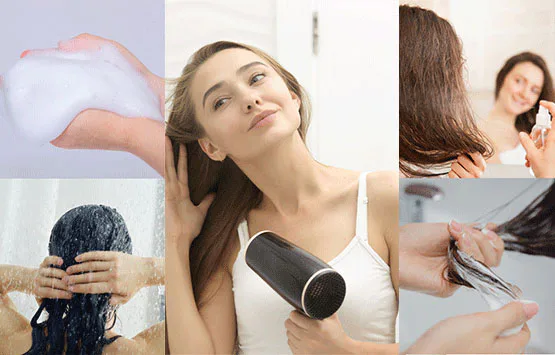
Hello!! ... Hair fall — the world-class problem for women like us that just never seems to go away no matter what we try. It really is a heavy burden. Hair fall can occur from many factors, especially our daily hair care habits — whether it's shampooing, blow-drying, or flat ironing. Today the admin is bringing you great tips for shampooing, blow-drying, and ironing to prevent hair fall — just for the ladies! 1. Shampoo with water at normal temperature. Hello!! ... Hair fall — the world-class problem for women like us that just never seems to go away no matter what we try. It really is a heavy burden. Hair fall can occur from many factors, especially our daily hair care habits — whether it's shampooing, blow-drying, or flat ironing. Today the admin is bringing you great tips for shampooing, blow-drying, and ironing to prevent hair fall — just for the ladies! 2. Don't shampoo too frequently. Keeping your hair and scalp consistently clean is a good thing, but washing your hair too often can actually have a damaging effect on your hair. Because the more frequently you wash, the more oil on the scalp gets washed away, leaving the scalp dry and the hair damaged — plus dandruff joins in to annoy you. So for those who currently wash their hair every single day, it's recommended to switch to washing every other day instead. 3. Mix shampoo with water in your palm before applying. When washing hair, many people like to squeeze shampoo directly onto their hair, or squeeze it onto wet hair and lather it up. This is really not ideal at all, because most shampoos contain chemicals — and squeezing or pouring shampoo directly concentrates those chemicals straight onto your scalp, which may cause irritation. If not rinsed out thoroughly, residual chemicals will clog the hair follicles and can lead to hair fall and thinning. So every time you wash your hair, squeeze shampoo into your palm, mix it with water to create foam first, and then apply it to your scalp and hair. 4. Apply conditioner only to the ends of your hair. Hair conditioner is a product that makes hair look soft and glossy with a sense of weight. Many people feel strange if they don't use conditioner when washing, and believe that applying it all over will make hair even softer and more beautiful. Let me stop that thought right there — because the main ingredient in conditioner is silicone, which accumulates on the scalp and clogs hair follicles, causing hair fall and oiliness. If you still want to enjoy conditioner, it's recommended to apply it only to the ends of your hair. 5. Use cool air instead of hot air for blow-drying. After shampooing, you need to dry your hair — and many people use a hair dryer as their main tool. Most dryers blow hot air, though some have a natural cool air function. It's recommended to use the cool air setting, because blow-drying with hot air damages our hair — even though it dries faster, the heat strips moisture from the hair, causing it to become dry, brittle, and prone to breakage and fall. So for the health of your hair, it's better to dry with cool air, or turn to a regular fan, or let it air dry naturally. 6. Use heat protection products. Every time before blow-drying, flat ironing, or doing anything that exposes hair to heat, ladies should spray a heat-protection serum first — to protect hair from heat to a certain degree so it doesn't absorb the full heat, preventing it from drying out and becoming damaged quickly. Don't forget, ladies — before applying heat to your hair, spray on some serum first! 7. Don't blow-dry or flat iron when hair is soaking wet. One thing ladies should never do is blow-dry or flat iron soaking wet hair. If we blow-dry soaking wet hair, we need to blow for longer to get it dry — meaning hair is exposed to heat for longer, which increases the chance of damage. So it's recommended to let hair air dry for about 10–15 minutes before blow-drying. In the case of flat ironing — those who have ironed soaking wet hair will have heard that sizzling, frying sound. That's your hair being severely damaged. If you want to iron, wait until hair is dry first. 8. Divide hair into sections before blow-drying or ironing. Every time before blow-drying or flat ironing, divide hair into sections of a suitable size — not too thick and not too thin. If the sections are too thick, you'll need to blow-dry or iron over the same area repeatedly, causing the same spots of hair to be exposed to heat multiple times. But if the sections are too thin, hair will be exposed to direct heat and there's a higher chance of damage. So sections should be just right — so hair isn't repeatedly hit with concentrated heat. 9. Use low heat. Many ladies like to use high heat when flat ironing — turning the device on immediately at full blast. In reality, this method is not good for our hair at all — because sometimes our hair doesn't need that level of heat to style, yet we're already starting at maximum heat, which increases the chances of hair becoming dry, damaged, and prone to breakage and fall. So start with low heat, and only increase to high heat when truly necessary — to avoid excessive heat that will damage the hair. 10. Iron in one pass. When flat ironing, it's recommended to make one smooth pass through each section — so you don't need to go over the same spot multiple times. Repeated passes are like exposing the hair to heat over and over — and the more heat the hair is exposed to, the more likely it is to become dry and damaged. So iron in one pass — gliding slowly from root to tip — to prevent damage. These are everyday matters that should not be overlooked, because they can have a negative impact on our hair and scalp. For any ladies who are currently engaging in hair-damaging habits — don't forget to apply the tips above to change those habits. If you keep doing them, your hair will become weak, break off, and thin out — and don't say you weren't warned!

Read more »
Really? Cutting hair short during pregnancy reduces 'hair fall'?

Really? Cutting hair short during pregnancy reduces 'hair fall'?

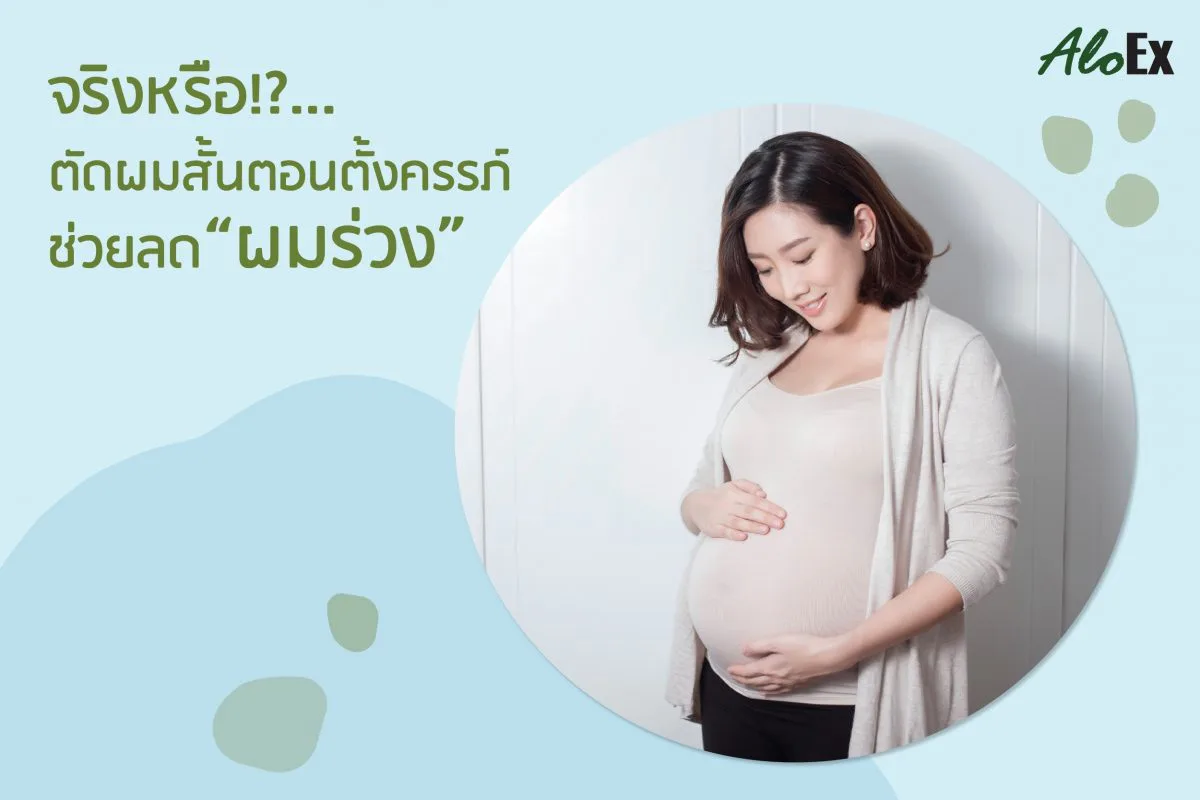
Ladies, have you ever heard the saying that during pregnancy you should cut your hair short so it will fall less? Combined with seeing that most expectant mothers keep short or not very long hair during pregnancy, it makes it sound even more believable. But does cutting hair short really help reduce hair fall? Hormones change, and so does hair. During pregnancy, the hormones in a woman's body change — oestrogen levels rise significantly for a prolonged period, making hair look darker and fuller than before, because this hormone causes hair fall to slow down. The only issues are oily or dry hair due to the hormonal changes. However, if hair fall occurs even though it doesn't normally, it indicates the body is low in iron, leaving insufficient supply to nourish the hair roots. Cutting hair short does help reduce hair fall — even if not 100%. Cutting hair short during pregnancy can help reduce breakage and hair fall, because the longer the hair, the more weight the hair roots must bear, making it harder for nutrients to reach the hair, weakening it until it breaks and falls. Importantly, during pregnancy when oily or dry hair occurs due to hormonal changes, keeping hair very long can make it hard to manage, and can negatively affect the hair strands. Cutting it short therefore also makes it easier to care for. Heavy post-partum hair fall — short hair helps too. Before giving birth it's not so bad… but after giving birth, hair falls heavily — especially in the first 6 months, or for some women even longer — which is normal for every mother. Because after giving birth, oestrogen levels drop sharply, causing a lot of hair fall — so much that wherever you sit you find hair strands. If hair is long, it becomes even more noticeable that a lot of hair is falling, and some women become very anxious about it. Cutting hair short is therefore another good option that makes hair easier to manage and makes the fall look less noticeable than with long hair. Other nourishing options beyond cutting short. For those experiencing hair fall during pregnancy or heavy post-partum hair fall, cutting hair short does help to an extent — but it is also recommended to add further nourishment and care. Especially during pregnancy, eat foods rich in iron to ensure the body receives sufficient iron — because it doesn't only affect hair fall, it also affects the foetus and the mother's body. It is also recommended to avoid using chemicals on the scalp and hair, as sensitivity is increased. Use a gentle shampoo that has the ability to nourish hair roots for strength and good health — to prepare hair and be ready to cope with post-partum hair fall.

Read more »
4 factors that thin your hair

4 factors that thin your hair

Every day, the scalp is exposed to all-round pollution — such as sunlight, dust and smoke, or chemicals used to hold hair in place — until hair starts to fall and thin. Let's check what factors can cause hair to thin. 1. Starting with heat from sunlight that directly hits exposed areas of the scalp — such as the crown or the hair parting — which are directly exposed to sunlight, causing the scalp to become dry and hot. Hair will be the first thing to be shed in order to protect the scalp — just as leaves fall from a tree to protect its trunk. 2. The use of chemicals for frequent hair styling — such as to add thickness and softness to hair or keep it in place — commonly seen among actors, hosts, and news presenters. These chemicals can irritate the scalp. 3. Genetic factors. If parents or grandparents have a history of hair thinning, it is possible that we may also have hair thinning. But this factor can occur at any area of the scalp — not just at a widening parting or the crown alone. 4. An important factor is insufficient nutrients reaching the hair. Because hair is like a plant that absorbs nutrients from its roots to nourish itself for growth. If the hair roots are weak, they cannot absorb nutrients — making hair weak and eventually falling. To address thinning hair, nutrients must be added to nourish and restore the hair roots and build immunity for the scalp against the aforementioned pollutants — with AloEx extracts, which contain various Thai herbs. For example, extract from Phikun Thong (Mimusops elengi) helps absorb toxins from chemical residue left by various hair products, restoring good health to the scalp, and also contains antioxidants to help reduce skin ageing and fight free radicals. In nourishing and repairing hair roots and the scalp, protein is indispensable. AloEx contains highly concentrated protein extracted from plant seeds and herbal bulbs to help fill in the missing nutrients and restore strength to the hair roots. With the detoxifying properties of the Phaya Yen herbal bulb extract, it helps cool the scalp. Furthermore, it also reduces dehydrotestosterone (DHT) male hormone, thereby further reducing hair fall.

Read more »
5 basic hair-care tips and techniques for thick, beautiful hair — like bringing the spa home

5 basic hair-care tips and techniques for thick, beautiful hair — like bringing the spa home

1. Nature never harms us. Mum always said that the herbs in the kitchen can be adapted to use on hair and help keep it healthier. But we don't have to go to the trouble of growing fingerroot, boiling Gotu Kola, peeling aloe vera, or making our own shampoo. Nowadays, natural-formula shampoos are widely available — but that doesn't mean they are 100% natural. It's better to look for the word 'organic' — that's more reassuring. ——————————————————————————— 2. Comb hair gently and your hair will be as beautiful as Rapunzel's. We should not comb hair forcefully or yank the ends. Think about how long it takes for each new hair strand to grow — if you pull too hard and lose a handful, what then? Observe your own behaviour carefully and be patient when combing. If hair is tangled, comb gently and slowly — gentle combing yields beautiful strands. ——————————————————————————— 3. Look beautiful (only) on special days is enough. No need to style hair every day. If we take good care, hair will be naturally beautiful without much embellishment. So items like dryers, electric curling irons, and various hair styling tools — save them for special occasions. This will help preserve hair a great deal, and try not to expose hair to too much heat — otherwise hair roots will be exhausted before they're beautiful. ——————————————————————————— 4. We know hot water is comfortable — but it's not comfortable for hair. Using hot water to wash hair is a cause of dry hair. Don't say lukewarm water will do — in truth, you shouldn't use water at high temperature. Using water at normal temperature is much more hair-friendly, giving hair shine and less brittleness. ——————————————————————————— 5. Beautiful, healthy hair with organic-formula products. Nowadays, shampoos and hair products are available in many formulas and from many brands. We are in the position of choosing — what is good, what is appropriate. It is recommended to choose according to your needs and hair condition. If you are concerned about hair fall, look for products that specifically address this — and if they are an organic formula, all the better. A loud whisper: AloEx natural formula — just 2 steps, no hassle — please try it. ——————————————————————————— If we're talking about a currently very popular Thai-brand shampoo that you need to try, it's AloEx — with AloEx Hair Regrowth Shampoo, used as Step 1, an organic formula that can deeply cleanse and remove both chemicals and dirt. For anyone whose hair has been exposed to a lot of chemicals, you know that they clog the pores which could cause hair fall. But if you try this one, it deeply detoxes, thoroughly cleaning away chemical build-up. Most importantly, it's gentle on the scalp — and for those with oily hair or hair fall, please try it. It apparently reduces scalp itching and dandruff too. For the next step of nourishment — for those with hair fall or dandruff, we believe you may be wary of serums because you don't know if you'll have a reaction. This product is gentle enough for pregnant women — even new mothers can use it. Its most standout property is using extracts from over 30 types of herbal plants to stimulate blood circulation, nourish hair and the scalp, and inhibit DHT male hormone, the main cause of hair fall. Oh, almost forgot — they've added nutrients to speed up hair growth, making it look thick and shiny, with people beside you none the wiser about what you've been doing. This time, go ahead and encourage the men to buy it and secretly use it together. ^^ To summarise, AloEx has 5 good reasons to buy: It's organic, using herbs from 3 nations — Thai, Chinese, and Indian — which has been researched to show that the action of these herbs complements each other perfectly. Beyond cleansing, it nourishes deeply down to the hair roots. When washing, it's recommended to massage the scalp in circular motions — this helps balance blood circulation, giving a clear, refreshed feeling. Those with oily hair will love this product a lot — it's like detoxing, removing dirt and oiliness, giving the most refreshing feeling. When used together with the serum, it doesn't just nourish — it also balances the sebaceous glands to produce only as much oil as needed. No fragrance, no chemicals. Oh, and no colouring agents, fragrance agents, or any preservatives in the ingredients either — so new mothers can use it. As for the serum, it uses Silver Nano technology from Japan — very safe, effectively reduces hair fall. Someone used the serum for 1 month before undergoing chemotherapy — hair roots became stronger and hair fell less. #GoodForTheSoul. For anyone who wants to purchase it as a surprise gift for their partner, feel free to enquire at LINE ID: @AloEx. www.aloexhair.com, www.facebook.com/aloexofficial

Read more »
Get to know 'silicone' — the hair helper to watch out for

Get to know 'silicone' — the hair helper to watch out for

Get to know 'silicone' — the hair helper to watch out for. "Silicone" — the hair-beauty helper that many have heard of, and many still do not know. Today, we bring information about silicone — what it is, and what its advantages and disadvantages are. Let's find out. What is 'silicone'? Silicone is a polymer — colourless and translucent — found in many forms including liquid, solid, paste, or rubber. Silicone is used very widely because it has the distinct quality of being adaptable for many different uses as appropriate, and is also highly effective at coating and sealing surfaces with strong adhesion. Silicone is therefore used in hair care products such as shampoo, conditioner, and hair treatments. How does silicone help hair? Silicone reduces friction between hair strands, makes hair easier to comb without tangles — and with its excellent surface-coating properties, silicone coats hair too. When silicone coats our hair, the hair becomes smooth, shiny, weightful, and looks healthy. Furthermore, the silicone coating also helps protect hair from losing moisture. Conditioner therefore contains more silicone than shampoo. Hair problems that can arise from silicone. Silicone is not a nourishing agent — the results are therefore only temporary. Therefore, after a period of time, hair that looked smooth, shiny, and healthy will become dry and lack moisture, because the silicone coating on the hair, while it traps moisture, also means hair cannot receive nourishment and moisture from outside. With prolonged use, silicone accumulates on hair and the scalp, making hair look dull, flat, and lifeless from the silicone build-up, and causes the scalp to clog so that the ability to expel waste and absorb nutrients decreases, and hair strands start to weaken and eventually break and fall. In some people there may also be allergic reactions such as rashes and red bumps. Beautiful hair even without silicone. While silicone has disadvantages, telling someone to stop using conditioner and use only shampoo is extremely difficult — because shampoo mainly cleanses and nourishes only minimally, with the nourishing step falling fully to the conditioner. Therefore, it is recommended to choose hair care products without silicone to avoid the negative effects. AloEx Natural Hair Mask is one recommended option — because it contains no silicone but has natural extract such as Lavender Oil to provide moisture to hair, leaving it soft and smooth with natural volume, and also contains Black Sticky Rice extract to nourish hair roots for strength. 💚 Interested in the product? You can order via LINE: @AloEx or click http://bit.ly/LINEAloExFB

Read more »
Review — AloEx shampoo and serum spray with natural herbal extracts that reduce hair fall

Review: AloEx Shampoo and Serum Spray with Natural Herbal Extracts to Help Reduce Hair Loss

Hello, welcome back to the hair section once again — with a hair problem that causes many people to feel even more anxious than damaged hair: the problem of hair fall!!! It cannot be denied that experiencing hair fall causes a significant loss of confidence and affects one's personality — because fall will gradually lead to hair thinning and then a bald scalp... Oh, it's goosebump-inducing. Therefore, before the problem escalates, we should start looking for ways to prevent it early on. There are many causes of hair fall — the main ones are genetics and hormones, which, well, we have to accept — they've been passed down from our parents. But the many external factors we encounter every day also cause a great deal of hair fall — whether chemical treatments, perming, straightening, dyeing, using hair styling products, leaving the scalp damp until it develops scalp fungus, excessively oily roots, and so on. But looking at all of this, the cause is that we are harming the scalp. When the scalp is not healthy, it affects the hair roots — which is the source of hair fall. Therefore, no matter what the cause of hair fall, the most important basic care is to clean the scalp — by choosing a shampoo specifically designed for people with hair fall problems, which we will review in this blog. Both video and text versions are available. AloEx Shampoo & Hair Serum Spray. Product details: a shampoo and serum for people with hair fall problems, thinning hair, or an unhealthy scalp. Ingredients extracted from various Thai herbs including Kaffir Lime, Butterfly Pea, Aloe Vera, Henna, Glory Bower (Clerodendrum), Moringa, Ginseng, Thai Soapnut, Bamboo Leaf, and Gotu Kola — with the following properties: stimulates blood circulation to effectively transport protein and nutrients to nourish the hair roots, encouraging faster new hair growth; absorbs heat toxins, reducing scalp temperature which is a cause of weak hair roots and hair fall, with the cooling extract from Phaya Yen; adds protein (amino acid) to hair roots and strands from plant seed, herbal bulb, and ginseng extracts; increases moisture and builds density in hair roots with extracts from various aloe species (Pure Hyaluronic Acid); reduces itching, oiliness, and skin inflammation with concentrated Curcumin herbal extract; gives a cool, comfortable feeling without stickiness, absorbs into the skin and dries quickly because it is extracted in fine molecules; free of fragrance and unnecessary additives such as antistatic agents commonly found in general shampoos — therefore safe even for sensitive, irritation-prone scalps. AloEx Shampoo — herbal extract shampoo, strengthens hair roots and the scalp, helps reduce hair fall and dandruff problems, size 200ml, price 595 baht. Ingredient details: uses surfactants from the gentle group — Sodium Cocoamphoacetate, Sodium Cocoyl Glutamate, and Sodium Cocoyl Isethionate — which are organic compounds derived from coconut oil. Contains no sulphates, silicone, fragrance, or preservatives. Texture and scent: a clear shampoo in a pump bottle for easy use. The shampoo has a viscous texture but lathers easily, giving a moderate lather — not too much, not too little. Effectively removes oil and dirt from the scalp; the lather rinses out easily. After washing you'll feel a cool, comfortable freshness on the scalp. The scent comes from natural herbs — because no fragrance is added — which is a wonderfully pleasant scent... personally love it. It's a mild, cool herbal scent that gives a refreshing feeling, with a light scent lingering in the hair. Because the shampoo emphasises many natural ingredients and contains no silicone to coat and smooth hair (though that does clog it well), when washing you may feel a slight friction — for those with long, colour-treated hair, it's almost impossible to detangle while wet. The technique is to use AloEx Shampoo only at the roots to thoroughly cleanse the scalp, since it removes excess oil very effectively, and then use a shampoo specifically for colour-treated hair on the mid-lengths to ends — getting a clean scalp and nourishing the hair colour at the same time. But for the partner who has short hair, can use it all over the head. When asked, apparently the friction feeling is the same — but for men, that friction feeling gives a sense of being really clean. After rinsing the shampoo off and blow drying, hair is normally soft and smooth — no feeling of dryness whatsoever. AloEx Hair Regrowth Serum Spray — a scalp serum spray to nourish hair roots for strength, reduce hair fall, scalp itching, and dandruff, stimulate new hair growth, and make hair dark and thick. Size 120ml, price 990 baht. Ingredients are purely herbal extracts — no fragrance — so it is gentle and can be used daily, 2–3 times per day. Texture, scent, and method of use: the serum is a clear liquid as thin as water — not sticky. The scent is mild, with a light herbal character. Personally, it's not particularly appealing but not unpleasant — the shampoo scent is preferred. It comes with a spray nozzle that produces a very fine, wide mist — one press covers a large area, which works well for people with short hair since a few sprays cover everything. But for those with long hair, it can make the roots quite damp over a wide area. Using it after washing hair is preferred personally. But you can really spray it both on wet hair and during the day on dry hair without rinsing out. After spraying, use fingers to massage the scalp — this helps stimulate the serum to absorb and improves blood circulation. Summary of feelings after testing: personally no hair fall problems to begin with, so mainly tested it on a partner. The partner had been experiencing very severe hair fall over the past year, and had tried many shampoos for hair fall. When tried this one, the feedback was that it really did reduce hair fall — when washing, fewer strands come out on the hands. What really stood out compared to other shampoos used before was the scent — because shampoos for hair fall tend to emphasise being gentle and contain no fragrance, many have a medicinal smell. But this one uses herbal extracts that give a mildly pleasant herbal scent.
Read more »
10 techniques for washing, drying, and styling without hair fall

10 techniques for washing, drying, and styling without hair fall

Hello!! ... Hair fall — the world-class problem for women like us that just never seems to go away no matter what we try. It really is a heavy burden. Hair fall can occur from many factors, especially our daily hair care habits — whether it's shampooing, blow-drying, or flat ironing. Today the admin is bringing you great tips for shampooing, blow-drying, and ironing to prevent hair fall — just for the ladies! 1. Shampoo with water at normal temperature. Hello!! ... Hair fall — the world-class problem for women like us that just never seems to go away no matter what we try. It really is a heavy burden. Hair fall can occur from many factors, especially our daily hair care habits — whether it's shampooing, blow-drying, or flat ironing. Today the admin is bringing you great tips for shampooing, blow-drying, and ironing to prevent hair fall — just for the ladies! 2. Don't shampoo too frequently. Keeping your hair and scalp consistently clean is a good thing, but washing your hair too often can actually have a damaging effect on your hair. Because the more frequently you wash, the more oil on the scalp gets washed away, leaving the scalp dry and the hair damaged — plus dandruff joins in to annoy you. So for those who currently wash their hair every single day, it's recommended to switch to washing every other day instead. 3. Mix shampoo with water in your palm before applying. When washing hair, many people like to squeeze shampoo directly onto their hair, or squeeze it onto wet hair and lather it up. This is really not ideal at all, because most shampoos contain chemicals — and squeezing or pouring shampoo directly concentrates those chemicals straight onto your scalp, which may cause irritation. If not rinsed out thoroughly, residual chemicals will clog the hair follicles and can lead to hair fall and thinning. So every time you wash your hair, squeeze shampoo into your palm, mix it with water to create foam first, and then apply it to your scalp and hair. 4. Apply conditioner only to the ends of your hair. Hair conditioner is a product that makes hair look soft and glossy with a sense of weight. Many people feel strange if they don't use conditioner when washing, and believe that applying it all over will make hair even softer and more beautiful. Let me stop that thought right there — because the main ingredient in conditioner is silicone, which accumulates on the scalp and clogs hair follicles, causing hair fall and oiliness. If you still want to enjoy conditioner, it's recommended to apply it only to the ends of your hair. 5. Use cool air instead of hot air for blow-drying. After shampooing, you need to dry your hair — and many people use a hair dryer as their main tool. Most dryers blow hot air, though some have a natural cool air function. It's recommended to use the cool air setting, because blow-drying with hot air damages our hair — even though it dries faster, the heat strips moisture from the hair, causing it to become dry, brittle, and prone to breakage and fall. So for the health of your hair, it's better to dry with cool air, or turn to a regular fan, or let it air dry naturally. 6. Use heat protection products. Every time before blow-drying, flat ironing, or doing anything that exposes hair to heat, ladies should spray a heat-protection serum first — to protect hair from heat to a certain degree so it doesn't absorb the full heat, preventing it from drying out and becoming damaged quickly. Don't forget, ladies — before applying heat to your hair, spray on some serum first! 7. Don't blow-dry or flat iron when hair is soaking wet. One thing ladies should never do is blow-dry or flat iron soaking wet hair. If we blow-dry soaking wet hair, we need to blow for longer to get it dry — meaning hair is exposed to heat for longer, which increases the chance of damage. So it's recommended to let hair air dry for about 10–15 minutes before blow-drying. In the case of flat ironing — those who have ironed soaking wet hair will have heard that sizzling, frying sound. That's your hair being severely damaged. If you want to iron, wait until hair is dry first. 8. Divide hair into sections before blow-drying or ironing. Every time before blow-drying or flat ironing, divide hair into sections of a suitable size — not too thick and not too thin. If the sections are too thick, you'll need to blow-dry or iron over the same area repeatedly, causing the same spots of hair to be exposed to heat multiple times. But if the sections are too thin, hair will be exposed to direct heat and there's a higher chance of damage. So sections should be just right — so hair isn't repeatedly hit with concentrated heat. 9. Use low heat. Many ladies like to use high heat when flat ironing — turning the device on immediately at full blast. In reality, this method is not good for our hair at all — because sometimes our hair doesn't need that level of heat to style, yet we're already starting at maximum heat, which increases the chances of hair becoming dry, damaged, and prone to breakage and fall. So start with low heat, and only increase to high heat when truly necessary — to avoid excessive heat that will damage the hair. 10. Iron in one pass. When flat ironing, it's recommended to make one smooth pass through each section — so you don't need to go over the same spot multiple times. Repeated passes are like exposing the hair to heat over and over — and the more heat the hair is exposed to, the more likely it is to become dry and damaged. So iron in one pass — gliding slowly from root to tip — to prevent damage. These are everyday matters that should not be overlooked, because they can have a negative impact on our hair and scalp. For any ladies who are currently engaging in hair-damaging habits — don't forget to apply the tips above to change those habits. If you keep doing them, your hair will become weak, break off, and thin out — and don't say you weren't warned!

Read more »
Really? Cutting hair short during pregnancy reduces 'hair fall'?

Really? Cutting hair short during pregnancy reduces 'hair fall'?

Ladies, have you ever heard the saying that during pregnancy you should cut your hair short so it will fall less? Combined with seeing that most expectant mothers keep short or not very long hair during pregnancy, it makes it sound even more believable. But does cutting hair short really help reduce hair fall? Hormones change, and so does hair. During pregnancy, the hormones in a woman's body change — oestrogen levels rise significantly for a prolonged period, making hair look darker and fuller than before, because this hormone causes hair fall to slow down. The only issues are oily or dry hair due to the hormonal changes. However, if hair fall occurs even though it doesn't normally, it indicates the body is low in iron, leaving insufficient supply to nourish the hair roots. Cutting hair short does help reduce hair fall — even if not 100%. Cutting hair short during pregnancy can help reduce breakage and hair fall, because the longer the hair, the more weight the hair roots must bear, making it harder for nutrients to reach the hair, weakening it until it breaks and falls. Importantly, during pregnancy when oily or dry hair occurs due to hormonal changes, keeping hair very long can make it hard to manage, and can negatively affect the hair strands. Cutting it short therefore also makes it easier to care for. Heavy post-partum hair fall — short hair helps too. Before giving birth it's not so bad… but after giving birth, hair falls heavily — especially in the first 6 months, or for some women even longer — which is normal for every mother. Because after giving birth, oestrogen levels drop sharply, causing a lot of hair fall — so much that wherever you sit you find hair strands. If hair is long, it becomes even more noticeable that a lot of hair is falling, and some women become very anxious about it. Cutting hair short is therefore another good option that makes hair easier to manage and makes the fall look less noticeable than with long hair. Other nourishing options beyond cutting short. For those experiencing hair fall during pregnancy or heavy post-partum hair fall, cutting hair short does help to an extent — but it is also recommended to add further nourishment and care. Especially during pregnancy, eat foods rich in iron to ensure the body receives sufficient iron — because it doesn't only affect hair fall, it also affects the foetus and the mother's body. It is also recommended to avoid using chemicals on the scalp and hair, as sensitivity is increased. Use a gentle shampoo that has the ability to nourish hair roots for strength and good health — to prepare hair and be ready to cope with post-partum hair fall.

Read more »
Why does your hair leave you? 8 causes of hair fall and breakage

Why does your hair leave you? 8 causes of hair fall and breakage

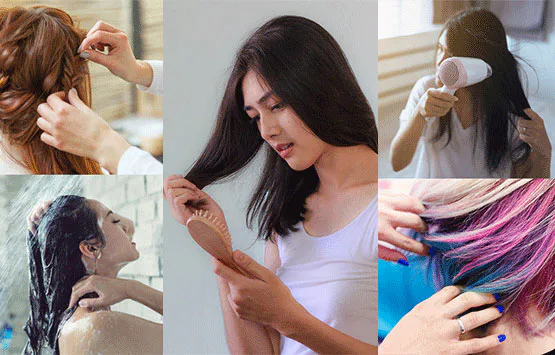
Have you ever wondered why your hair keeps falling out even though you take really good care of it? Hair fall can have many causes, and some of them are everyday habits you might be overlooking. Today the admin has listed 8 causes that keep making hair fall again and again until it becomes noticeably thin. 1. Pulling your own hair — Do any of you pull your own hair? Some people do it absentmindedly while lost in thought — the more they daydream, the more they pull. Some like having friends pull at itchy strands. Some even pull their hair when stressed or upset. Pulling frequently — watch out, ladies, you might go bald without realizing it. Repeatedly pulling hair causes patchy thinning that can eventually lead to baldness, and it weakens the hair roots so that new growth is not strong and falls out easily. 2. Shampooing habits — We understand that the weather here is incredibly hot — sweating almost constantly, so hair gets smelly easily from the heat, pollution, and various odors. That's why many people wash their hair every day. But did you know that washing hair too frequently is a big no-no? Over-washing dries out the scalp, causing irritation and itching that eventually leads to dandruff — and once you have dandruff, hair fall follows. Washing every other day is enough. In between, you can turn to dry shampoo. 3. Styling and hair treatments — Let's be honest, looking good is very important to us, especially styling our hair beautifully when going out. Dyeing, using spray, straightening, and all sorts of other treatments are also causes of hair fall, because we expose our hair and scalp to too many chemicals and heat — damaging them in the process. Various styles, whether braids or tight buns, can also cause hair breakage and fall, because rubber bands and hair clips that are too tight weaken hair right from the roots. 4. Diet — Who says "once you're grown up, you can eat anything"? That's not wrong per se, but it's really not advisable. We need to watch what we eat, because what we drink and eat affects the health of our hair and scalp too. People who love spicy food especially need to be careful — spicy food stimulates high blood pressure and constricts blood vessels, reducing blood circulation to the hair roots. Weak hair roots then break and fall out easily. 5. Protein deficiency — Following on from the previous point, many people wonder what they need to eat to have healthy hair like others. It's not that complicated — the best foods for nourishing hair are protein-rich foods. If your body is deficient in protein, hair becomes fragile and falls out easily — and you might even find gray hairs showing up too. 6. Hereditary hair fall — Some people have never dyed their hair, never used chemicals, take excellent care of their hair, yet it still keeps falling. That's when you need to look back at older relatives — parents, grandparents — to see whether anyone had thinning or falling hair. Hereditary hair fall is mainly caused by the male hormone DHT, which is passed down from generation to generation. DHT reacts with the hair follicles, causing them to atrophy, contract, and shrink until hair gradually falls out. Hair strands become thin, weak, and easy to fall out — and in severe cases, baldness can result. 7. Using harsh shampoos — One thing that directly impacts our hair is the hair care products we use regularly — especially shampoos and conditioners. These can also cause hair fall. Every brand has a different formula with different ingredients, and not all formulas suit every hair type. Formulas with harsh chemicals can damage hair even more. If you don't choose carefully, it can lead to heavy hair fall. So it's recommended to choose a gentle, chemical-free shampoo to minimize chemical exposure for your scalp and hair. 8. Emotional stress and pressure — Stress is a problem that can affect people of all genders and ages, because it arises so easily from both small and large issues. Did you know that aside from causing headaches and a bad mood, stress also causes hair fall? Prolonged accumulated stress slows the hair follicles' ability to produce new hair strands, and hair falls out more and more. This is really not good, ladies — we must find ways to relieve stress for the sake of our hair! Anyone who fits several of these 8 points — if it's happening regularly, fix your habits quickly before your hair leaves you. Most importantly, don't forget to use AloEx products to nourish your hair roots for strength, reduce hair fall, and help new hair grow back. ^^ Order AloEx at LINE: @AloEx or click http://bit.ly/LINEAloExFB — free shipping nationwide.

Read more »
The 4 cleansing-agent families in shampoo you've never heard of

The 4 cleansing-agent families in shampoo you've never heard of

Today's hair cleansing products and shampoos contain many different ingredients, such as preservatives, foaming agents, and conditioning agents, etc. However, the most essential ingredient that cannot be omitted is the cleansing agent, or surfactant. The molecular structure of this agent can attract oil-based dirt and help rinse it away with water. The cleansing agents used in shampoos are classified into 4 groups based on their ionic charge when dissolved in water, as follows: Anionic surfactants have high cleansing efficiency, produce a lot of foam, and are low in cost — but they may strip too much oil from hair and scalp, leaving hair in poor condition after washing, and may cause irritation for those who are sensitive to shampoo. Most regular shampoos use this group as the primary cleansing agent, mixed with nonionic surfactants to reduce irritation. Examples of anionic surfactants: Sodium lauryl sulfate, Sodium lauryl ether sulfate, Ammonium lauryl sulfate, etc. Cationic surfactants produce less foam and have less cleansing power than anionic agents, but they are excellent at restoring the condition of hair and skin. They are therefore often used in conditioning products (hair conditioners). Examples of cationic surfactants: Cetrimonium chloride, Behentrimonium chloride. Amphoteric surfactants carry both positive and negative charges. They cleanse hair well, produce plenty of foam, and at the same time help preserve hair condition after washing without irritating the scalp, because they have low alkalinity. However, because they are expensive, they are not widely used. Due to their low irritation potential, they are often the main ingredient in shampoos for children and for those who are sensitive to regular shampoos. Example of amphoteric surfactants: Amino propionates. Nonionic surfactants have high cleansing ability and maintain good hair condition after washing, but produce little foam and are expensive. They are typically used as supplementary cleansing agents in regular shampoos to help reduce irritation caused by the anionic agents used as the primary ingredient. Example of nonionic surfactants: Cocomide monoethanolamine. Now that you are familiar with all four groups of surfactants, let's look at which type of shampoo or hair care product suits which type of user: Normal hair — If possible, shampoo with a product that uses nonionic surfactants as the primary ingredient, or a sulfate-free shampoo. If not available, use a regular shampoo followed by a conditioning product every time. Oily hair — Shampoo regularly with a regular anionic-formula shampoo and rinse thoroughly with cool water. Dry hair — Avoid washing hair every day. When shampooing, use an amphoteric-formula shampoo, and nourish hair with a conditioning product that contains cationic surfactants — especially a deep conditioner. Sensitive scalp — Use an amphoteric-formula shampoo or a baby shampoo. AloEx encourages all readers to choose a shampoo that suits your individual hair and scalp condition, so you can keep your hair clean and healthy. Many thanks for the helpful information from the Department of Pharmaceutical Sciences and Pharmaceutical Industry, Faculty of Pharmacy, Chulalongkorn University, "Cosmetics in Everyday Life," Bangkok: Chulalongkorn University, 2001, pp. 154–160.

Read more »
What did the ancient Thais use to 'wash' their hair?

Back then, what did you use to “wash your hair” with?

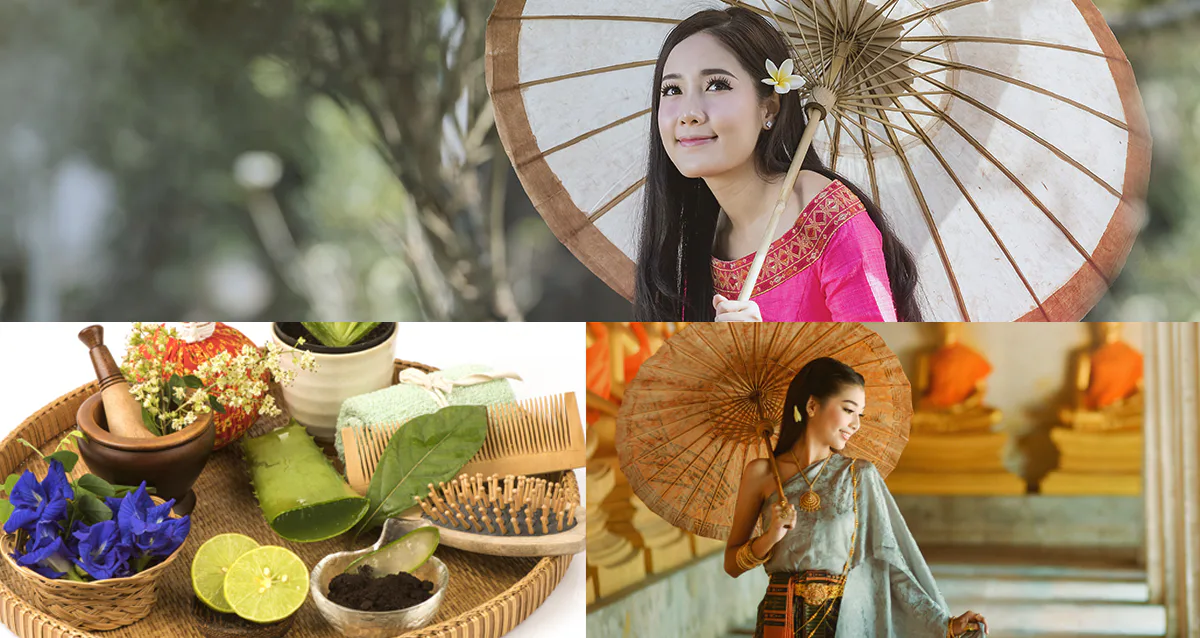
Today AloEx would like to introduce you to the herbs that the character Mae Ying Kara-Kay used to wash her hair. Each herb has different properties. Some you may have heard of before, but every one of them has properties that help nourish hair and scalp. Let's take a look, dear friends! 1. Bai Mi (Indian Tulip / Thespesia populnea) — also known as Mi Mhen — an herb found in the Lanna region, abundant in Nan province. People in the old days would boil Bai Mi leaves in water, or crush them and mix with water to get a pleasant fragrance, then use the water to wash hair. Some households would soak Bai Mi leaves as a hair mask — by pounding the leaves finely, mixing with rice-washing water, and soaking the hair — to get soft, beautiful hair, free of dandruff, reducing scalp itching, reducing hair fall, and helping to strengthen the scalp. 2. Henna — People in the old days liked to pound Henna finely, strain through cheesecloth, and use the resulting liquid to dye hair a naturally thick, dark color — while also strengthening the scalp. This herb is not only used by Thai people — it is also popular in many other countries, such as India, and is widely made into hair dye products. 3. Soapnut — A natural herb that can produce foam on its own. People in the old days would crush the soapnut to remove the inner seed, then rub it with water to use for washing clothes or washing hair. Alternatively, they would crush it until it cracked and boil it in about 1 cup of water, then use it to soak hair or wash hair. Its properties are also very good — it helps reduce hair fall and treats scalp conditions. 4. Kaffir Lime — Ladies in the old days would char Kaffir Lime over a flame, cut it in half, and rub the Kaffir Lime fruit over the hair and scalp, or squeeze the charred Kaffir Lime with water and apply it to the scalp. 5. Butterfly Pea — Ladies in the old days would crush Butterfly Pea flowers until they gave off a blue color, or soak them in clean water and apply all over the hair. Some would mix it with Kaffir Lime water or Sompoi (Acacia concinna) to wash hair — making hair thick, dark, and also slowing graying of the hair. Nowadays, there is also a belief that applying Butterfly Pea to the eyebrows helps make eyebrows fuller. 6. Sompoi (Acacia concinna) — Ladies in the old days used this herb specifically to reduce hair fall. They would break the Sompoi pods into small pieces, soak them in water for about 30 minutes, and then use the water to wash hair instead of shampoo — as a scalp cleanse. Once the water turns yellowish and is ready, beat it to create foam, then pour it over the head and wash. How do you find these ancient Thai herbs that people in the old days used to care for hair and scalp health? For those who want hair as beautiful as Mae Ying Kara-Kay and want to braid your hair like the ladies of old — don't forget to take care of your hair and scalp health to make them strong. Otherwise, a bad spell may leave your hair weak, prone to falling out — and in poor condition indeed!

Read more »