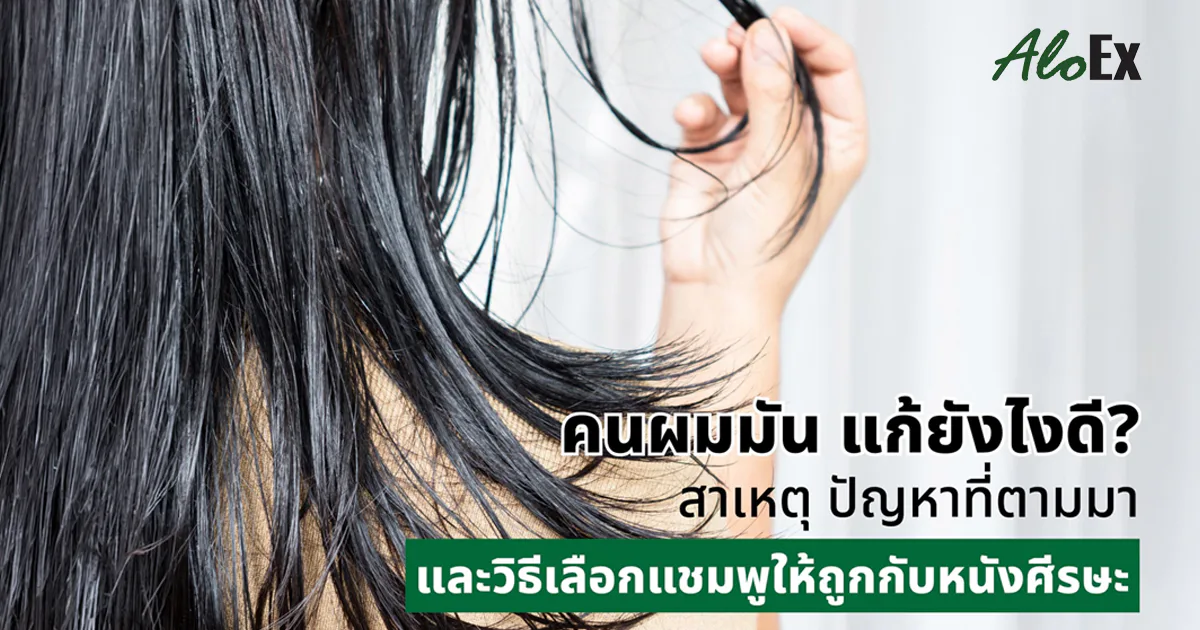





Hair-cleansing products or shampoos today contain many kinds of ingredients, such as preservatives, foam boosters, hair-conditioning agents and so on. But the indispensable key ingredient is the cleansing agent, or surfactant, whose molecular structure can attract oil-based dirt and help the dirt be easily rinsed away by water.
Cleansing agents used in shampoo are divided by their water-soluble charge into 4 groups, as follows:
- Anionic surfactants have high cleansing efficiency, produce lots of foam, and are also cheap, but they may strip too much oil from the hair and scalp, causing hair to lose condition after washing, and may also cause irritation for users allergic to shampoo.
- Cationic surfactants — their foaming and cleansing efficiency is not as high as anionic agents, but they restore hair and skin condition very well, so they are often used as ingredients for hair conditioner products.
- Amphoteric surfactants have both positive and negative charges combined, so they clean hair well and produce lots of foam, while also helping preserve hair condition after washing and not causing scalp irritation, since they have low alkalinity. But because they are expensive, they are not widely used.
- Nonionic surfactants have high cleansing ability and care for hair condition well after washing, but they produce little foam and are expensive. They are commonly used as a supplementary cleansing agent in regular shampoos, to help reduce the irritation resulting from the anionic agents that are the main ingredient.
Regular shampoos commonly use this group as the main ingredient, mixed with nonionic cleansing agents to reduce irritation. Examples of anionic surfactants are Sodium lauryl sulfate, Sodium lauryl ether sulfate, Ammonium lauryl sulfate, and so on.
Examples of cationic surfactants are Cetrimonium chloride, Behentrimonium chloride
Because they cause low irritation, they are often the main ingredient in shampoos for children and for users allergic to regular shampoos. Examples of amphoteric surfactants are Amino propionates.
Examples of nonionic surfactants are Cocomide monoethanolamine.
Now that we know all the groups of cleansing agents, let's take a look at which group of cleansing agent in a shampoo or hair-nourishing product suits which type of user.
- People with normal hair If possible, you should wash with a shampoo that has nonionic cleansing agents as the main ingredient, or a sulfate-free shampoo. But if you can't find one, use a regular shampoo, followed by a conditioner every time.
- People with oily hair should wash regularly with a regular shampoo, which is an anionic formula, and rinse clean with cold water.
- People with dry hair should avoid washing every day. When washing, use an amphoteric-formula shampoo, and should nourish the hair with a conditioner that has cationic cleansing agents, especially the deep conditioner type.
- People with sensitive skin should use an amphoteric-formula shampoo or a shampoo for children.
AloEx encourages all readers to choose a shampoo suited to your hair and scalp condition, so you can keep your hair clean and healthy.
With thanks to the Department of Pharmaceutical Science and Pharmaceutical Industry, Faculty of Pharmaceutical Sciences, Chulalongkorn University; Everyday Cosmetics;
Bangkok: Chulalongkorn University, 2001, pp. 154-160.