




Human hair can be classified by shape into 2 types: straight and curly. The reason hair has different shapes comes from one of the key structural components of hair — the disulfide bond.
What is a disulfide bond?
A bond formed by the linking of an amino acid called cysteine, which exists in large quantities within the keratin layer surrounding the hair. The amount of cysteine that bonds together to form disulfide bonds determines whether hair is straight or curly. Hair shape is also related to the shape of the hair follicle: if the follicle is circular, fewer disulfide bonds form and hair tends to be straight; if the follicle is oval, more disulfide bonds form and hair tends to be curly — the more disulfide bonds, the curlier the hair.
Since the disulfide bond is the main structural component that determines hair shape, changing the shape of hair — whether through hair relaxing (straightening curly hair) or hair perming (curling straight hair) — relies on the key principle of altering how the disulfide bonds in the hair are arranged.
And that is the property of hair relaxers and hair perming solutions!
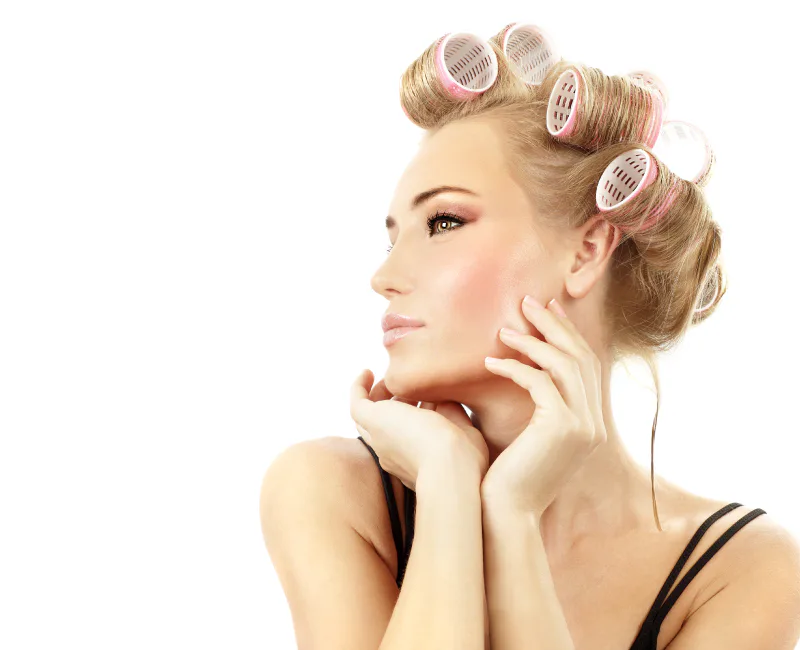
The key chemicals used in hair relaxing and perming products — such as hydrogen peroxide, guanidine hydroxide, or ammonium thioglycolate — all have the primary function of breaking the existing disulfide bonds in the hair, softening it so the hair can be reshaped as desired: using rollers to create curls, or a flat iron to straighten. Left in place for a while, the cysteine in the newly shaped hair reforms into new disulfide bonds, locking the hair into its new curled or straightened shape.
However, hair relaxers and perming solutions only temporarily change the disulfide bond structure in hair — the effect is not permanent — because these products each have a different lifespan. Additionally, newly grown hair retains the original disulfide bond structure. So if you let your hair grow for a while, the new growth will be naturally straight or curly according to your original hair structure.
However, frequent and repeated perming or relaxing can damage hair, because the hair's pH balance (acidity-alkalinity) is disrupted, the outer hair cuticle is opened up, the inner cortex swells, and pores form — making hair more sensitive to humidity and sunlight than normal, ultimately leading to dry, split-end hair.
To prevent hair damage, beyond avoiding frequent perming or relaxing, you should choose a gentle shampoo, use a conditioning product every time after shampooing, and also choose products containing UV filters to protect hair from UV ray damage.
With thanks to the Department of Pharmaceutical Science and Pharmaceutical Industry, Faculty of Pharmaceutical Sciences, Chulalongkorn University; Everyday Cosmetics;
Bangkok: Chulalongkorn University, 2001, p. 164.